Sign in. It’s quick, free and it’s up to you.
An account is an optional way to support the work we do. Find out more.
Sign in. It’s quick, free and it’s up to you.
An account is an optional way to support the work we do. Find out more.
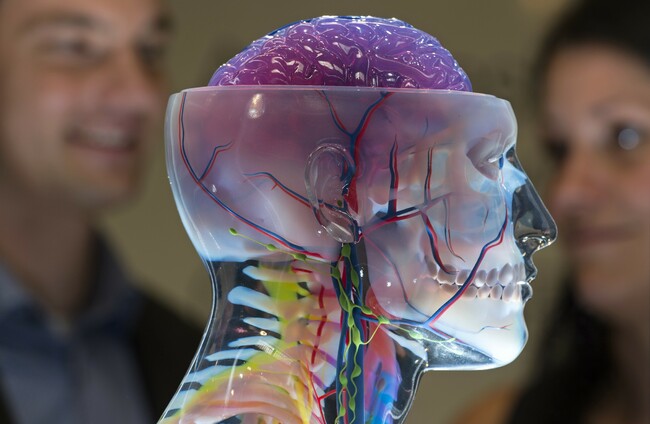
RESEARCHERS BASED IN Dublin have created a process to support 3D printing of new bone material – which might give those that require bone grafts more options.
The research could be used to regenerate large defects caused by tumour resections, trauma and infection, as well as inherited bone deformities.
It could also have numerous applications in surgeries involving the mouth, jaw, face and skull and orthopaedic surgery, especially in cases where tissues with complex geometries need to be regenerated, for example cases in the head, jaw or spine.
Led by Professor Daniel Kelly, the study was conducted by Amber, the materials science centre which aims to research ”materials that will transform everyday products of the future, from mobile phones to knee implants, batteries to beer bottles”.
What is a bone graft?
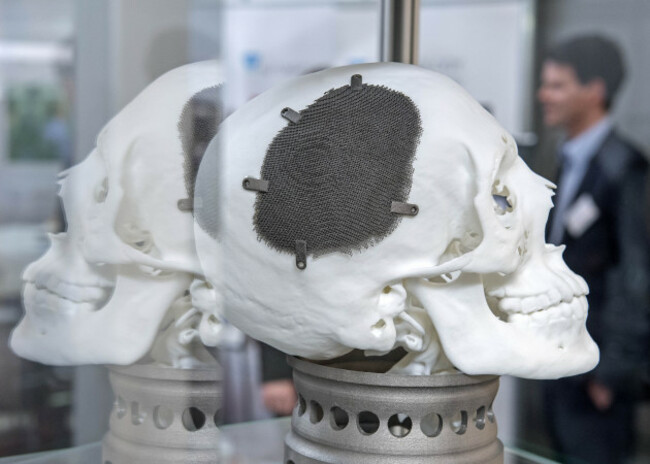
A bone graft involves replacing missing or damaged bones in particularly severe injuries where the bone cannot repair itself.
Every year, there are 2.2 million procedures worldwide which require a bone graft. At present there are two methods to do this:
But complications can include donor site morbidity, poor availability of transplantable tissue and disease transfer from the donor to the recipient.
This new research, however, could eliminate these difficulties by enabling the printing of larger and more complex shaped implants. The new method involves using 3D printing to build cartilage which has been proven to help bone growth.
Professor Daniel Kelly of Amber said about the research:
“While the technology has already been used to engineer relatively simple tissues such as skin, blood vessels and cartilage, engineering more complex and vascularised solid organs, such as bone, is well beyond the capabilities of currently available bioprinting technologies.
Our research offers real hope in the future for patients with complex bone trauma or large defects following the removal of a tumour.
“In addition, this bioprinting approach could also be used in the development of the next generation of biological implants for knee and hip replacements. Our next stage of this process is to aim to treat large bone defects and then integrate the technology into a novel strategy to bioprint new knees.”
Amber is funded by the Science Foundation Ireland and hosted in Trinity College Dublin. Their findings have been published in the Journal Advanced Healthcare Materials.

To embed this post, copy the code below on your site











have your say