Sign in. It’s quick, free and it’s up to you.
An account is an optional way to support the work we do. Find out more.
Sign in. It’s quick, free and it’s up to you.
An account is an optional way to support the work we do. Find out more.
(Seo alt ónár bhfoireann nua Gaeltachta. Is féidir an bunleagan as Gaeilge a léamh anseo.)
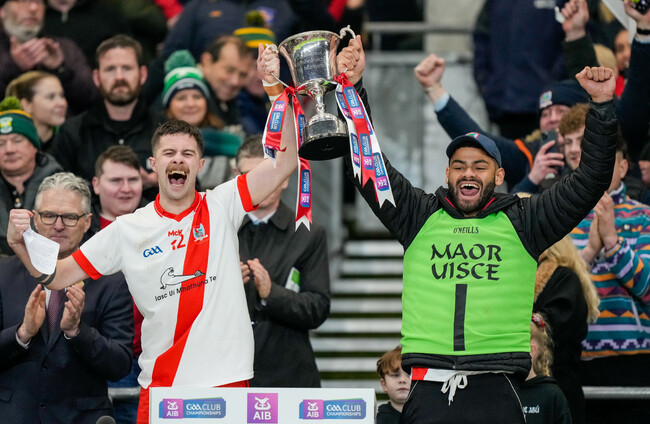
‘AN POC AR Buile’, a song composed in the Múscraí Gaeltacht in County Cork, was the song sung by An Ghaeltacht, the football heroes of western Kerry, after they won the All-Ireland Intermediate Championship under the floodlights of Croke Park on Sunday.
‘An Poc’ is a song describing the journey a goat took through Cork and Kerry to reach Daingean Uí Chúis by evening which is fitting to celebrate and there will certainly be other songs composed in the future about this victory which will live on in the memories of the people of western Kerry.
It is also fitting because it shows the support for An Ghaeltacht from Gaeltacht communities across the country. The hopes of Gaeltacht communities from Gweedore to Cléire were carried by the heroes of western Kerry in Croke Park on Sunday and their victory is worth celebrating on that basis.
Back in 2004, when the team played against Galway Caltra in the senior competition final, Dara Ó Cinnéide was playing for the team alongside a number of other Kerry stars, Dara, Tomás and Marc Ó Sé and Aodhán Mac Gearailt.
He is now the chairman of the club and Aodhán Mac Gearailt is on the selection team and Feargal Ó Sé, brother of Dhara, Tomáis and Mharc, is the team manager.
Heartbreak was the fate of An Ghaeltacht in 2004 and again in 2018 but Sunday’s victory over Glen an Iolair in County Derry is another story that will be written in the history books.
It is difficult to over-estimate the joy and pride of Dara Ó Cinnéide as he speaks on the phone to The Journal on Monday morning after a late night celebrating in the Mercantile Hotel. It is clear that he is happy that the memories of 2004 and 2018 ,when they lost in the All-Ireland semi-final against a team from Tyrone, have been replaced by a glorious moment which will last for generations.
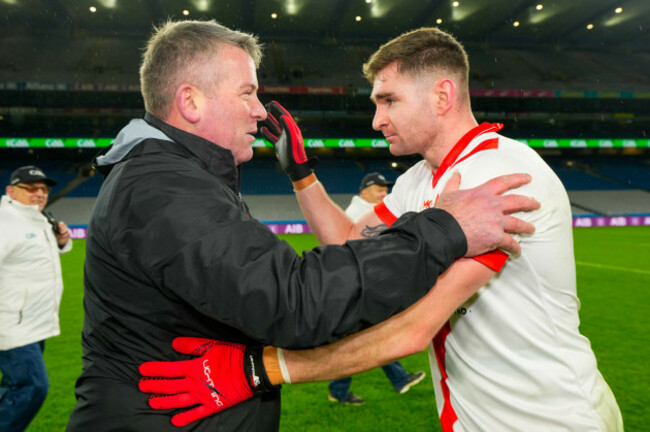
Ó Cinnéide highlighted the support the club had received from the club’s diaspora around the world and from individuals and clubs in other Gaeltacht communities across the country. After winning the semi-final in Páirc Uí Chaoimh the week before, he and his colleagues on the management team said that €5,00-€6,000 were needed to cover their expenses in Dublin.
Within an hour the campaign had raised €5,000, it had €91,000 the morning before the game and there will be more before long.
It blossomed and it grew and it didn’t stop and I think it gave the lads so much courage that they understood, and it wasn’t the money, but they understood that there were so many people behind them and that there was that kind of momentum and that the wind was in their sails as they went to Dublin.
“People from abroad, people who couldn’t have been home for the game, giving five hundred dollars here and three hundred dollars and things like that, it gave you so much encouragement and we were trying to get something done.”
Along with the money that came towards the club, messages of support came from every Gaeltacht community in Ireland.
“We all know that the Gaeltacht has a large diaspora and we had great support from Gaoth Dobhair down to Cléire and receiving texts and supports and things like that throughout the week.
We were always telling the lads throughout the year that if you give the people of the Gaeltacht something to hold on to, they will follow you more strongly than regular supporters.
“We knew that since 2004, the people of An Cheathrún Rua and Gaoth Dobhair were in Croke Park that day because language is what connects us.”
Ó Cinnéide had a busy day on Monday, preparing for the trip home to west Kerry and had a radio programme to do at noon. He is the manager of RTÉ RnaG in the southern region and An Saol Ó Dheas is the flagship programme for the region every day from Monday to Friday. The programme was broadcast from the Mercantile Hotel today and a huge crowd from west Dublin was there, including the manager, Feargal Ó Sé, and the goat was being roasted
“We still don’t understand what we have done,” said Ó Sé while speaking on the programme. “It will live forever in our hearts at the club and the young footballers and the young children, they now have dreams and things to achieve in life.
“On behalf of the players and the management team, we are so proud of all that has been achieved so miraculously.”
This campaign has been going on for almost a year since the start of the campaign and the cards started to fall for the club when Dara managed to persuade Feargal to come back as manager. Feargal was a player and manager in 2004 and was trusted.
The campaign started with the Kerry West League in January and then the County League and County Championship. This year’s Kerry West League will not be long in coming. In between then and now, there will be celebrations to be had and, next Sunday, they will be putting aside the old rivalry with their neighbours in Dingle or Dingle themselves will be going to Croke Park to play in the All-Ireland Championship in the senior grade.
Although An Gaeltacht is under pressure like all other rural societies, with migration threatening along with a housing shortage, the society is still ploughing on and fulfilling their motto, ‘Spiorad (Spirit), Croí (Heart), Caid (Gaelic Football as played in Kerry from ancient times) and Teanga (Language)’.
However, when ‘caid’ was played in Corca Dhuibhne, it became a red war between the six parishes behind An Daingean, Fiontrá, Dún Chaoin, Baile an Fheirtéaraigh, Cill, Márthain and Múrach. Now that they are united under one banner, they still play caid. And that spirit is hard to defeat.
The renowned musician Cormac Ó Beaglaoich, was playing the concertina when the players returned to the dressing room. The music and songs and the team will continue on the way to Baile na Ngàl in the evening and the other parishes behind An Daingean and, indeed, it could continue for a long time to come.
The Journal’s Gaeltacht initiative is supported by the Local Democracy Reporting Scheme

To embed this post, copy the code below on your site












have your say