Sign in. It’s quick, free and it’s up to you.
An account is an optional way to support the work we do. Find out more.
Sign in. It’s quick, free and it’s up to you.
An account is an optional way to support the work we do. Find out more.

NEW COUNTER-TERRORISM laws will be on the statute books in a “period of weeks”, according to the Minister for Foreign Affairs Charlie Flanagan.
Flanagan attended a meeting with other EU foreign ministers in Brussels yesterday, where they discussed ways to boost cooperation to combat the threat posed by radicalised Europeans returning home after fighting in Iraq and Syria.
Speaking after the meeting he said that he was in daily contact with the Minister for Justice Frances Fitzgerald in relation to the terror threat.
He said that while Europe has a role to play as a collective, so do individual governments.
New anti-terror laws
The legislation due to be introduced shortly will see it being a criminal offence to direct or train those involved in “terrorist acts and terrorism”, said Flanagan.
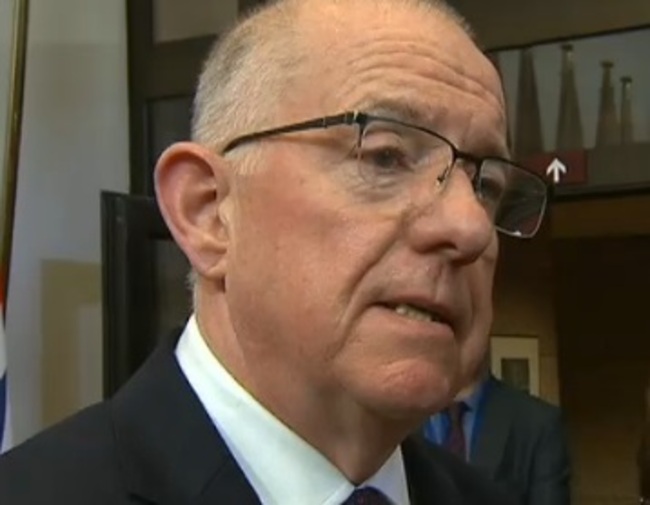
“There currently exists a power for the revocation of citizenship,” said the minister, which could mean the withdrawal of passports “in certain circumstances”, said Flanagan.
He said he would support this measure.
“Terrorism as we know is adaptable, it doesn’t remain static. Similarly our laws need also to adapt and change… I would expect this new legislation to be on the statute books within a period of weeks.”
Yesterday, before the EU meeting, Flanagan said that the terror threat to Ireland is low, but that “it’s important to remain on alert”.
‘Real and serious threat’
Flanagan said that EU states agreed to co-ordinate a response to the “real and serious threat” in Europe. This will include the sharing of information and data between EU countries.
Another issue Flanagan said he was “most anxious” to see progress forward is the sharing of information in relation to flights.
He said he would like to see Irishs MEPs take a lead role on the issue, which he said has been “on the shelf for a while”.
The response shouldn’t be security based alone, said Flanagan, who said it was agreed that other issues in terms of ensuring engagement with minority communities needs to happen, especially in large urban areas where there are areas of neglect.
Links must also be fostered between “friendly Arab states”, who have condemned “forthrightly acts of terror” that were seen in France and Belgium in recent weeks.

To embed this post, copy the code below on your site















have your say