Sign in. It’s quick, free and it’s up to you.
An account is an optional way to support the work we do. Find out more.
Sign in. It’s quick, free and it’s up to you.
An account is an optional way to support the work we do. Find out more.

Updated at 3.50pm
A NEW REPORT from the Organisation for Economic Co-operation and Development (OECD) has brought some unexpected news.
Schools that have put a big focus on boosting the use of ICT technology in the classroom may well have been wasting their time.
In the new report, entitled ‘Students, Computers and Learning: Making the Connection‘, the OECD has said, “countries which have invested heavily in information and communication technologies (ICT) for education have seen no noticeable improvement in their performances in PISA results (an educational test issued by the OECD) for reading, mathematics or science.”
Ensuring that every child reaches a baseline level of proficiency in reading and mathematics will do more to create equal opportunities in a digital world than solely expanding or subsidising access to high-tech devices and services.
How does Ireland fare?
This comes as good news for Ireland, as we were found to have one of the lowest levels of computer use of any country included in the figures.
It was found that 63% of Irish teenagers use computers at school, but only spend an average of 16 minutes a day online, compared to the OECD average of 25 minutes, and well below the high of 58 minutes in Australia.
In Ireland more than 90% of students have access to at least one home computer and internet use outside of school came to 74 minutes, one of the lowest of the countries examined.
Weekend usage was also low, coming to just 100 minutes.
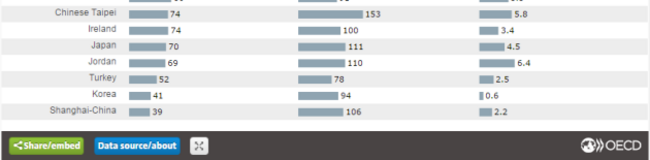
Chart showing the amount weekday minutes, weekend minutes and percentage of extreme internet users in different countries
What should schools do?
The OECD has recommended that schools find “more effective ways” to bring technology into teaching and the classroom.
Similar to traditional learning, a gap exists in digital learning based on how advantaged and disadvantaged students perform.
Speaking about the findings, Andreas Schleicher, OECD director for education and skills, said, “Technology is the only way to dramatically expand access to knowledge. To deliver on the promises technology holds, countries need to invest more effectively and ensure that teachers are at the forefront of designing and implementing this change.”

To embed this post, copy the code below on your site













have your say