Sign in. It’s quick, free and it’s up to you.
An account is an optional way to support the work we do. Find out more.
Sign in. It’s quick, free and it’s up to you.
An account is an optional way to support the work we do. Find out more.
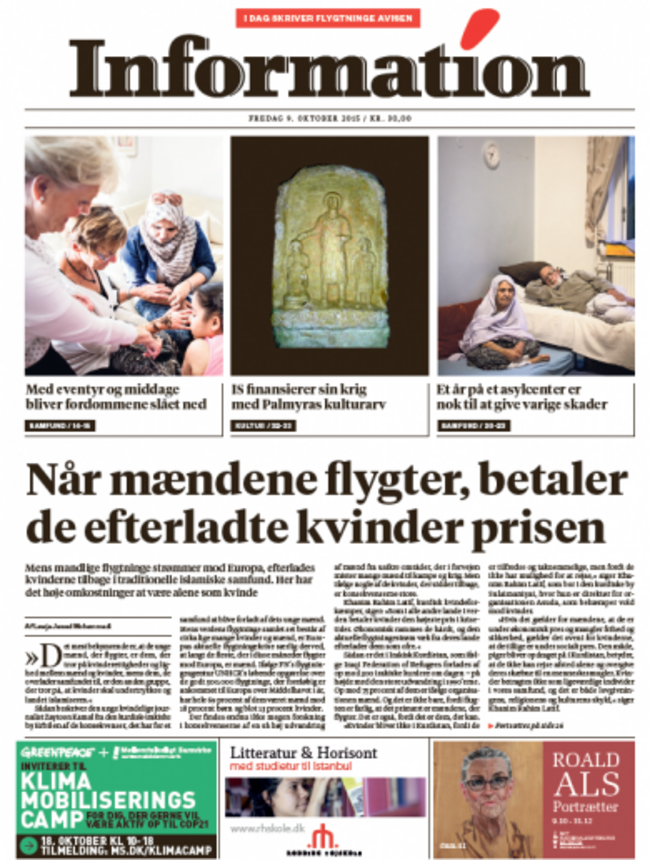
THEY FLED TO Denmark from Syria, Somalia, Afghanistan, Kurdistan, Kenya and Thailand, and today they have the run of one of the country’s main newspapers.
Left-leaning daily Dagbladet Information gathered 12 refugees – who are also professional journalists – to edit, write and research a special issue published this morning.
The 48-page edition tackles, among other issues, the difficulties faced by asylum seekers looking for legal work, the cost borne by women left behind at home and common myths surrounding the refugee crisis.
The issue paints a vivid picture of life in asylum centres and the arduous journey to Denmark, as well as budding friendships between Danish and refugee families.
Refugees in Denmark have “their own history, destiny, professionalism and dreams for the future, but we hear them rarely and sporadically”, an editorial in the paper said.
For politicians, refugees only a problem to be solved as soon as possible, and most prefer to do it without looking them in the eye.
The refugee journalists, most of whom have only recently arrived in Denmark, tell their own stories in profiles on the paper’s website, describing their upbringing, education and new lives.
“Everytime I see a football or a pair of football boots, it hurts. He had just tied his shoes and was heading out to play when the bomb exploded,” said Zeinab Uzbak, 35, from Afghanistan, whose son was killed in revenge for her writing.
Hardline stance
Denmark’s right-wing government, which came to power on a platform of tougher asylum rules, has adopted a hardline stance towards refugees since its election in June.
Last month, the country closed its border with Germany and halved refugee benefits.
The Danish immigration ministry drew criticism around the same time for placing a reported €34,000 worth of advertisements in several Lebanese newspapers warning of regulation changes designed to make the country less attractive to migrants.
But public opinion has largely opposed the government’s anti-refugee rhetoric, with recent polls showing the majority of Danes want the country to be part of the EU’s plan to distribute refugees around the continent.
Additional reporting by AFP

To embed this post, copy the code below on your site












have your say