Sign in. It’s quick, free and it’s up to you.
An account is an optional way to support the work we do. Find out more.
Sign in. It’s quick, free and it’s up to you.
An account is an optional way to support the work we do. Find out more.
LAST UPDATE | 9 mins ago
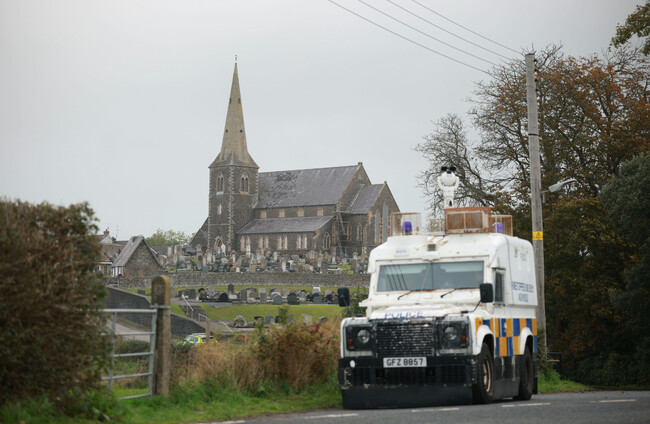
NORTHERN IRELAND SECRETARY of state Chris Bryant has banned the controversial Drumcree parade following a two-week standoff between Orangemen and nationalist residents of the Garvaghy Road in Portadown.
It comes after PSNI chief constable Jon Boutcher asked him to review the Parades Commission determination over the parade.
The Parades Commission ruled two weeks ago that the march could pass along the mainly nationalist Garvaghy Road with restrictions in place, leading to a deadlock between residents and the Orange Order.
But the parade did not happen because of a large protest on the road, with local residents saying its goal was to intimidate them and dredge up memories of the Troubles.
In a statement, Bryant said he had spent the last fortnight trying to get a mutually acceptable agreement between the two sides, hosting several rounds of negotiations at Hillsborough Castle last week and maintaining frequent contact with both sides since then.
“Unfortunately it has not been possible to achieve a local resolution. I have therefore been intensively considering all options for bringing this dispute to an end,” he said.
“I don’t think anyone wants to see the stand-off continue into another weekend, with the consequent risk of protests spreading to other parts of Northern Ireland and the further deterioration of community relations.”
Bryant confirmed that he had reviewed the initial determination made by the Parades Commission following Boutcher’s request, adding that he had consulted both on the matter.
The chief constable has advised me that it would not be possible to enable the procession to happen without a major intervention which would carry an unacceptable risk of serious injury, disorder and a wider contagion effect across Northern Ireland.
“The Parades Commission have also advised me that ’While ultimately a matter for the courts to determine, the Commission is of the view that, in light of this current assessment by the Chief Constable, the original determination does not now have enduring legal effect.”
Bryant continued: “Consequently, and in the interests of wider public interest and safety, I’ve come to the conclusion that the circumstances under which that decision was made have now changed considerably.
“As a result, the procession cannot go ahead as it was determined.”
In a statement shared on X, Northern Ireland First Minister Michelle O’Neill welcomed the “very positive” news.
We have just received confirmation that there will be no unwanted Orange march down the Garvaghy Road. https://t.co/HYOTpgWCl4
— Michelle O’Neill (@moneillsf) October 9, 2026
She paid tribute to the residents, who she said have shown “remarkable strength and dignity over these last few difficult weeks”.
“There will be an enormous sense of relief right across that community today, and I want to send you all my love and continued support.”
She also commended people from across Ireland “who stood firm, who stood together, and who played their part in protecting the peace and progress that has been achieved across the last 28 years.”
O’Neill added: “The people of the Garvagh Road now deserve the opportunity to get on with their lives, free from sectarianism and intimidation and fear. Our society will not be dragged back into the past. There is no going back. Not now and not ever.”
Taoiseach Micheál Martin said the announcement would come as “a significant relief to the community on the Garvaghy Road”.
The announcement by Secretary of State Chris Bryant regarding the Parades Commission’s determination in relation to Drumcree will come as a significant relief to the community on the Garvaghy Road. https://t.co/Z4sVh8W54y
— Micheál Martin (@MichealMartinTD) October 9, 2026
“It will also be a relief to people in communities right across Northern Ireland, and the island of Ireland as a whole, who were concerned that the situation at Drumcree, if left unresolved, could have had lasting negative repercussions on community relations and reconciliation,” he said.
“These past weeks have been very difficult for the people living along the Garvaghy Road and I am glad that there is some closure for them today.”
Meanwhile, DUP leader Gavin Robinson called Bryant’s decision “a direct result of republican agitation, mobilisation and the looming threats of potential violence”.
“These decisions are a mistake, and send profound signals that the country should be run on force of numbers and who shouts the loudest,” he said.
“The framework for both parading and protests now lies in tatters and the rule of law has been fundamentally undermined.”
Robinson said O’Neill “has been perceived to act as a substitute to judges whilst appearing to demand that both the Chief Constable and the Secretary of State do as she demands”.
He said Bryant must now explain “what his Government intends to do to restore confidence in the rule of law” and called on the PSNI to pursue evidence of lawbreaking “without fear or favour”.
“The investigation must follow the evidence wherever it leads and the PSNI must be transparent and keep the public informed of each step in the investigation.”
O’Neill confirmed earlier that she was invited to a police interview over her attendance at a protest on Garvaghy Road.
Other members of Sinn Féin as well as People Before Profit representatives in the North also received letters from the PSNI, who confirmed on Thursday that they had begun sending them to those suspected of committing criminal offences at the protest which led to the march not going ahead on 27 September.
In his statement, Bryant said respect for the rule of law “is fundamental to our society and I am grateful to those who have behaved peacefully and legally and sought to ease tensions in their respective communities”.
He said those who have acted unlawfully should face the consequences of their actions.
Bryant also called for all protests, rallies and demonstrations to be stood down, saying there is “no excuse for a continued ratcheting up of tensions”.
Asked if he feared a backlash or potential disorder from the loyalist community over the decision, he told the Press Association that it would have been better if a settlement had been reached between the two sides, but that they were unable to get that over the line.
“I really hope that people will look at this and go ‘look nobody wants to return to the problems we had in Portadown in the 1990s’, roughly 21 people were killed in and around Portadown at that time, including three young lads who were murdered when their home was firebombed,” he said.
“So I think it’s really important that we have calm heads now.”
“It’s always easy to stir up a sectarian grievance, much more difficult to calm it down, but I hope that this gives the people of Portadown a moment when they have a little bit of a breathing space and they don’t have the whole of the world’s attention on them.”
Earlier today, the deputy district master of Portadown District Orange Lodge Alastair Power said there would be “serious consequences from the Unionist community” if Bryant intervened to stop the parade down Garvaghy Road.
“We have said to the Secretary of State from the start of this process that we are expecting him and the chief constable to do the right thing for the law-abiding people that is up here on this hill and allow the parade to go through,” he said.
Asked how he would react if Bryant did intervene and stop the Drumcree parade, Power said: “Well, we will obviously not be very happy with that.
“It will be the first time a secretary of state has intervened on a lawful parade in over 30 years, and returning it. But we are law-abiding citizens, so we will have to abide by the law.
But there will have to be serious consequences from the Unionist community on that.
Power said he would not rule out further court action to challenge an intervention if it did happen.
“That’ll be up to the district and our legal team to see where we stand on that, but probably will be an option that we will use,” he added.
The Parades Commission had sought advice from the PSNI to make its initial decision. The force explained they had no information that the parade would result in “disorder or violence”, an assessment the commission said it gave “significant weight in the consideration of the potential for disorder”.
Lawyers for the residents had sought to appeal the Parades Commission’s decision to let the march go ahead.
The Court of Appeal was due to deliver its judgment in the matter on Monday.
With reporting from Jane Moore

To embed this post, copy the code below on your site














have your say