Sign in. It’s quick, free and it’s up to you.
An account is an optional way to support the work we do. Find out more.
Sign in. It’s quick, free and it’s up to you.
An account is an optional way to support the work we do. Find out more.

IN 2003, PHOTOGRAPHER Thilde Jensen was living in the hectic urban environment of New York City when she began to suffer from chronic sinus and ear infections that only kept getting worse.
One day, while waiting in traffic, she noticed a car ahead of her spewing out exhaust fumes and simultaneously felt a sore throat and fever coming on.
It was then she knew that the pollution and chemicals around her were making her ill.
“The urban life I so carelessly had enjoyed now turned into a toxic war-zone,” she tells Business Insider.
Soon after, she was diagnosed with Multiple Chemical Sensitivity, or Environmental Illness (EI), a condition where patients suffer chronic symptoms when in the presence of low-grade chemical exposure.
Jensen joined a small group of people whose lives had become completely debilitated by the toxins present in everyday life.
As a photographer, Jensen’s immediate response to her situation was to document it with her camera.
She met other MCS suffers and set out to tell their stories. Her acclaimed book of this work, titled “The Canaries,” was released this year.
Here’s a selection of Jensen’s story and images:

After the initial incident with the car exhaust, Jensen’s symptoms continued to get worse while she lived in the city.
There seemed to be new triggers every day. Soon, the ink from a newspaper would make my head go spinning, perfume and cleaning products felt like breathing paint stripper and gave me strange tingling sensations.
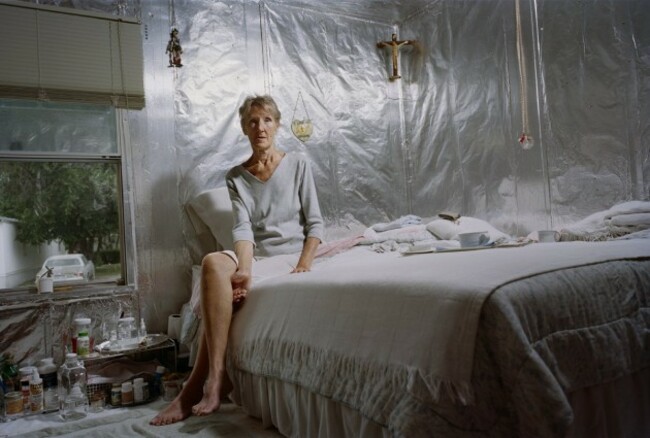
Like many sufferers of EI, Jensen was forced to abandon her job and life and move away from the city.
She lived in the woods of upstate New York in an open tent. She soon began to experience sensitivity to electrical objects as well, and was no longer able to use computers or phones. The scenario “felt like a prison sentence,” Jensen says.

“For the following seven years, I would wear a respirator whenever I re-entered the man-made world,” she explains.
Many others with EI shared that necessity.
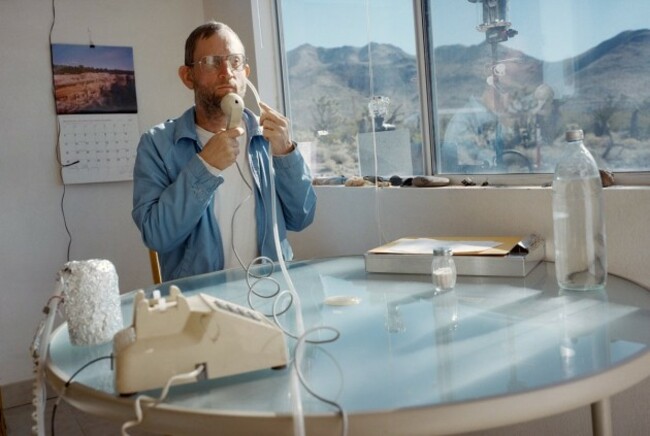
Soon after she got sick, Jensen began to photograph her predicament and seek out others with whom she shared symptoms, such as the man above, who is using an ultra-low-radiation telephone.
I would just photograph as a way to comprehend the surreal nightmare my life had become.
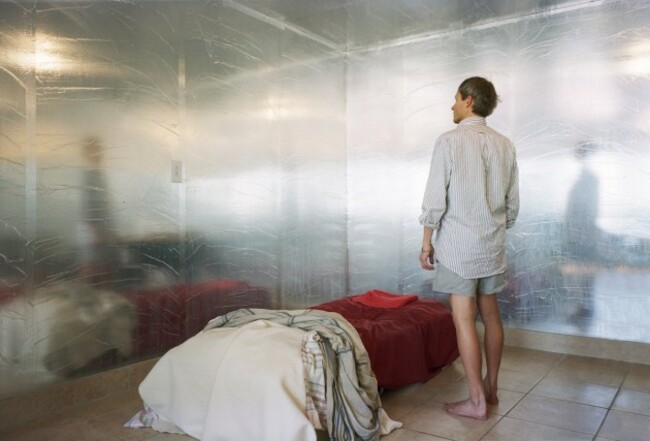
They allowed Jensen into their homes, which is a very private place for someone with EI. Sufferers often wrap potentially toxic things, including entire walls of their house, in aluminium foil in an effort to keep out chemicals.

Jensen says that while there are chemicals in our air, our food, and the objects we purchase at all times, there are steps that everyone can take to lessen the effects of EI.
We can choose products that are nontoxic or less toxic and fragrance-free.

It has been reported that EI symptoms are much more tied to mental perceptions of chemical presence than the effects of these chemicals themselves.
No matter the cause, the physical manifestations of the condition are severe and crippling to all affected.
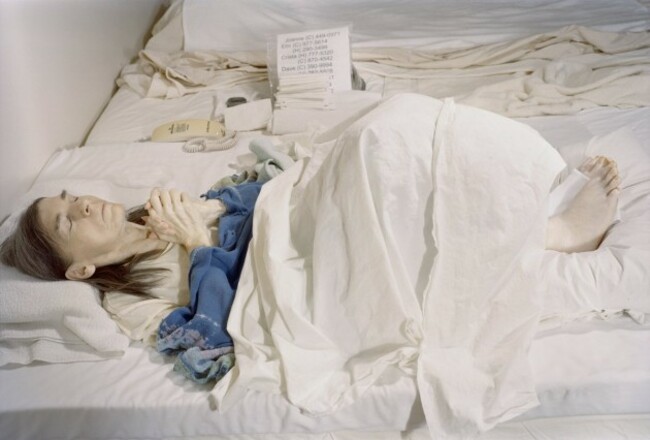
Jensen feels that as both a photographer and a sufferer of EI, she has the unique ability to “tell an otherwise untold story to a wider audience.”
It was always my aim to create awareness about the existence of Environmental Illness.

To embed this post, copy the code below on your site














have your say