Sign in. It’s quick, free and it’s up to you.
An account is an optional way to support the work we do. Find out more.
Sign in. It’s quick, free and it’s up to you.
An account is an optional way to support the work we do. Find out more.
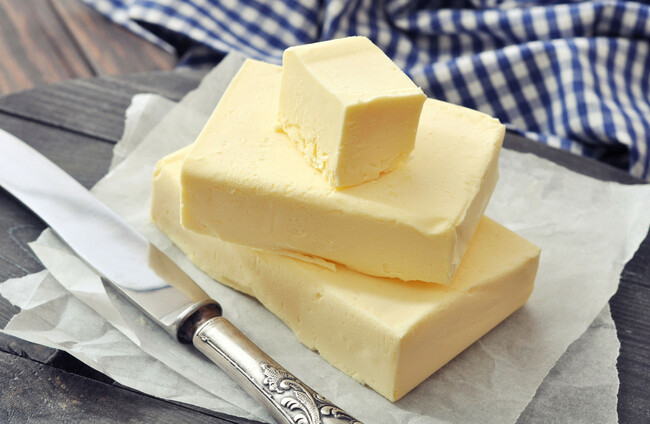
IN WHAT WILL come as a surprise to absolutely no one, businesses tend to compete with each other.
One company sells something for €10, another sells the same for €9 to try to win customers, and so on. Most of these disputes are barely noticed, accepted as the normal cut and thrust of the marketplace.
So why has a row over Irish butter sales grabbed so much attention that the government is being asked to weigh in?
On one side, we have Ornua. A co-operative which sells dairy products on behalf of farmers and processors, it is probably best-known for its Kerrygold butter brand.
On the other, we have Tirlán. It is another big cooperative formed from Glanbia, a Kilkenny-based company which is now one of the world’s largest nutrition businesses.
Ornua has about 14,000 farmer members, while Tirlán has approximately 5,000.
To confuse matters somewhat, Tirlán is actually part of Ornua.
In addition to the ‘normal’ farmers, Ornua also has seven major processor members. Tirlán is one of these, with the power to nominate directors to Ornua’s board.
But despite this, these seven co-op members still run their own businesses. And this is where the friction comes in – because Tirlán owns Truly Grass Fed, a premium dairy brand which it sells in the US, in competition with Ornua’s Kerrygold.
Previously, the US prices were fairly close, with Kerrygold coming in a bit more expensive. Reportedly about $19.28 (€16.72) for just under 1kg of butter, versus $16.90 (€14.66) for Truly Grass Fed, a difference of about 12%.
However, Tirlán recently struck a deal with Costco, a huge membership-only retailer which sells products in bulk at low prices.
Tirlán’s butter will be sold at about $15 per kg – substantially lower than Kerrygold, which costs about $21 per kg.
This is the heart of the ‘war’ between the two.
Many Irish farming groups are concerned at Tirlán effectively undercutting Ornua, worried that the move could devalue the status of Irish grass-fed butter.
The ultimate concern of many co-op members is that, if retail prices are driven lower, they will end up being paid less for their dairy.
The Irish Creamery Milk Suppliers Association (ICMSA), a group first established to tackle reducing milk prices, is one of those against the move.
“It won’t be the executives concerned who suffer: it’ll be the dairy farmer,” Denis Drennan, the groups’ leader, told the Irish Times.
Meanwhile, the Irish Farmers’ Association (IFA) has come out with similar concerns, saying the Tirlán deal risks triggering a “race to the bottom” which would ultimately slash the margin farmers’ get for their milk.
It’s also worth noting that private-label brands such as Costco have become increasingly popular in the US amid cost of living pressures. This means the Costco deal is seen as very important in the American market, which is a key one for Irish dairy farmers.
Ornua as a whole has revenues of about €3.5 billion. Approximately $1 billion (€860 million) of this comes from US retail sales of Kerrygold – so the sector is absolutely crucial for the co-op.
For its part, Tirlán has said that the move is good business for its 5,000 member farmers.
The organisation also said that ‘developments’ are ‘market-led’, extending beyond ‘any single supplier, source country or brand’.
Effectively, it is saying that it isn’t the responsibility of any one organisation to set the price of Irish butter. The product will naturally set itself at a level that makes sense in the market.
This also isn’t the first time these concerns have arisen. There were similar worries when Tirlán first launched Truly Grass Fed in the US back in 2018.
The fears back then were similar – that the brand would undercut Kerrygold’s ‘gilded’ position in the US market. The tension resulted in the cancellation of a directors’ meeting at Ornua at the time.
Ornua said at the time that these concerns were overplayed in the media.
However, it appears much less sanguine about the latest Costco deal, saying that competing on price alone is not “in the best interests of the farmers we represent”.
It said the move risked devaluing “the Irish grass-fed butter proposition” and added that the greatest long-term value for Irish dairy farmers “is created when our members continue to invest through Kerrygold”.
However, it’s worth noting that despite the competition, Kerrygold’s sales have increased. It first cracked $1 billion in the US last year, showing its revenues are still rising. The milestone came years after the launch of Truly Grass Fed.
But the latest Costco deal still stings as it has the potential to be a bigger market mover.
It also goes against Tirlán’s initial marketing of Truly Grass Fed. The company previously said it intended to sell the butter at a “price premium above Kerrygold” and for the two to not be direct competitors.
Of course, it’s also worth noting the political element. Irish dairy farmers are viewed as being a key part of the country’s cultural heritage.
The government typically supports them when it can, which is why it is being asked for its take on the deal.
Smartly, it said it does not comment on private commercial arrangements, sidestepping the temptation to play favourites.
A final important point worth noting. Tirlán’s Costco deal will apparently give it a better price per kg of product than the one Tirlán receives from the Ornua.
While Ornua can argue about the importance of keeping Irish butter as a premium product, it’s not hard to see why Tirlán would feel it has to accept the best deal on the table for its 5,000 members.
Realistically, with the government not wanting to get involved, the Tirlán deal will most likely proceed as planned.
If there are signs in a year or two that Kerrygold’s US sales suffer, and Irish dairy farmers get lower payouts as a result, then the pressure on politicians could ramp up significantly.
There is evidence that this could happen. Exports of Irish butter to Germany have halved over the last four years. There are concerns that this is due to competition on pricing in Germany making the market a less attractive one for Irish co-ops.
But even if Kerrygold’s US sales take a hit, the more likely scenario is that there would be a push for Tirlán to strike some kind of new commercial deal with Ornua, rather than a complete 180.
Especially if the Costco arrangement is providing a better return to Tirlán farmers.
Ornua could take the ‘nuclear’ option and try to eject Tirlán as a member to discourage it from pursuing the deal.
But the most likely approach is the status quo – the Costco deal goes ahead, and all sides wait to see how the dust settles.

To embed this post, copy the code below on your site












have your say