Sign in. It’s quick, free and it’s up to you.
An account is an optional way to support the work we do. Find out more.
Sign in. It’s quick, free and it’s up to you.
An account is an optional way to support the work we do. Find out more.
Updated 5.40pm
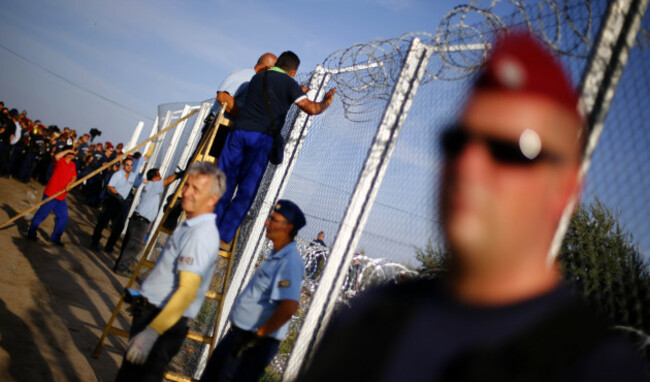
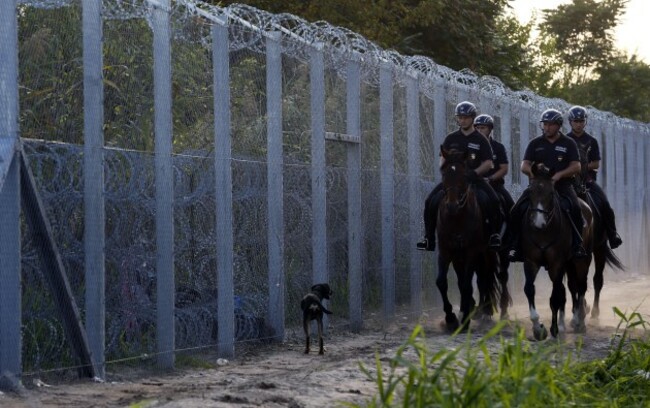
HUNGARIAN POLICE HAVE closed the main entry point for refugees entering the country from Serbia.
Around 20 police fenced off a 40-metre gap in a razor-wire barrier along the border by a railway line as other officers blocked the track.
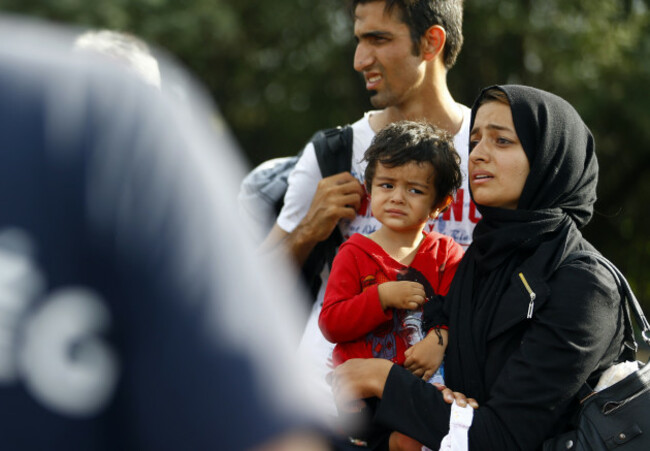
A growing group of several dozen migrants including many children, some in pushchairs, were stuck on the Serbian side of the border, with several women crying.
Austria has also said it will follow Germany’s example and temporarily reinstate border controls to cope with the increase in refugees coming into the country.
These developments come as EU interior ministers meet in Brussels to try to agree on quotas for redistribution of the massive flood of migrants fleeing war and upheaval across the Middle East and North Africa.
Military action
Member states also approved plans for military action against people smugglers in the Mediterranean, seizing and destroying boats to break up networks operating out of Libya, sources said.
The European Union launched a first, intelligence gathering phase of its EU NavFor Med operation in July but now it will be allowed to stop and if necessary destroy boats which have carried thousands of migrants risking their lives to get to Europe.
“The conditions have been met” to launch the new military phase, one European diplomat told AFP.
Traffickers
Many member states were reluctant to step up action against the traffickers for fear of getting embroiled in Libya where rival factions have been fighting it out for control since the ouster of longtime strongman Moamer Kadhafi in 2011.
EU leaders agreed however that there had to be a much tougher response, including the use of force, after more than 700 migrants drowned off southern Italy in April.
The second phase of the operation approved Monday still restricts EU NavFor Med to action in international waters.
Libyan territorial waters
A third phase involves military action against people smugglers inside Libyan territorial waters, aiming to destroy their boats and networks before they set sail.
This step is more controversial given the increased risks and requires at a minimum a UN Security Council resolution and preferably Libyan government agreement.
EU efforts to help establish a national unity government in Libya which could grant such approval have so far failed but special UN envoy Bernardino Leon reported at the weekend that progress was being made.
Russia, current president of the UN Security Council, has said a resolution could be adopted this month but it would only apply to action on the high seas.
More than 350,000 people have risked their lives crossing the Mediterranean this year, according to the International Organization for Migration, with nearly 3,000 losing their lives.

To embed this post, copy the code below on your site















have your say