Sign in. It’s quick, free and it’s up to you.
An account is an optional way to support the work we do. Find out more.
Sign in. It’s quick, free and it’s up to you.
An account is an optional way to support the work we do. Find out more.
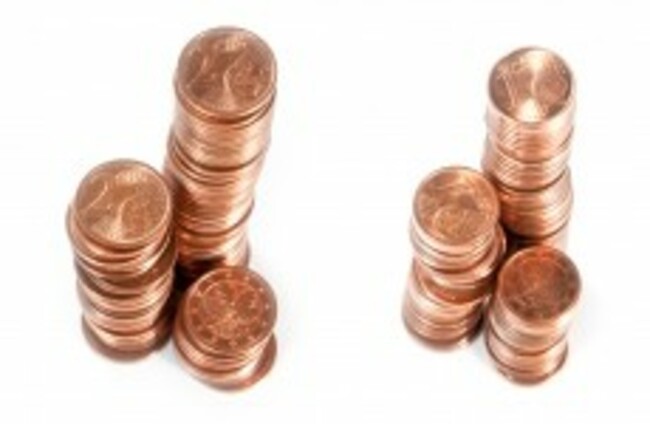
THOSE CUTE LITTLE one and two-cent coins, that are expensive to make and a nuisance for many, may be a thing of the past, the European Commission said today.
Small and awkward they may be: but they have also cost the eurozone about 1.4 billion euros since 2002, the Commission said.
The Commission outlined four possible scenarios for the coins, based on a cost-benefit analysis of their use – the status quo, making cheaper versions, and a speedy or a gradual withdrawal. It said public attitudes are mixed overall.
Spike in inflation
Some people fear a spike in inflation if the small coins – which account for about half of all coinage in circulation – are dropped since prices would inevitably be rounded up.
While the cost of minting the coins would argue for withdrawal, that needs to be “balanced against other considerations, notably the negative reaction from the general public that rounding rules could trigger,” a statement said.
The Commission will now take up the issue with member states to see whether a “clear preference emerges on which to base a legislative proposal.”
Since January 2002, euro area member states have issued more than 45.8 billion one- and two-cent coins, the equivalent of 137 coins per capita, according to the Commission.
Just last month, a pilot project was recommended by the Central Bank of Ireland that would see an Irish town experiment with scrapping the coins.
- © AFP 2013 with additional reporting by Michelle Hennessy.

To embed this post, copy the code below on your site
















have your say