Sign in. It’s quick, free and it’s up to you.
An account is an optional way to support the work we do. Find out more.
Sign in. It’s quick, free and it’s up to you.
An account is an optional way to support the work we do. Find out more.
LAST UPDATE | 24 Mar
THE GOVERNMENT IS set to introduce temporary cuts to fuel taxes from midnight.
The move follows a sharp rise in fuel costs linked to disruption in global energy markets in the Strait of Hormuz, with prices edging back towards the highs seen during the 2022 energy crisis.
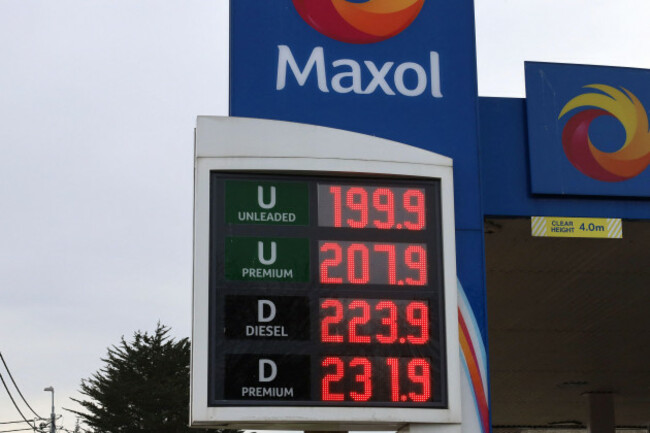
It will be a welcome move here, as petrol prices have rapidly been approaching €2 per litre, while diesel has surpassed €2.25 per litre at many forecourts.
Here’s how the Government cuts will translate to the pumps.
Tánaiste and Finance Minister Simon Harris is set to bring proposals to Cabinet today to cut excise duty on petrol by 15 cent per litre and on diesel by 20 cent.
On top of that, the State also plans to pause the National Oil Reserves Agency (NORA) levy, a small 2 cent charge, bringing the overall reduction to around 17 cent per litre for petrol and 22 cent for diesel.
The excise measures are expected to take effect from midnight, once approved by the Dáil, and will initially run until the end of May.
The price reduction may not be seen by consumers straight away however, as fuel bought by forecourts in advance may sit in storage for days. The lower prices will likely only kick in when forecourts start selling fuel carrying the lower excise duty.
Excise duty is one of the main taxes built into the price of fuel.
It’s a flat charge applied per litre, and it makes up a big chunk of what you pay when you fill up.
By cutting excise, the Government can quickly bring down prices at the pump, even if oil prices themselves remain high.
It’s a lever that’s been used before, most notably in 2022, when fuel prices shot past €2 per litre after Russia’s invasion of Ukraine.
A lot more than you might think. Around half the price of a litre of diesel, and slightly more for petrol, is made up of taxes and levies.
That includes excise duty, carbon tax (currently about 16c per litre for petrol and 18c for diesel), VAT, and the small NORA levy. VAT is charged as a percentage, so when prices rise, the tax take rises too.
It means that relatively small changes to tax can make a noticeable difference to what you pay.
The excise cuts are expected to apply from midnight, once a financial resolution passes through the Dáil.
The NORA levy change will take a little longer, as it needs legislation, but the Government has said it wants that done quickly.
For now, everything is being framed as temporary, with a review pencilled in for the end of May.
The price reduction is not expected to be immediately evident at the pumps.
Vincent Jennings, CEO of the Convenience Stores and Newsagents Association, told The Journal that filling station owners won’t reduce their prices until they have sold the fuel they bought at the previously higher prices.
Depending on how busy a filling station is, Jennings said it will take between two to ten days for the previous fuel to be sold and fully replaced with the lower priced fuel.
Jennings said the time lag has nothing to do with ‘gouging or profiteering’. “Nobody can either sell, or be expected to sell at a price that’s lower than they bought it for,” he said.
The former forecourt owner said it is important for the government to communicate that there will be a lag between the excise cuts coming into effect and a change in the price of diesel and petrol.
“When the government says the price is going down, it’s important to reflect it won’t be immediately,” he said.
“The most important thing is for people to be nice and not abuse filling station workers.”
Yes.
There’s also a diesel rebate scheme on the way for hauliers and bus operators, which will be backdated to January.
The idea there is to ease pressure on supply chains and stop higher fuel costs feeding into prices more broadly.
Additional supports for pensioners, carers and people with disabilities are also expected, though the details are still being worked out.
With additional reporting from Sophie Finn.

To embed this post, copy the code below on your site















have your say