Sign in. It’s quick, free and it’s up to you.
An account is an optional way to support the work we do. Find out more.
Sign in. It’s quick, free and it’s up to you.
An account is an optional way to support the work we do. Find out more.
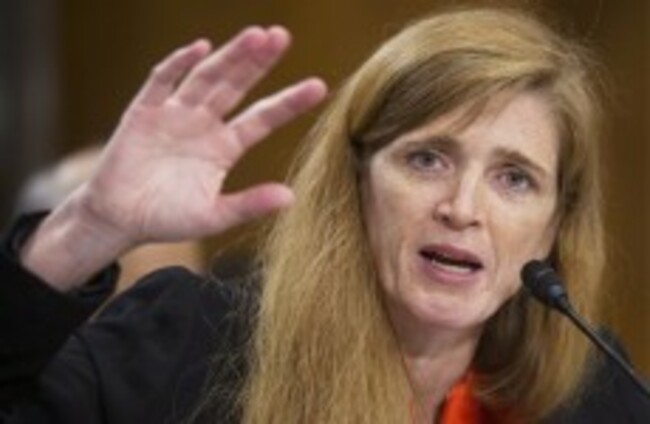
US PRESIDENT BARACK Obama’s choice as U.N. ambassador acknowledged Wednesday that the United Nations was unlikely to take decisive action soon to halt Syria’s civil war, and she pledged to work to eliminate what she termed the organization’s anti-Israel “bias.”
Irish-born Samantha Power also said that if confirmed by the Senate, she would try to make the UN more efficient and stand up for freedom.
Her confirmation appeared likely. Several Republicans said Power would be a force in New York even as they pressed the former journalist, human rights campaigner and author to clarify several decade-old comments that the lawmakers suggested were critical of Israel or the United States.
Power, who won a Pulitzer Prize for her examination of the US response to genocides in Rwanda and Bosnia in the 1990s, long has advocated military and other forms of intervention to prevent mass atrocities. She helped make the case for Obama’s decision to deploy American air assets to oust Libyan dictator Moammar Gadhafi from power in 2011.
On Wednesday she expressed little confidence in the UN authorising any similar intervention in Syria but said Washington could act on its own, if necessary.
“The failure of the U.N. Security Council to respond to the slaughter in Syria is a disgrace that history will judge harshly,” Power told the Senate Foreign Relations Committee.
Overall, the hearing amounted to a surprising show of bilateral backing for Power, a 42-year-old mother of two. She was a senior foreign policy adviser during Obama’s first term and served as the first head of the Atrocities Prevention Board he established last year.
“America is a light to the world,” she said, refusing to delve deeper into a 2003 article she wrote for The New Republic. She also rejected having ever referred to Iran’s contested nuclear program as an “imagined crisis,” as stated by Senator Marco Rubio.

To embed this post, copy the code below on your site













have your say