Sign in. It’s quick, free and it’s up to you.
An account is an optional way to support the work we do. Find out more.
Sign in. It’s quick, free and it’s up to you.
An account is an optional way to support the work we do. Find out more.
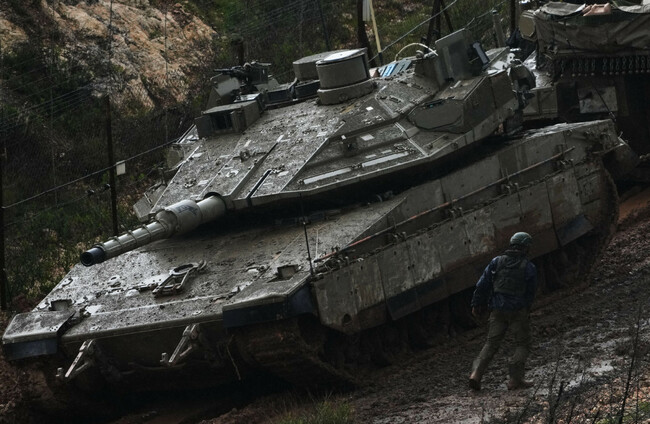
ISRAEL’S ATTACK ON southern Lebanon is now being called what it is, an invasion.
The Associated Press (AP) published an editorial update yesterday that outlined the reasons why it has chosen to use that word to describe what Israel is doing in Lebanon, where it has sent ground forces ostensibly to fight against Hezbollah.
AP is a major American news agency whose style guide is used by media outlets around the world. Its articles are carried by newspapers and broadcasters across the United States and beyond.
Hezbollah launched rocket attacks across the southern border into Israel at the beginning of the US-Israeli war against Iran, which the group said was a retaliation for the killing of the Iranian supreme leader, Ali Hamenei.
In response Israel has been bombing Lebanon, not just in the Hezbollah-controlled south but also in Beirut and other parts of the country.
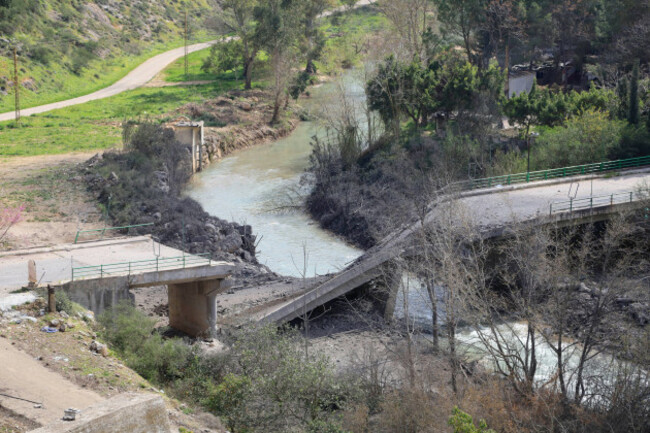
Israel has also invaded the south of Lebanon, sending tanks and troops across the border, where Irish peacekeepers are based, and blown up bridges on the Litani river, largely cutting the south off from the rest of the country.
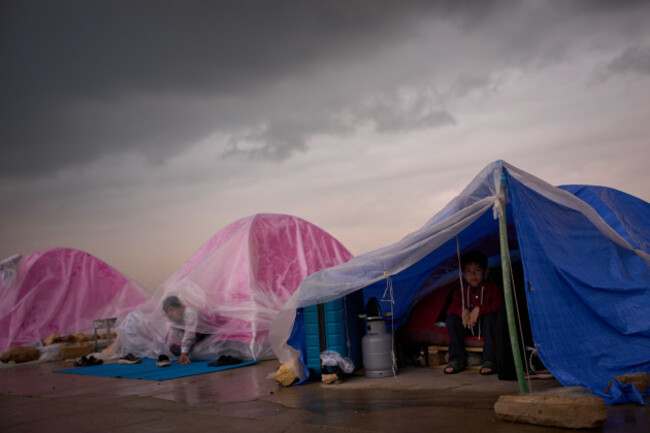
More than one million people have been displaced from their homes, according to the International Organization for Migration.
“The situation remains extremely worrying and the risk of a humanitarian catastrophe… is real,” Karolina Lindholm Billing, the UN refugee agency’s representative in Lebanon, said today.
Explaining the use of the term invasion, the Associated Press said:
“Israeli officials, including the defense minister, said they want to take control of the entire area south of the Litani River — some 20 miles (about 30 kilometers) north of the border — and that displaced Lebanese residents will not be allowed back until Israel decides that its northern border is safe.”
Israel’s defence minister, Israel Katz, said this week that “hundreds of thousands of residents of southern Lebanon who evacuated northward will not return south of the Litani River until security for the residents of the north is ensured”.
Israel’s finance minister, Bezalel Smotrich, said the Litani should become the new border between Israel and Lebanon.
“The current war in Lebanon must end with a radical change, beyond the vanquishing of the terror group Hezbollah,” Smotrich told a meeting of his Religious Zionism party.
“The Litani must be our new border with the state of Lebanon, just like the ‘Yellow Line’ in Gaza and like the buffer zone and peak of the Hermon in Syria,” he added.
The “yellow line” in Gaza has become the de facto border between Israel and the Palestinian enclave, where the Israeli military continues to carry out a genocide despite a nominal ceasefire agreement with Hamas.
Today, Israeli army spokesperson Brigadier General Effie Defrin said more troops are needed to establish the so-called “buffer zone” in Lebanon.
“On the Lebanese front, the forward defensive zone that we are creating requires additional (Israeli army) forces,” he said, noting that Israel is fighting across multiple fronts, including the West Bank, Gaza in Palestine and at another “buffer zone” in Syria.

To embed this post, copy the code below on your site















have your say