Sign in. It’s quick, free and it’s up to you.
An account is an optional way to support the work we do. Find out more.
Sign in. It’s quick, free and it’s up to you.
An account is an optional way to support the work we do. Find out more.
THE ISRAELI MILITARY has launched a new phase of its offensive in Gaza, carrying out what it called “extensive strikes” across the besieged territory.
At least 100 people were killed in the latest wave of airstrikes, Gaza’s civil defence agency said.
Since Israel resumed its offensive on 18 March following a brief truce, over 2,985 Palestinians have been killed, bringing the total death toll to more than 53,000.
Most of the victims are understood to be civilians, with large parts of the enclave reduced to rubble.
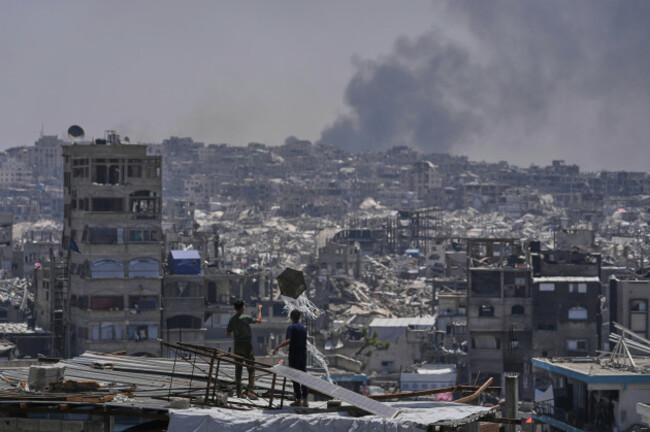
The Israeli army confirmed it had begun the “initial stages” of Operation ‘Gideon’s Chariot’, a plan it says is aimed at “defeating Hamas” and securing the release of remaining hostages. The military said it had struck over 150 targets across the Gaza Strip in the past 24 hours.
An Israeli official said yesterday’s bombardment was a preparatory action ahead of a larger operation.
Earlier this month, Israel’s security cabinet approved Operation Gideon’s Chariot, which reportedly includes a plan to seize full control of Gaza and relocate its entire population to a small southern enclave.
A defence official had indicated the operation would proceed if no hostage deal was reached by the end of US President Donald Trump’s Middle East visit, which concluded on yesterday.
Hamas had offered to release all hostages in exchange for a permanent end to the war – a proposal rejected by Israel, which instead sought a temporary ceasefire in return for the release of half the remaining captives and the group’s disarmament.
Far-right Israeli finance minister Bezalel Smotrich, who sits on the security cabinet, said the plan would see Gaza “entirely destroyed” and its population forced to “leave in great numbers to third countries”.
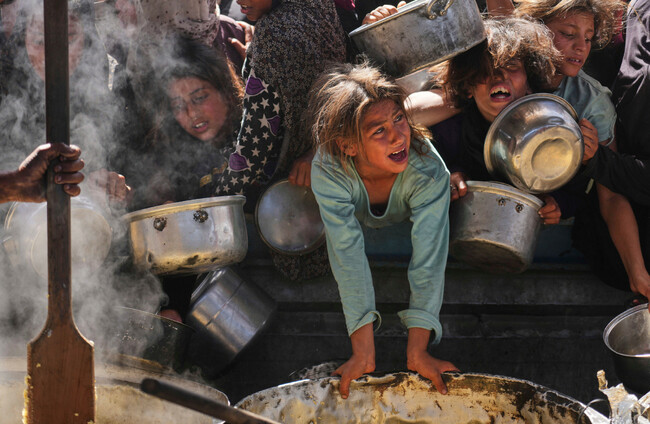
Israel has enforced a total blockade on Gaza since 2 March, blocking food, fuel and water. On Monday, a UN-backed report warned that one in five people in Gaza now face starvation.
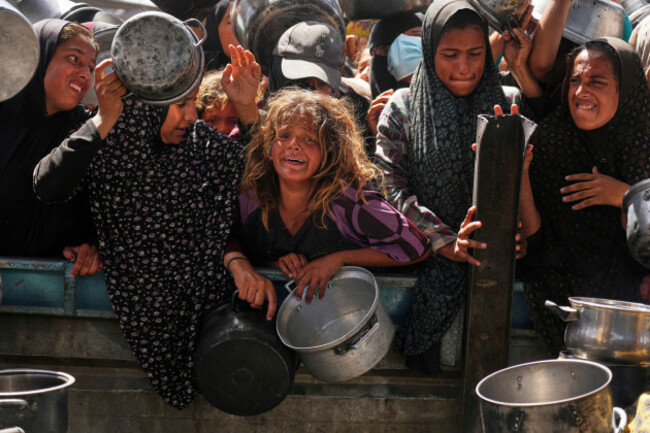
The resulting shortages of food and medicine have aggravated an already dire situation in the Palestinian territory, as families in Gaza have resorted to boiling grass and eating animal feed.
Oxfam’s Khalidi said that Israel’s actions represent a “total disregard for humanitarian norms”.
The renewed strikes have drawn widespread international condemnation. UN human rights chief Volker Türk accused Israel of trying to force a “permanent demographic shift” in Gaza.
“This latest barrage of bombs… and the denial of humanitarian assistance underline that there appears to be a push for a permanent demographic shift in Gaza that is in defiance of international law and is tantamount to ethnic cleansing,” he said.
Meanwhile, hostage families in Israel have criticised Prime Minister Benjamin Netanyahu for prioritising military action over diplomacy.
A leading campaign group warned that extending the war risked losing a “historic opportunity” to secure their loved ones’ release.
On Friday, Hamas urged the United States to pressure Israel to reopen border crossings and allow vital humanitarian aid.
The appeal came shortly after the release of Edan Alexander, the last known living US hostage, in a deal mediated by Washington but reportedly excluding Israeli officials.
President Donald Trump, speaking during a stop in Abu Dhabi, acknowledged the scale of the crisis.
“We’re looking at Gaza. And we’re going to get that taken care of,” he said. “A lot of people are starving.”
Regional leaders are expected to discuss the crisis at an Arab League summit in Baghdad this weekend, which will be attended by UN Secretary-General António Guterres and Spanish Prime Minister Pedro Sánchez, a vocal critic of Israel’s campaign.
Additional reporting from AFP

To embed this post, copy the code below on your site













have your say