Sign in. It’s quick, free and it’s up to you.
An account is an optional way to support the work we do. Find out more.
Sign in. It’s quick, free and it’s up to you.
An account is an optional way to support the work we do. Find out more.

HUMAN BEINGS GET a physiological high from committing murder, even a fake one.
That is the suggestion from a new study printed in the journal Emotion today.
The study, carried out by researchers from Harvard, Notre Dame, the University of Maryland and the University of California at San Francisco, asked 108 volunteers to attack a man to gauge how they reacted.
The study had volunteers attack a man by hitting his shin with a hammer, slitting his throat, shooting him and smashing his hand with a rock, as well hitting a fake baby on a table.
The “victim” used a pvc pipe under his pant leg and a rubber hand to ensure that they were not injured.
Another group was asked to do similar things, but not to humans.
They hammered nails, smashed nuts and cut bread.
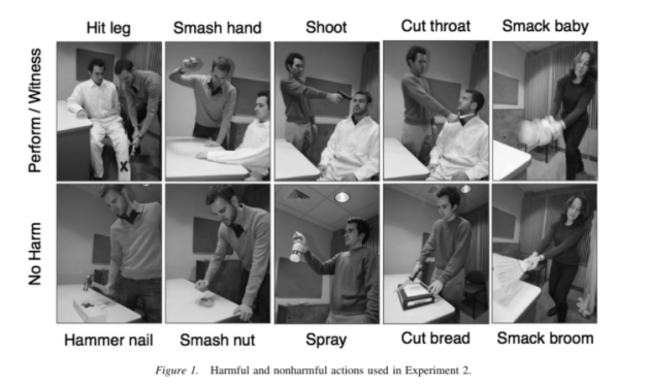
The study found that even when the participants knew the scenario was fake, their heart rate and blood pressure changed more than those who watched.
However, it found that people were also far more likely to be averse to causing harm to someone after committing or witnessing the acts.
The study also suggests that people fail to take into account the moral implications of their actions if they’re not directly causing harm.
When banal or novel actions lack motoric and perceptual properties associated with harm, they may fail to trigger an aversive response. Signing one’s name to a torture order or pressing the button that releases a bomb each have real, known consequences for other people, but as actions they lack salient properties reliably associated with victim distress.

To embed this post, copy the code below on your site












have your say