TheJournal.ie uses cookies. By continuing to browse this site you are agreeing to our use of cookies. Click here to find out more »
Dublin: 14 °C Thursday 20 June, 2013

Over 7,000 applied to retire from public sector last month

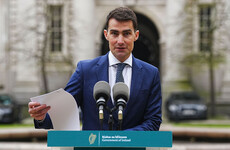
Brendan Howlin says that the number of staff in the public sector has fallen by more than the target set for 2011.

Image: Julien Behal/PA Wire

MORE PEOPLE RETIRED from the public service by the end of 2011 than had been expected by the government, according to the Minister for Public Expenditure and Reform Brendan Howlin.

Earlier this week, Howlin said that that the number of people in public service had hit 297,000 by the end of 2011, beating the 300,000 staff level the government had expected after retirements from the sector.

A further 7,406 people applied to retire from the public service by the end of February 2012, and the government has set a target of 294,400 staff in the public service at the end of this year. It aims to reduce that figure further in the coming years, dropping to 282,500 in the public service by 2015.

The reduction recorded for 2011 coupled with notified retirements to the end of February “indicates that the expected 9,000 ‘grace period’ retirement number will be exceeded,” he said.

He also said that the number of people who had made an initial declaration of interest in applying for retirement but had later decided not to proceed with their application “is not available centrally” for the overall public service. He added that he expects that figure “to be very small”, given the numbers who did proceed with retirement.

Numbers in the public service have dropped from 311,676 in 2007 to 296,872 in 2011.

Minister Howlin said that recruitment moratoriums currently in effect would continue except for “certain limited exceptions”, such as certain frontline posts, if a “sufficiently strong business case is made to my department”. However, public bodies would have to work out how best to redeploy their staff to continue providing their services:

Of course, responsibility for operational planning in the context of reducing resources rests in the first instance, with each Public Service body and its parent Department.

The Public Service Reform Plan and the Croke Park Agreement provide a range of mechanisms for discharging work including work reorganisation, changes to rosters or working hours, new methods of service delivery and redeployment of staff.

Read: Government spent €132k on ‘entertainment’ last year >

  • Share on Facebook
  • Email this article
  •  

Read next:

Comments (17 Comments)

  • They’d really want to get started recruiting front line services sooner rather than later.

    Reply
  • this country is top heavy with public servants but not the front line where they are needed just pen pushers on savage wages

    Reply
  • When they get the figures it would be nice to know how much this cost.ie gratiuity,top ups,rehiring and ongoing pension costs.

    Reply
  • How many of these “retired” nurses will sign up for agencies and be back at work the following day with both pension and lion share of hours thanks to their friendship with the nurse manager.
    This has been happening for years to the detriment of young newly qualified nurses.
    My woman is a psychiatric nurse, she has been forced into agency slavery and has seen her hours decimated thanks to the roster preferring those “retirees” who come back for another few years.

    Nothing illegal about it but it smacks of bulls**t.

    Reply
  • Ahh there’s gimpy now, good man Brendan how’s the new jax working out for you?

    Reply
  • OK, so the government wants to reduce the level of public sector workers, but reducing the numbers by pensioning them off makes no sense.. how can it, OK, there will be less people working, but the government (tax payers) will have to pay the same money out to the pensioners, so no savings to be offered is there?

    worst still, some are getting massive cash lump sums, a hugh strain on the tax payer!

    Reply
    • vim_to 02/03/12 #

      The figures from people who are in favour of this clearount and opposed have both indicated strong savings. Your reasoning that letting 9000 people will not engender savings does not compute in any way. They are not retiring on a similar salary. All new entrants are starting on salaries that are significantly lower than were previously given and there isn’t going to be that many of these replaced.

      Honestly how do you figure out it will not save money?????

      Reply
    • Simon, you are completely incorrect. The maximum pension for regular civil servants is one half of final salary and that’s if they’ve worked a full 40 years in service to the state.

      Reply
    • I agree with Simon. The pension lump sums mean that there will be no savings per retiree for 5-6 years. Also people will be promoted to fill vacancies meaning higher pay for many people. Higher costs instead of savings for many years.

      Reply
  • jimbo 02/03/12 #

    Well with a nice package who would not,then they go get a job elsewhere in the sector

    Reply
  • So they’re below 300,000 now?

    Greece has 150,000 public servants for a population of 11 million. That means Ireland has twice as many civil servants for half the population.

    I’m voting no.

    Reply
  • The taxpayer pays for everything in Ireland including for free travel on Irish Rail, Dart and Bus Eirann for most in the public sector. Their travel is subsidised and the ratio for full paying passengers is 1:1. Ie the one paying passenger is subsidising the person next to them. All this expense will have to stop. Civil servants and public servants pay for very little like golf clubs food travel etc.

    Reply
  • And what about the ones who have been re-hired on contract. We need, in all these things, the better sums, the cost savings, less the alternative costs. Ask your (non FG/Lab) TD to ask the question

    Reply

Add New Comment