TheJournal.ie uses cookies. By continuing to browse this site you are agreeing to our use of cookies. Click here to find out more »
Dublin: 6 °C Friday 24 May, 2013

Poll: Should State subsidies to fee-paying schools be cut?

What do you think?

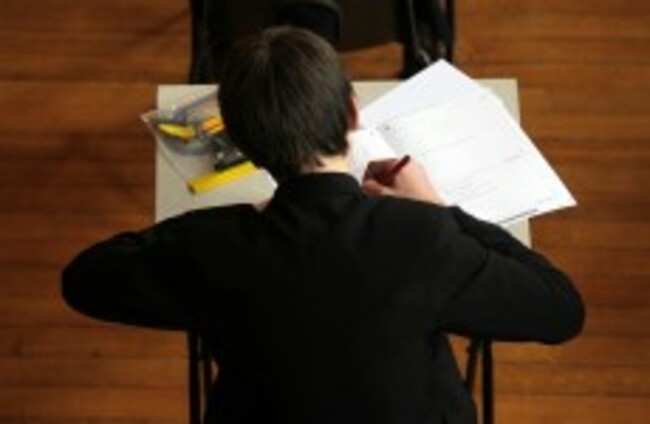
Image: David Davies/PA Wire/Press Association Images

A DISPUTE OVER whether the State’s subsidies for private schools should be cut in the next Budget has split Government opinion.

Labour junior minister Alan Kelly has described the annual subvention – totalling about €96 million – as “a luxury rather than a necessity” and said it would need to be examined as part of the €2.25 billion of spending cuts required in the upcoming Budget.

However, Minister for Transport Leo Varadkar has today insisted that not every parent who sends their child to a fee-paying school is “super rich” and that many make huge sacrifices to do so. Varadkar added that closing down such schools would cost the State money, the Irish Times reports.

What do you think – should the State’s subsidies to fee-paying schools be cut?


Poll Results:


Read next:

Comments (144 Comments)

  • Many a folk with chips on their shoulders present here today!

    Reply
  • I talked to a teacher in a private school recently who informed me that they get paid by the hour, if they don’t show up for work they don’t get paid. My daughter in a state school had a teacher missing for six months of the year on full pay while she was out. My daughters class was left unattended, subs sent in and other teachers kept an eye on them. Christopher talks about elitist education and I think thats not really true. If I choose to drive a ten year old car and pay a school 5/6k a year instead of changing my car am I not allowed to do that? Should I sell my home (Iwish I could) and seek a home from the council rather that live in my 3 bed elitist Dublin 12 home?

    Reply
    • If you live in South county Dublin and have a daughter there are relatively few options on the non-fee paying secondary school front, mainly due to poor planning: throw up a load of houses and hope new schools materialise seems to have been the strategy.

      Reply
    • There is a fundamental difference between education and goods like a car or a house. Education is, by its very nature, a social good. It influences the future of an individual on a profound level but also the future of the society as a whole, and as such that society has an interest in ensuring that educational resources are used effectively (for example that those with academic talent see it nurtured).

      Reply
  • I’m not wealthy. I moved my child into private school after she was often targeted by teachers with anti-Prod remarks. I felt I’d no option but to pay to have her educated in a school of our own faith. Her school had none of the facilities of State schools nor was the building state of the art as some claim. In theory, I believe private should mean private but in reality, I would not have been able to move my child had I to pay private fees akin to those paid in Britain.

    Reply
  • This is pointless, if the finding is removed the fee posting schools will simply split into a non fee paying school and a fee paying institute on the same campus, access to basic schooling will be free but the good stuff will be handled by the institute. The state will effectively end up paying more for the non fee section, while the same ‘extras’ supplied by fee paying schools now will be accessable in the institute as additional paid for programs.

    Reply
    • I wouldn’t have a problem with that as they wouldn’t be able to exclude people from accessing their teachers in the non-fee paying section.

      Reply
    • Not necessarily, many non-fee paying schools operate a preferential admissions scheme based on siblings or children of past pupils, or religion. I don’t doubt that it is entirely possible for the new non-fee section to set it up to maximise the number of students attending that would also pay for the institute.

      Alternatively the institute could operate in a more open manner and just provide additional grinds and tutorials on a private basis to all fee paying people regardless of what school they attend, in which case there would be no clear advantage to sending kids to the non-fee section.

      Reply
    • I would have just as big a problem with a school operating such an admissions system (although siblings of current students is an obvious practical exception to that rule). If they must operate a preferential admissions system then let it be based on merit assessed by a fair and transparent exam.

      The latter situation I would have no problem with. My problem isn’t with parents buying advantages for their children, we can never stop that. My problem is with taxpayers being denied access to the teachers they pay for based on their inability to afford exorbitant fees; I have a particular issue with schools then using those fees to attract the best teachers in the system, depriving the public, who pay their wages, the ability to be taught by them.

      Reply
    • Those teachers could be attracted into the institutes on that basis. I suspect that starting down this route will change the current status quo, but not necessaries in the way the proponents of removing the funding expect. I could see free market economics actually exacerbating the problem where the best teachers end up in the private sector, especially as the economic and demographic issues in this country put further pressure on wages and pensions in the public sector.

      Reply
    • Then so be it, such a situation would not only force our public schools to rise to the challenge in the face of such a stark and telling contrast, it would also produce no doubt innovative practises in these private schools that could be copied to the benefit of everybody. Most importantly, they would have achieved it on their own terms, without depriving taxpayers of access to services that they funded.

      I suspect of course that this won’t occur. If private schools were the educational palaces that they would need to be for this to occur then they would not fear withdrawal of public funds and offer threats of closure.

      We currently have the worst of both worlds, public funds going to support private schools which, it appears by their own admission now, do not provide a standard of education high enough to merit someone paying the full cost of it.

      Reply
    • Just to be clear I am ambivalent on this topic, but your goal appears to be access for taxpayers, to the superior quality of teacher. You have then cast doubt on the idea that private schools provide a higher quality of education (I’d go along with that), and yet you assert that by removing the government funding they superior teaching abilities would be now accessible to all?

      Now, are the people currently sending their kids to private schools not tax payers?

      Reply
    • MathsDebater, I think the fundamental problem with your argument is one that doesn’t even touch on the issues of paying fees per se.

      You’re effectively saying that teaching should be a profession with a set wage and that schools should not be free to reward/entice better staff with better salaries and conditions. That strikes me as inherently contrary to the basic ethics of labour management and an attack on the rights of workers.

      Reply
    • Nope, not entirely sure where you got that idea. I have no problem with schools offering some teachers better salaries to entice them. My problem is with public funds being used to pay the salaries of teachers who are then made inaccessible to the public.

      Reply
    • You seem to believe that either these schools will wither, or go fully public, or toe the line in some way and that the market for private education will evaporate. The service providers will continue to serve the market in a different way because the market exists, and good teachers will seek employment with the service providers because they will be paid better.

      If you want to address unequal standards of education go ahead and do that, I am all in favour, starting with shorter summer holidays which is shown to have a positive impact on social mobility, this will have no impact on social mobility but is is based on ideology and prejudice that is being skilfully manipulated into spin by the political sector.

      Reply
    • Maths doesn’t seem to be your strong suit, MathsDebater. If you support the rights of teachers to move from school to school based on who pays more, but you don’t support parents being allowed to put additional funds at the schools’ disposal to pay those teachers the extra money. Where the merry hell is the extra money supposed to come from?

      And how, even the tooth fairy, leaves an extra few grand under the school’s pillow to pay for it; how is that any different from what you’re complaining about — it’s still schools who can afford to pay more acquiring the best teachers and making them ‘inaccessible’ to students in other schools.

      Reply
  • So if all the kids currently in private schools turn up at the local secondaries looking for the place they’re entitled to, will the current system be able to absorb these?

    Reply
    • Kids in private schools and their parents would never in a million years go within an asses roar of a public school because it would be abhorrent and distasteful to their sensibilities. They love their posh schools and airs and graces. Please give me a break. Is that the only argument they can come up with. Never heard suck bullshit in my life. Snobs hate public schools so thats never going to happen.

      Reply
    • I agree Patrice. If every private school was to close tomorrow, firstly places wouldn’t be available for all the students that need them and secondly it would end up costing taxpayers more than it currently is. This would be due to the lack of private funds and fees previously paid by the parents. Also I think we could be fairly certain that children would suffer as a result of increased class sizes, and not enough funding per capita. You can be sure that the ‘voluntary contributions’ requested of parents would definitely increase to cover this. Now for the wealthy that would be fine, I’m sure they would manage; but for those who don’t have it….what then? I think it’s very unfair that children’s education should be sacrificed as a result. Sometimes the status quo is just fine.

      Reply
    • Christopher, your impression that parents put their kids into fee paying schools solely due on elitist reasons is absolutely false. There are many reasons to do so; geography, experience, past record in going on to 3rd level attendance.

      At the moment I am given to understand (I won’t state this as fact as I have not seen the data) that the state funding that goes to fee paying schools is less per pupil than what goes into public schools.

      I would agree that schools should all be of similar performance but that is not something you’ll ever truly be able to rate as some areas may traditionally have a lot of school leavers who wish to go into trades (and thus the was league tables are drawn up is not reflective of the full experience of secondary schooling.)

      There are certainly some measures around which parents should not be forced to choose to avoid or go to a particular school. Until we have a public system that is significantly more equitable I think it stinks of inequality to deny the public funding to any child’s education.

      Reply
    • Well Christopher you can stop commenting now. We’ve had enough of your rubbish. I went to a private school and my sisters went to a public school so your argument is pure and utter sh***.

      Reply
  • Every child in the State is entitled to an education. If parent’s wish to pay additional money for what they consider a better education for their child that is their right. (We all have the Health Service but if want “better” we get Health Insurance and no one cares) A lot of kids that go to private kids are not “super rich” the way people think. They live in standard 3/4 bed houses but the parents are willing to sacrifice items to send their kids to these schools.I know of one couple who smoked 40 cigarettes a day and gave up smoking to put there kid into private school. Thats €18 a day or just over €6,500 a year to pay for their childs education in a private school. Sometimes it is about choices.

    Reply
  • Derek 09/10/12 #

    I think may here get mixed-up up over the word “private”. The word here is not what it means in the UK which are fully private schools. Where as in Ireland they are more like “semi-state funded” being the correct term.
    Semi due to parents paying the remainder + more for their children’s education.

    If those demanding funds to be removed, these schools can not offer the extra services which parents are currently paying on top of the states contribution to all children for, so they will either have to ask parents for the extra €3,00 a year which the state previously provided and go properly “private” creating a larger divide and a true 2 tier system or end fee’s entirely, cut all extras services once provided by parents contributions thus become like a regular state sponsored school resulting in the tax payer now taking the full burden for the 35,000 or so pupils who would then require that additional €1,000 extra a year plus all the others costs the state provide to it’s schools. I’d imagine, some schools will go one way or the other, but in the end, the tax payer will be the one paying for this as the vast majority of parents could simply not afford the extra annual fee’s per child.

    This entire topic is more spin to create divide and distractions for the Government to be looking to be saving a few million, in reality costing the state more in the long run.

    Reply
  • This isn’t easy. Removing the subsidy will cost the State more money. The teachers are full time employees and the pupils still have to be taught. People do understand that bit – right?

    In saying that, the State should not be involved in promoting educational apartheid. A private school should be private and fund itself fully.

    Reply
  • I personally don’t like private schools and would not send my children to one, but if people are willing to cover all expenses of their childs education except of teachers salaries, why stop them?

    Reply
  • Calling this a ‘subsidy’ is somewhat misleading, if techincally correct. What most people seem to immediately assume is that money is being taken out of the system to give to people that don’t need it anyway,

    That’s not the case.

    Children in public schools are being given, on average, €4000 a year towards their schooling costs by the state. Parent who place their children in private schools are, effectively agreeing to see that state support cut to €3000 a year – freeing up €1000 per child to be spent on public schools.

    If we strip children of their entitlements and birthrights based on who their parents are, we risk having to cut the money available to other children by an additional 3.3 MILLION on top of all the cuts that have already been endured. How that’s in anyone’s interests, I don’t know.

    And I’d actually point out the farcical nature of assuming that just because someone manages to get together €3000 towards their child’s education they *must* be able to afford to pay €6000 instead. No other discussion would you see that kind of logic in — nobody think that if you can afford to pay €50 on petrol to and from work every week you’d be okay if it went up to €100 a week. Nobody assumes that someone paying a €1500 a month mortgage will have €3000 a month ready to hand over if it doubles.

    Reply
    • Your logic is confusing the main point. Arguing that fee payer free up money is nonsense. The state is paying these schools millions. If wealthy people have to pay more thats your choice. Nobody is forcing you to go to elite schools so please don’t try to make us swallow that your are doing us all a favour by keeping your apartheid elitist system. Its insulting to our intelligence (even those of us who didn’t get an elitist education).

      Reply
    • @christoper
      I think you missed Peter’s point. Just calling it “nonsense ” isn’t very helpful.
      It’s also factually incorrect

      Reply
    • Um. You seem to be under the assumption, Christopher, that I send my son to a fee-paying school. Nor, did I go to one myself*. I don’t. I think you’re showing a fair amount of reverse-snobbery prejudice here (and in your other posts by the way) in simply lashing out at anyone who perceive (rightly or wrongly) to not be in the same class as you.

      And I don’t think it’s insulting to anyone’s intelligence to expect them to have a basic level of primary school maths. Parents in fee paying schools hand over, on average, €3000. €1000 of which would otherwise have had to paid by the State had the child gone to a public school. That’s just *maths*.

      (*No wait, I tell a lie, I did two years of Infants in Loretto College in the city centre before moving out to Tallaght. I guess those couple of years of scribbling with crayons makes me an inferior human being eh?)

      Reply
  • As it stands the state provides an amount for every child’s education. In the case of fee paying schools this is slightly less than that paid to non fee paying schools. Why should those children,whose parents decide to pay some of their already taxed income towards their education, not receive the same ‘subsidy’ as those going to non fee paying schools?

    Reply
  • It’s not just people with wealth who send their children to private schools. Many parents save or go to the credit union to get the fees together, should they be punished for having thier childrens best interests at heart?

    Also, Peter has rightly pointed out that if these schools choose to come back into the system then the state will have to pay all the funding, thats more money out of the tax take to fund education.

    Reply
    • If they are taken back into the public system, then at least those teachers will be accessible by everyone; we will no longer have a situation where the best teachers are poached by the private system and then sequestered away from the public, in schools that sometimes cost tens of thousands a year to attend, while still being funded by that same public.

      Reply
    • I’d be curious about the average salary of a teacher in a public versus private school in Ireland. In the Quaker school I attended growing up, the teachers actually made less money than those who taught in a public school. Do you have any figures on this, MathsDebater?

      Reply
    • Yeah, I mean we’re talking about 35,000 kids here. If they’re all the kids of millionaire elitists Ireland must be doing better than we thought!

      Reply
    • But going to the credit union was your own choice to get an elitist education. Why should the bankrupt state support this “choice”.

      Reply
    • But that arguement can be made about a lot of things, Christopher. Why should we give child benefit when people chose to have children? (I totally disagree with that line of thinking, by the way, since Ireland should in no way tolerate child poverty?)

      But it’s important to understand the reasons why parents want to send their children to private schools, rather than insisting it’s always a “hatred of the poor.” Even if you’re opposed to the entrenchment of economic inequality (totally legitimate), do you not understand good reasons WHY parents would want their children to attend a school with a high percentage of students who move on to university?

      Reply
    • Because, Christopher, nobody IS asking for the taxpayer to support that choice. Nobody IS asking for the taxpayer to pay any extra money to it AT ALL. All that’s being asked for is for children not to be stripped of the money they would have GOTTEN ANYWAY.

      Reply
  • Parents who send their children to fee paying schools pay the same amount of taxes as they would if they were to send their children to non-free paying schools. Making them pay for tuition through fess would mean that they are effectively paying for the same service twice: first through their taxes, secondly through direct finance. By sending your child to a fee-paying school, you are simply supplementing the education the state already guarantees to your child as a citizen.

    On top of that, the Government must be careful not to cut funding to fee-paying schools in such a way that would result in parents deciding to send their children to non-fee paying schools instead, which the State funds to a far greater extent, meaning that the State would have to pay even more.

    By the way, I went to both a non-fee paying primary school and a non-fee paying secondary school. I agree that sometimes it may be the case that parents send their children to fee-paying schools because of snobbery, but that is not true off all cases and besides, it’s not the role of the State, in my opinion, to force people to be nice!

    Reply
  • Also should the state subsidy be taken away from kids whose parents pay for grinds after school? Every kid is entitled to the same basic education which can then be supplemented according to people’s means or choices.

    Reply
    • There is no state subsidy for grinds. Anyone can go get grinds, or not; their ability (or lack thereof) to pay for grinds does not (as it does in the case of fee paying schools) prevent them from accessing services that their tax euros are paying for.

      Reply
    • MathsDebater, that’s actually his point, as I understand it.

      If you pay extra for extra schooling, it doesn’t strip you of your right to the same basic schooling as everybody else.

      So, if we accept that principle for people who take grinds, why not for those who pay extra for extra schooling through the fee paying system (we certainly don’t go around assuming that if someone can afford grinds, then they must have the cash to pay for their child’s entire education)? Why strip them of the same basic schooling rights as everybody else?

      Reply
    • Peter, they still have the same rights as everyone else, they can go to the same schools as the rest of us attend for free. I have no problem with individuals choosing their schools, I have a problem with those schools having their teachers paid for by the state and then refusing to allow taxpayers equal access to those teachers.

      If schools want to make a profit, or be exclusive, then they can do so if they wish; just without the tax money of those they seek to exclude.

      Reply
  • There’s two things to consider here, the practical cost/benefit to the country, and the more ephemeral question of a just society.
    From a practical point of view, it is likely that cutting subsidies will push many schools from being partly state funded to totally state funded. Esentially if we give them an all or nothing ultimatum, counter-intuitively it will cost the state. This is well accepted across both sides of the debate.
    The second question of whethter it is a just society that allows fee paying schools is less clear cut. My own opinion is that parents who want to spend their AFTER TAX income on their children’s education, should not be penalised for doing so.
    I recall a case in the UK a few years ago, where a state school asked parents to contribute to a new computer centre. There was no big deal initially when the computers were bought, but it became a political problem as the school was now viewed as a “partly privately funded school”. Cue uproar and threat to pull all funding & close the school (it didnt close).
    So, if we want to live in a society that tries to drag our best schools down to the common denominator, the question is, are we also willing to pay the additional cost to the state that this will incur?

    Reply
    • But hey are not the “best Schools” listen to yourself. Discrimination is rife in your comment.

      Reply
    • meant They are not the best schools.

      Reply
    • Well, obviously “best” is a very subjective thing, Christopher. Ethos is important to some parents, Irish speaking is essential to others. But in terms of continuing onto third level, fee paying schools do seem to have an advantage. Does that make them the best? Not necessarily, but it’s understandable why that would be important to some parents.

      http://www.irishexaminer.com/ireland/glenstal-abbey-crowned-irelands-top-school-186633.html

      Reply
    • 9/10 top boys’ schools in SundayTimes 2012 school leagues are fee paying.
      6/10 girls’
      7/10 mixed
      A disproportionate weighting I would say.
      Not quite sure how you saw a discriminatory comment in there?

      Reply
    • Part of the “advantage”, though, is a)a middle class background and parents who are committed to their children’s education and b)an assumption in some parts of the country (South Dublin, I’m looking at you) that if you *are* a middle class parent with etc. etc. that you *must* send your child to private school or you are being somehow negligent/not interested in them getting a “good education”.

      I was genuinely surprised when I started college that almost all my Southside peers with similar backgrounds/parental jobs to me had gone to private schools. Meanwhile most of the girls in my Northside state school went on to third level, and many of them excelled at it. It’s not like if you don’t go to a private school you’ll be somehow academically deprived, or that all state schools are just for giving a bare minimum education to the proles. I’m sure there are terrible state schools, and there are many that don’t have an academic focus, but many of them are at least as academically “good” as their private equivalents, if less moneyed, and it pisses me off when private school parents are depicted as “but they’re just prioritizing their children’s education” – as if that’s the only way to do it, and if you can’t get the money together to send your child to private school, well, whose fault is it when they turn out to be an illiterate savage?

      Of course, they’re certainly buying other advantages for their children in terms of social contacts, cachet, etc., but that’s a whole ‘nother issue….

      Reply
    • Also, FWIW, I am yer classic middle class could-probably-afford-it overeducated house-full-of-books parent and really cannot envisage choosing private education for my children. Which is not that I can’t see a couple of circumstances under which it would seem reasonable – if I was a committed religious person and there was no free school of my chosen denomination in the area, or if my child had a particular educational need that wasn’t being met in any of the local state schools, then yeah, maybe. “Just because private schools are better”? Nope.

      Reply
    • (Also in defence of the abovementioned Southside parents, I think there are also fewer non-fee-paying schools per capita on the Southside, so in some circumstances it’s less “this school will provide a better education” and more “this school will provide an education that doesn’t involve my child travelling miles to school every day” .Though dunno how much of that is bad planning, and how much is lack of demand.)

      Reply
    • I would totally agree with you, Lisa, that most of the middle class kids whose parents send them to private schools would have an advantage because they clearly value education and would seek to instill that in their children…but I think the parents who do work hard to scrape up the money are genuinely motivated by wanting to give their children as many opportunities as possible (and yes, probably including the social network).

      The thing about this debate in Ireland is that I think so much of it is localised. The school situation in Dublin seems very different from a rural area and I disagree with Christopher that we can take one aspect of school without looking at the broader picture (there just aren’t a lot of non-RCC public schools outside of Dublin).

      Reply
  • Colin C 09/10/12 #

    For the record, I went to a public primary school, and went to a private secondary due solely to the generosity of that school in waiving significant amount of fees, as my own parents would certainly not have been in a position to send me there otherwise. Still, they needed to make huge sacrifices to pay for things like uniform, transport and such.

    What I know is that if these Labour ideologues had had their way back in the 80′s, I would not have had that opportunity as the cost would have been put firmly beyond my parents reach, and they could have afforded

    What the private school did for me, and what I saw as recognisably different to what my previous primary school classmates experienced, is that it swept away all mental and socially ingrained barriers to achieving my potential. Later in university, I knew people who had come from a public school in a different area of the city who openly admitted that his teachers pooh-poohed any desire shown by their pupils to go to 3rd level. The guy I’m thinking of was the exception who ignored them. Fair dues to him. I don’t know if I would have had the same reaction in his position.

    You want to talk about social cohesion and mobility – someone needs to have a serious look at the attitudes of some secondary school teachers in working class areas.

    This is one of the primary reasons I would consider private schooling for my own kids now, though I’m not wedded to it yet. I am saving to at least have the option. And this is my after-tax income, which anyone who tells me how I should or should not spend can go….

    Reply
  • The left wing crap in here would almost make you get sick.

    I went to a CBS in Roscommon. No facilities, basic subject choices.
    On to Uni & then teacher training college.

    I have worked in private schools for the past number of years.

    Many private schools have 5-9% of their students in the school on a social justice type programme where they don’t pay fees allowing them access to this “elite” system.

    Private schools are just schools with the facilities all schools SHOULD have. The world isn’t fair.
    I enjoy working in an environment with motivated kids, good facilities & a commitment to social inequality.

    Every child in Ireland has access to 1/19 if a teacher. It’s 1/21 if a teacher in the private sector.

    I fail to see how you could punish people who are already paying tax at 56% for using their ever decreasing net income to boost their children’s chances in life.

    Why should the middle – high earners pay for EVERYTHING for everyone?

    I’m all for an egalitarian society but only to a point. You can’t expect others in society to pay for your roads, education, healthcare, benefits through their taxes & then start playing the poor mouth and calling it unfair when they use their left over net income for a purpose like this.

    Someone mentioned the public don’t have access to private school teachers. That’s a stupid statement. I went to an all boys school. There may have been much better teachers in the all girls school next door, dies that mean I was DENIED access to them?
    Please…

    Reply
    • What gives your or others the right to a better education just because your parents either became very wealthy or inherited wealth. If people like you used your energy better towards building equality and making sure every school in the state is top class . For to long people born with the silver spoon have ruled every level of society in this country and this has to end. It should be all about equality,

      Reply
    • Colin C 09/10/12 #

      What gives you the right to dictate how people should spend the 48% of their after-tax income? Is there a Cllr Brendan Killeavy-approved spending-list that I can refer to to avoid falling foul of your indignation?

      I know all about SF/IRA justice and equality and won’t take any lectures on the score.

      “Who is the Catholic”. Kingsmill, 10/2/75

      Reply
    • Colin C 09/10/12 #

      Correction: 5/1/76

      Reply
  • Colin C 09/10/12 #

    What people forget is that it is not the super-rich who are up in arms about this proposal. The super-rich will absorb a few extra grand a year with no problem.

    The people I see up in arms about this are those for whom a loss of state funding would be the end of their own ambitions for the their kids. Many of us from, like I mentioned previously, working class / lower-middle class backgrounds.

    Reply
  • to Cian, I went to fee paying schools and we still had to pay for our school trips. I was definitely amongst the poorest in the school and many of my school mates were sons of politicians (one of them is a TD now just like his Dad). maybe that’s why the subsidies still exist?

    Reply
  • Why not go the whole hog and force any parent who pays for a grind to repay to the fully subsidy that is provided by the state? And let’s not forget the other elites, those parents who, with no consideration for social cohesion, organise student exchange to help their childrens’ foreign language development. And if this sort of thing is still not stamped out then maybe we should create a state quango to give out penalty points to those parental enemies of social cohesion. Eventually they will get the message and not make silly sacrifices for their childrens’ future at the expense of the equality of the johnny-blue-smoking, cider-swilling classes.

    Reply
    • Oh Colin please please don’t give us that condescending twaddle. Social cohesion my ass. Yea ok lets just continue to give the wealthy more perks and gee you are so right. How stupid we were not to recognise the great service ye are doing for us by keeping costs down and paying for all your elitist add ons. The only silly sacrifices the wealthy make are having to defend themselves to the vast majority who are not so privileged. As for your Cider-swiling jonny-blue-smoking comment. Would it be more in your line to say to Prosecco-guzzling coke-sniffing classes that are the rich and wealthy. Keep your class discriminatory venom to yourself.

      Reply
    • Colin C 09/10/12 #

      Never had the pleasure of coke-sniffing or prosecco-guzzling myself. But while we’re dealing out stereotypes, I think you might agree that the stereotype of the “elite” attending these schools is as accurate as the johnny-blue smoking proles who don’t.

      It’s easy to see the millionaire financier dropping his son off in the Merc. The middle-class Mum who is sacrificing everything to get her daughter what she sees as the best education, or the rural protestant farmer who is taking charity handouts from the church to send his son to board in the only available non-catholic secondary school in the munster are not so visible.

      Private schools are the patch. What I would really like is genuine free schools for all – where poor teachers are sacked, and good ones handsomely rewarded. But that is not going to happen. Just look at ASTI’s reaction to the revised Junior Cert program to see that despite their best efforts at PR, the interests of the teaching unions are deeply divergent from the interests of educating kids to their maximum potential – be they working-class, middle-class or one of these fabled “elite”

      Reply
    • Colin, I think your views on the ASTI’s reaction to the JC reforms might be based on the assumption that the reforms are all good. There are good elements, no denying that but Quinn is being crafty here. I’m sure I’ll get red thumbed for that – but I will say that as a NQT I have no particular love for how the ASTI are complicit in the creation of a two-tier system in not fully protecting new entrants.

      Other than that – I recognise the irony that Christopher appears to have missed. Christopher, you can’t seriously be still claiming that everyone in a fee paying school is loaded? And you can’t surely be saying that people who’s parents pay extra to send their kids to fee paying schools deserve to be discriminated against by removing support for those kids that every other child in the state gets?

      Reply
  • Private schools are for profit enterprises, they should not be receiving taxpayer money and then refusing to allow some taxpayers to use the services they are paying for without also paying often exorbitant fees. If there were actually a market for fee paying schools in Ireland then they wouldn’t require state subsidies.

    If you want your child to have a school set on rolling acres of land where they take school trips to India (as they do in Brian Cowen’s Alma Mater) then you should shoulder the cost of that yourself, not put a significant proportion of it on the shoulders of the taxpayer.

    Reply
  • I’m sick of this ,, how is a loreto full of rich ppl just because they saved for year to give there kids a chance , there are just working class ppl struggling to get by ,,, nothing more

    Reply
  • To take away half the funding from a school is ridiculous, especially when the vast majority of the 100million odd they plan to cut out pays teachers salaries. It they want private schools to pay teachers salaries also then deem the teachers private sector and take away their public pension accordingly.

    Reply
  • Some of these schools cater for religious minorities (i.e. non-Catholics). If there was a proper secular schools system in place, there wouldn’t be as much of a need for these schools. Until the Catholic Church hands over (at least) the vast majority of the schools it controls to the State, then parents of Anglican/Methodist/Presbyterian/other religious backgrounds will feel the need to send their children to these private schools.

    Reply
    • This isn’t about religion – it is about the wealthy who can afford to pay their fair share but are being subsidized by the state to create class division.

      Reply
    • There still isn’t a need for it, the state can, and would continue to, subsidise non-catholic schools in the same way as it funds all other schools, those schools would simply not be able to charge fees.

      The majority of fee paying schools are not secular.

      Reply
    • Una can you define “fair share”? The wealthy carry the bulk of the nations tax burden already what is fair? Is it fair to take away government subsidies for their kids while taxing them more to pay for other kids education? Is it fair to take away all their child benefit while taxing them more to pay for people who couldnt afford to raise kids but had them anyway? Do their children not have the same rights as every other child in the country?

      Reply
    • They may not be secular, but a lot of them do cater to minority religions. I would be uncomfortable with sending any children to Catholic schools, and unfortunately, that might mean paying for an alternative if I end up living in a very rural area.

      However, I can see a very good argument that the Irish government should tie this money to a certain amount of subsidised/free places for students from less wealthy backgrounds.

      Reply
    • They do have the same rights as everyone else Cian, they can feel free to go to a normal free school if they wish, like anyone else. If they want the bells and whistles of private education then they can pay for those, themselves, without help from taxpayers who are denied access to those luxuries made possible by their tax money.

      Reply
    • “The wealthy carry the bulk of the nations tax burden”. Hah!
      The wealthy receive the bulk of the nation’s wealth in grants, subsidies, back-handers and all the rest and let us not forget all wealth is created by workers.

      Reply
    • Cian what planet are you on. The disadvantaged low paid and middle earners and poor are the people actually pay more. As a percentage they give most. We all know in this recession the top earners have had their incomes increase and the lowest in society have had massive cuts and their quality of life and services. Don’t give me this bullshit that the rich pay the most. look at top paying consultants. This government won’t even cut their wages they are so afraid of them.

      Reply
    • @ Ciaran,from the god squad………
      Think you commented on the wrong story mate,us normal people are concerned about our children’s education,not about that hocus pocus you seem to be caught up in.

      Reply
    • @christopher
      Please explain “as a percentage they pay most”
      I genuinely dont understand how you arrive at that. A low earner on €22,000 pays €2,500 in tax. A comparatively high earner on €60,000 will pay a little over €20,000 in tax.
      That’s about 11% for the low earner and 33% for the high earner.

      Reply
    • @Christopher top 10% of earners in Ireland pay 60% of the nations tax income. That figure is surprisingly concentrated into the top 5% but I don’t have the figure to hand.

      Reply
    • @ Cian Doherty

      Since the 1980’s taxes on the wealthy have been falling. Taxes on the rich are currently at a 20 year low.

      Reply
    • The RC church can hand over as many schools as they want but that wont change any
      thing.

      Anglican/Methodist/Presbyterian/and those of other religious backgrounds want to send their kids to schools with an Anglican/Methodist/Presbyterian ethos.

      Reply
    • I don’t think that’s necessarily true, Dearbhla. I’m from a minority Christian background and I’d be perfectly happy with my children attending a secular school. There are just as many people from those backgrounds who aren’t religious as there are Catholics who have left the church and don’t wish to send their children to RCC schools.

      Reply
    • No one has a right to religious education at the expense of the state.

      Reply
    • Ciaran how do you explain that even in areas where there are interdenominational schools-community, comprehensive and vocational,parents choose to send their children to schools which cater for religious minorities?

      Reply
    • @Dale – I’m not from the “God Squad”. The vast majority of the State’s public schools have a Catholic ethos. If many of these schools dropped this Catholic ethos, parents from religious minorities won’t feel the need to send their children to these boarding schools.

      Reply
  • I am wondering does anyone know the legalities of cutting the subsidies from a private school . Surely under the constitution every child is entitled to an education so if the government cut the subsidy without supplying these children with a viable school place surely then that is against the law??? Now I am just speculating and am open to being corrected. Also wouldn’t the parents/taxpayers in this case have a legal right to challenge the extra money given to disadvantage schools as it would mean that children from a predominately social welfare areas (no taxes paid) are being supplemented by taxpayers whose own children are being denied their basic rights?????

    Reply
  • Colin C 09/10/12 #

    And by the way, that public school I mention about is in Alan Kelly’s own constituency.

    Reply
  • If this funding is to be pulled those parents who work to send their kids to private school must at least be provided with a marginal rate rebate on related fees. How else can this decision be considered equitable other than upon the basis than since you work hard & earn a decent income you must pay my for my kids because I can’t/won’t and I resent any advantage you bless your own kids with.

    Reply
    • It creates a two tiered system. One for the people who can afford it and one for those who can’t. The assumption is that there’s a better quality of education on offer in a private school, which is why parents pay extra for them. In reality, there’s the added bonus of having an influential network deriving from your time in the school. The argument is that it defeats the goal of equal social mobility for all if access to the top tier of education is based on an ability to pay.

      Reply
    • Colin C 09/10/12 #

      Kevin, 2-tier systems do not exist because people choose to go private – whether it’s health or education. Two-tier systems exist because the systems provided by the state are often hopelessly inefficient and ineffective, and create layers of bureaucracy that serve to do nothing more than perpetuate itself to the benefit of the “insiders” in that system.

      It would be impossible to have a two-tier system in health or education if those running the public systems delivered a top service, and which is measured by outcomes rather than by the quantities of cash they are capable of consuming.

      Private schools are a reflection that a significant number of people believe that paying for their childrens’ education will put their interests a little further up the usual pecking order of trade unions and bureaucrats who dominate every other aspect of publicly-provided services in this country.

      Reply
  • For the record- I went to public schools from national->secondary complete the with shitty school uniform, overcrowded, outdated buildings etc etc

    I really don’t like the way everything is now targeted at the “wealthy”, “super-rich”, “elite” etc. These buzzwords are what Sinn Fein and Labour live for. What is wrong with people being successful? Does it automatically mean you don’t pay taxes, live in mansions, take 10 holidays a year and eat caviar on the hour??

    It’s all bullsh1t and I am sick of all the crap that the lefties pump out, rounding up support via propaganda.

    Success has such a stigma in today’s society where if you make something of yourself, have paid your taxes, employed people and created opportunities for your family that you now deserve suspicion and accusations.

    People forget the top 10% of earners contribute in excess of 70% of the total tax revenue, so give them a break. These ”mega-wealthy” people probably 100′s of 1000’s of people in the Irish workforce?

    I am not for one second suggesting that people who have contributed to Ireland’s economic downfall (bankers, auditors, politicians, regulators) should escape criticism. I think they should face serious custodial sentences akin to Bernie Madoff stateside.

    Should private schools should receive state funding? I think so, do their students not then work in Ireland and pay their taxes? A potential reduction in funding may be appropriate but removing it completely could be very bad for everyone involved.

    I think there are sectors in this country that need greater reform than education namely, health, social welfare and justice.

    Reply
  • Subsidising fee-paying schools (no matter what ethos) is subsidising an elitist education system, in other words another transfer of wealth from the poor to the rich. We need a fully secular egalitarian meritocratic school system, properly funded through progressive taxation from playschool to 3rd level.

    Reply
  • Colin C 09/10/12 #

    As with anything, you’ve got to ask yourself what the intent of removing the state payment to private schools would be.

    1. As a money saving exercise
    Clearly this does not achieve that objective. If effectively tells parents of privately-schooled children to keep their money, and not dare spend it on their kids’ education. Net result is either the same pool of money spread across more children, or less money being spent on the same children – depending on how you look at it. As a cost-saving measure, it fails.

    2. As a tool of social engineering
    First of all this assumes that the education system is a tool of social engineering first, and a tool of education second. I vehemently disagree with this, but it is clear that for some posters this is a legitimate prioritisation. Clearly some people want the secondary education system to be about promoting their own ideologies, whether that is mandatory secularism or class deconstruction. It’s fine to hold your own opinions on that, but let’s not be so arrogant as to assume they are self-evidently “right”. Even then, you have to question whether this would be effective in the social engineering goals, because short of outlawing private education, removing the state payment is only going to make private schools more exclusive.

    3. Because everyone is suffering
    See 1). This only makes everyone suffer a little more. In other words, it’s called cutting off your nose to spite your face. It’s an emotional, illogical argument.

    Reply
  • The suggestion that these schools will close down without the funding is ridiculous.
    People who scrimp and save to put their kids in private school should put that energy into helping public schools. Better education for all.

    Reply
    • Yes I agree its pathetic. Can just see the them now going to the community colleges and yummy mummy dropping them off in her Mercedes. Please don’t insult our intelligence. We all know the wealthy love their exclusive schools where they don’t have to mix with common rabble (as they see non wealthy people).

      Reply
  • The bigger question is why is there subsidies paid to private schools at all. A private schools is basically a private company and if it can’t survive on its own it fails. I think they can operate without the subsidies but like private companies at the moment cuts have to be made, wages, expenses, travel costs etc.

    Reply
  • The state has a duty to educate its children. This should not be influenced by the choice of school. We all know that education is not free – nomatter what school you chose you will end up paying. Yet segregating schools on the basis of fees, ethos or religion is a bad message for any government to send…

    Reply
  • Again like children’s allowance the same argument. Propping up the wealthy with state money. Disadvantaged schools have to struggle to pay for heating and materials and sometimes they have no heating but yet its ok for the state to give the wealthiest people in the country millions to support their already privileged kids. They should not get state money. And this ridiculous notion that if that happens these people will send their kids to the public system is so stupid it defies logic. We all the snobbery class wouldn’t let their little darlings within a mile of ordinary kids not so privileged. The whole reason these private schools exist is to facilitate the rich in avoiding working-class kids who predominantly attend public schools. It is an apartheid educational system that panders to the wealthy and makes sure they get the jobs and careers and continue the wealth of their families. It selects individuals not on merit but on class and status. Meritocracy is the myth they use to continually promote this discrimination against those who are disadvantaged in society.

    Reply
    • Not true disadvantaged schools receive more funding than regular public schools. Look up ‘DEIS schools’. I went to one and I remember my career guidance councillor saying it was helpful if you were applying for a grant or the access programme. They receive more funding for extra teachers and facilities. You’ve also made the incorrect assumption that everyone who goes to private school is wealthy. There are a lot of middle class families who send their kids to these schools and would send them to a public school if the state wasn’t covering some cost of wages. If they cut the subsidy they need to be prepared to put the money towards regular schools as they get an influx of new students and class sizes grow. Your argument is based on stereotypical ‘rich bashing’ and you need to ground yourself in reality and consequences before you
      comment any further.

      Reply
  • Its not these Schools provide a better education , IMO they are a Club, I think yo will find that the relationships that are built in these schools through attendance and sports create bonds between the students which continue into business and politics…

    It would be interesting to see the % current of industry leaders and politicians that went to those schools ..

    Reply
  • You know what’s a luxury and not a necessity in our modern day education system both Religion and Irish classes

    Reply
  • Nothing is wrong with being successful Matt, but the question is how people get there and what they contribute back to society.
    These mega-wealthy people receive the benefit of most of the tax breaks so in reality they pay an effective tax rate of less than 30% of their income. http://www.independent.ie/business/irish/superwealthy-only-pay-tiny-fraction-in-tax-3182624.html
    They may have employed hundreds of thousands, but it was those hundreds of thousands whose work day in, day out makes them their money. And as of this point in time they are on a strike of investment, creating no jobs because it is not deemed profitable enough to do so. These are the same people whose wealth has increased over the course of the recession while everyone else suffers. Of course in Ireland you can’t criticise the wealthy because they’ll just “take their money and leave” etc etc.

    Reply
  • Isn’t it terrible when de people do be hurtin de people…

    Reply
  • The government are going to do what’s best for their own grandchildren,that is why this is going to happen,we all know it,from working class through the middles,all the way to the elite,and their mates in the government.We are a well educated people,and are predicting what these people are going to do,because they are out of touch and think the majority of people cannot see through their(let’s be honest)”scheme”.I really despair of what is going on with our leaders,that they deliberately make it so challenging for my children to have the same level of education as theirs.And when honest people voice their concerns,they are not considered,mostly because they are from the lower levels of society(working class),and can at best,moan online about the extra barricade between,”them and us”.

    Reply
  • Having a subsidised 2 tier education system is terrible for society. it gives a real sense of separation, entitlement and superiority to those who attend private schools.And as a previous commenter has pointed out, most of our politicians have enjoyed this system….
    In Britain private schools arent subsidised by the government, plenty of people still manage send their kids to schools with much higher fees than in ireland,( fees in the tens of thousands rather than 5,000) and no sign of the private schools going out of business.
    If we cant pay SNA’s then why the f*** should we pay for the comfortable upper- middle ‘s children? Privilege should not be subsidised.

    Reply
    • And where will the money come from to build the facilities for these children when they have to be educated in non fee paying schools?

      Reply
    • Mary,

      Having a non subsidized private education sector creates a more divided society. Your example of the Uk process this. In Ireland, a family on the average industrial wage can decide to save for (subsidized) private education. In the Uk private education is to expensive for the majority to consider. This creates a greater Gulf between the wealthiest and poorest in Britain. I went to private school in Dublin with people from many different circumstances, including sons of poor widows etc. What we have in Ireland is not elitist!

      Reply
  • Why are there so many wealthy looking to take over the country?

    Reply
    • I really don’t think it’s a plan to “take over the country.” Parents quite logically want to give their children as many opportunities as possible. You can make a legitimate argument that they shouldn’t be able to buy those advantages and privileges, but it’s a bit silly to doubt the intentions of parents who do so. I don’t think wealthy people love their children any less.

      Reply
    • Nick nobody is saying “they shouldn’t be able to buy those advantages and privileges”. But the state shouldn’t be paying for those advantages and privileges. Why should some schools have no heating and others are in the leafy suburbs and countryside with top facilities all subsidised by the state? NO that is class discrimination and has to be stopped, end of story.

      Reply
    • Well, Una is. Like I said, there’s definitely a legitimate argument there, although I think defunding private schools and the secularisation of Irish schools should go hand in hand. I am deeply uncomfortable with some of the views of the Catholic Church and it would be nice for me to be able to send my children to a school which is not based in that ethos without having to pay an extortionate amount.

      But what is ridiculous is when people assume that wanting to send your children to private school is, as Una put it “wealthy looking to take over the country” rather than people just wanting to give their children opportunities. We can have this debate without vilifying people who want to send their kids to public school…

      Reply
    • I hear what you are saying Nick but this whole religious issue is a separate issue form funding. People are getting diverted here.

      Reply
    • And I disagree with you, simply because I think that parents have to make their choices as they find them. I consider it unlikely that if subsidies stop, these schools wouldn’t raise fees. And I don’t think it’s a good idea to limit access to non-Catholic schools without a viable alternative.

      Reply
    • An honest question, where do draw the line of “wealthy” as regards earnings Una?

      Reply
  • YES. The Rich elite can afford to pay for creed.

    Reply
  • Ah bring up the Ira when you losing a debate. The fact remains that for years people in this country were born into wealth, had the best of land , schools, health and jobs. All this because they have a lot more more money than the majority of the people . All i am saying is money should not ensure someone gets a better education or better health care than others, the tide should raise all ships. That very good education people get in private schools should apply to all schools as a standard. Equality

    Reply
    • Colin C 10/10/12 #

      Yeah, because bringing up home truths about Sinn Fein, their ambivalent and selective approach to equality and justice is called “losing a debate”.

      Saints, the lot of ye.

      So, Brendan, after I’ve had 52% of my marginal income (PAYE, BTW) confiscated, what would be Sinn Fein approved spending with the remainder?

      I’m afraid I’m all good for printer cartridges at the moment.

      Reply
  • Richard 09/10/12 #

    They should not be cut; they should be abolished.

    People who support the State maintaining the present two-tier system (State schools and State-funded private schools for the wealthy and their protegés) will always seek to make the argument that there is some kind of ‘cost saving’ to be made from maintaining such a system, by referring to the budget accounts for each given year.

    But what is the social cost of the State maintaining such a system? Answer: a society in which entrenched privilege appears as a fact of nature and democracy is systematically undermined.

    Here is one example. In the 2012 Finance Bill the government -the education minister, to be precise- allowed executives from major financial companies an effective subsidy of up to €5,000 so that they could send their children to private schools.

    That is, the person -Ruairi Quinn, who held the specific responsibility for ensuring that the democratic rights of citizens with regard to education are vindicated, introduced legislation that said: yes, we recognise that you super-rich types deserve better schools than the rest of the plebs, and we’re going to give you five grand towards the cost, because you’re great.

    So, the children of the very people who engineered the financial crisis get state subsidies, to attend private schools, at the very same time as the education budget for the public gets suffocated in obedience to the demands placed by the financial sector to pay for its gambling losses. Democracy!

    It is only through an overweening shared sense of elite entitlement, fostered by a private school education, that such an anti-democratic measure -and we have seen many such measures introduced in recent years- could ever have come to life. If people want to send their children to private schools, let them do so, but let them fund it entirely out of their own pockets, like they do in British public schools.

    Reply
    • I fail to see how this will do anything to address elitism other than make you feel better through schadenfreude, if you want to do something about elitism then go ahead and do that, but this ain’t it.

      Reply
    • Richard 09/10/12 #

      Seeing as I went to a state school myself, and my own child goes to one, I don’t know how it’s ‘schadenfreude’ to want decent public education for everyone, rather than a two-tier system that entrenches privilege and inequality.

      Reply
    • As did I, I’m simply pointing out that this is the best possible outcome

      schadenfreude \SHOD-n-froy-duh\ , noun:
      A malicious satisfaction obtained from the misfortunes of others.

      And the schadenfreude would be arising from the misfortune those currently attending private schools, which was relatively obvious I thought. And to clarify I wasn’t suggesting that you were going to experience it, again I was suggesting that was the only gain to be expected.

      Reply
    • Here,here.

      Reply
    • Richard 09/10/12 #

      I’m quite aware of what schadenfreude means. As it happens I think children who attend private schools would get a better education in a decent state school, but this is besides the point. The ‘misfortune’ that you are talking about -having to move to a different school, or having to pay more to be educated in an exclusive institution- is hardly a misfortune when compared to the indignities other citizens are being forced to endure at present, on account of the same cost-cutting drive: for instance, the withdrawal of special needs assistance, the withdrawal of home help hours, the closure of respite services, cuts to social welfare payments, and so on.

      I don’t agree with inflicting cruelty for any reason, least of all for the sake of it, and it would be a good idea, in the unlikely event that a transition to a fully public education system were ever on the cards (and I don’t believe it is), to talk about how one might mitigate the negative effects on children attending schools that are currently private.

      However, the deeper political question -beyond the fantasy participatory budgeting people are involved in here- is whether the priorities of government, particularly with regard to education, reflect those of a democratic society. Clearly they do not; and the whining from those with a vested interest in using the State to maintain entrenched privilege is all the more galling in the light of what so many other people are being compelled to endure.

      Reply
  • Yes, emphatically yes. Private schools are making mockery of the principle of equality of opportunity, as private schools are able to attract the best teachers by topping up their pay. This is not fair on children who happen, by accident of birth, to be born to a poorer family and end up having to go to a state school. What we need is a single tier system which rewards the smartest and most hard working, not the richest.

    Private schools obfuscate the issue by stating that they aren’t in fact private schools, that they’re just fee-paying. However by charging fees they are a) behaving according to market forces, b) restricting access which means that they dot not serve the public.

    In a market economy, the state cannot restrict the creation of private schools, but it SHOULDN’T subsidise them. Subsidies are anathema to market capitalism, which I’m sure many of the people who avail of these elitist institutions would agree. :)

    Reply
    • This has been mentioned several times that teachers are paid more by private schools, but does anyone actually have data on this? As I said earlier, teachers at my Quaker school were paid less than public school teachers, so I’d be interested to see the Irish trend.

      Reply
  • ‘Property has its duties as well as its rights’ – Thomas Drummond, under-secretary for Ireland 1835-40. Those who have done well out of this country have a moral duty to reinvest in its infrastructure and resources. In many cases, ‘someone’ will have been trampled or disadvantaged (very likely inadvertently) on that person’s ascendancy to the upper wage level or relative level of social comfort, for example, a semi-skilled or unskilled person might supply a majority of the labour involved but does not benefit from remuneration in the same way the higher-earner does. In the same vein, those at the lower end of the spectrum are obliged to contribute to society in whatever way they can, be it a sponge-avoider (that’s a technical term btw) or raising responsible children for the next generation, or up-skilling. And yes, I know we can all do that, my point is those with more money can invest more in the country they have done well in. We could always attempt to raise our expectations of every level of society in a positive, non-judgemental manner.

    Reply
  • It is about time that funding was cut, the same for private hospitals who cater for people with lots of money while the rest of us lay on trollies. One education system and Health system for all.

    Reply

Add New Comment