TheJournal.ie uses cookies. By continuing to browse this site you are agreeing to our use of cookies. Click here to find out more »
Dublin: 11 °C Tuesday 21 May, 2013

Junior minister: State subsidy to fee-paying schools is a luxury

Junior Transport Minister Alan Kelly says that the €96 million paid to fee-paying schools will need to be addressed in December’s Budget.

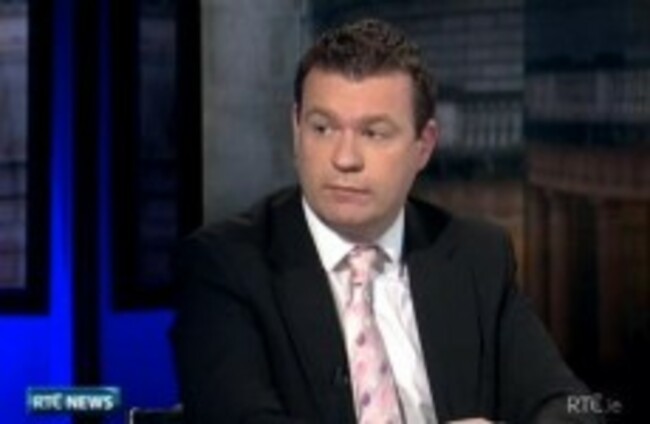
Alan Kelly on last night's The Week in Politics
Image: Screengrab via RTÉ

JUNIOR TRANSPORT MINISTER Alan Kelly has said that the State subsidy of nearly €100 million to fee-paying schools is “a luxury rather than a necessity” and will have to be addressed.

Kelly was speaking to RTÉ’s The Week in Politics last night when he said that the subsidy paid to the State’s 55 fee-paying schools would need to be looked at in the forthcoming budget.

The Department of Education is currently undertaking a review of the level of taxpayer funding the schools require, based on their income from tuition fees.

The principal of one school affected, criticised the Minister’s comments.

Kelly said that he agreed with a decision taken at the Labour Party conference in Galway earlier this year to end the practice of the State paying for teachers at private schools.

“I think this funding is a luxury rather than a necessity,” Kelly said yesterday saying that the “practical issues” need to be looked at and that the government needed to ensure that such a decision would not end up costing the State more.

He continued: “Personally, and I know my Labour party colleagues feel very similar, personally I do think that it’s going to be something that will have to be addressed.”

Teachers’ unions have already called on the government to stop paying teacher salaries in fee-paying schools calling it a “funding of privilege” an “educational apartheid”.

Kelly added: “The day of being able to give €96 to €100 million for private schools is something that is going to come to an end.”

On RTÉ’s Morning Ireland, Christopher Woods, the principal of Wesley College – whose 52 teachers are paid by the State – described Kelly’s comments as “utterly flawed”.

He warned that a dramatic cut in funding could pose a threat to the schools’ ability to operate and he called on Fine Gael backbenchers to take a stand on the issue.

Woods added that he was confident the Education Minister, Ruairí Quinn, would “not engage in a grand closure of our schools”.

Read: Quinn orders probe of €100m taxpayer funding for private schools

Read next:

Comments (100 Comments)

  • What is a non-fee paying school and where are they?

    Reply
  • No fan of private schools but absolutely hate political kite flying/populism that could end up costing us as this minister is doing

    Reply
  • Truly…. Why don’t the politicians begin cuts by leading by example….

    • How about reviewing their salaries, pensions and demand receipts for business expenditures before receiving reimbursement.
    • Then track down all the millionaires who owe the country money (taxes etc).
    • After that, charge and convict previous elected officials for incompetence, malfeasance and ineptitude, then claw back excessive benefits, rewards and pensions they are receiving.
    • Reward and punish people employed by the public sector by establishing roles, responsibilities and job performance expectations. Once this is established, demand annual reviews which performance is accessed. For those who meet expectations, they are rewarded with continued employment or performance based pay increases. Those who do not meet expectations are put on paper, monitored and if performance is not rectified, terminated from their position.

    If the above is covered… Then the government should have enough cash to reallocate funds were desperately needed.

    Reply
  • Let the battle commence! I don’t think Enda will have the stomach for this fight though. This would upset a helluva lot of his powerful pals.

    Reply
    • I agree. There’s a reason why they sent out a junior minister to fly this particular kite.

      Reply
    • I dont believe it should be brought in anyways. These kids are entitled to support the same as a child from a so called disadvantaged area. In certain parts of Ireland and particularly in Dublin the best option for parents is private schools and in most cases they make huge personal sacrifies to pay for the eduaction. They are 100% entiteld to support the same as other children.. Makes me sick the way its a crime to want whats best for your family now or heaven forbid to be sucessful in life / career…Its a sin now to earn a good salary..

      Reply
  • If a parent is sending their children to a fee paying school it would be fair to assume that they are at least paying tax, if not the higher rate of tax.
    Therefore all public funding for private schools comes from tax revenue rather than being borrowed (as suggested previously in these comments).
    By cutting funding for private schools the government would effectively be saying “Thanks for half the paycheque, but your children aren’t entitled to the same funding support as everyone else. And while we at it, you’re not entitled to any return for all your taxes.”

    Reply
  • This is such a soft target for Labour to seem more connected to working class voters. The numbers don’t make sense.

    Reply
  • According to a PWC report, the state spends €3,500 less per pupil in fee-paying schools than in non fee-paying schools.

    So while politically this is good ground for Labour, it may cost the State more than €100m per year if most or all fee-paying schools convert to non fee-paying schools.

    http://www.independent.ie/lifestyle/education/features/will-our-feepaying-parents-be-squeezed-until-the-pips-squeak-2935618.html

    Reply
    • Spot on Ryan.

      Reply
    • That’s surprises me, to be honest. But it does mean that, effectively, the subsidy goes the opposite way than depicted: parents’ fees in those schools are in fact subsidizing other schools. Which, arguably, is fair enough: but it does blow the case for stripping these children of their entitlements out of the water.

      Reply
    • Correct – if the fees go up then parents cant/wont pay and they all stream into the public schools which will not be able to cope … this is all blather and bluster by Labour … I am not political but I am just stunned by the sheer lack of will of the gov to tackle the REAL issues facing the country … crying out loud …

      Reply
  • I’m not defending fee paying schools and I don’t think they necessarily offer a better education than state funded schools. But those parents have paid as much tax, if not more than the parents who avail of free education. All they’re doing is topping up what they’re already entitled to.

    Reply
  • I choose to invest 3600 euros a year to send my daughter to a fee paying school. The benefits, it’s a very good local school with a ethos that suits our family. If I smoked 20 cigarettes a day it would probably cost twice that, should smoker’s children have some of their education or lifestyle funds cut too. This doesn’t make sense when it will impact on the costs and increase the class sizes in state schools and if I’m not mistaken Minister Quinn’s children have benefitted from private education.

    Reply
  • The funny thing is, it costs the State ?1000 more per year per student in a Non fee paying school. If all the fee paying schools suddenly became non fee paying…the Government could suddenly be looking at having to spend another ?20m towards educating these students…could be a case of pennywise pound shy Minister Kelly….

    Reply
  • Maybe paying salaries and expenses to junior ministers are a luxury.

    Reply
  • Here we go again. How exactly will this save money, are they going to make the teachers redundant? I dont think so.
    All this will do is ensure more kids go into the public system, teachers still get paid, on top of that the state will have to pay additional capitation grants for the additional students, find money to build new classrooms etc…..

    It’s a pr game by Labour who have been so ineffectual in this goverment, completely ignored by their partners, have no say in any decisions, so every now and then some junior nobody go-for is sent out to make noise and remind us that they are still there hanging on for their pensions.

    Reply
  • there is no such thing as free education, all schools ask for fees of some kind and you have to pay for books and uniforms no matter what school they go to, very few schools offer book schemes, in Kilkenny city only one secondary school offers a full book scheme.
    To be fair to private schools these parents pay taxes and are trying to get their kids a better start in life, as any parent would. I don’t think they should stop the payments but it should be reduced in some way, public schools have lost SNA’s, teachers, it is only fair they get the same level of cut backs.

    Reply
  • Damaging the private school system, which currently costs the state significantly less to support than public schools, will give those middle class households that earn over 100k per annum, and pay 40% of the tax received by the Exchequer, a very real reason to abandon Ireland if they cannot choose a private school for their children’s education.

    Without the assistance from the state many private schools will go bankrupt. The state will then have to fund more of each child’s education; with less taxpayers to fund it.

    Reply
  • It is written into the Irish constitution that the state undertakes to provide free primary education for every child – if parents wish to subsidise this that is their choice.

    If we absolve the state of it’s duties one by one we may as well crawl cap-in-had to Europe/The Commonwealth / whoever as there will be little left of the ethos of the independent state that was so long fought for…

    Reply
  • I can see an influx of portacabins on public school sites as soon as this funding is cut! :)

    Reply
  • not a bloody luxury if you scrimp and save every cent to send your kids to one of these schools. the gap between rich & poor widens…

    Reply
    • It’s still a luxury, just one you can afford. So why should the taxpayer subsidise it.

      Reply
    • They don’t Barry.

      First of all, it’s not a ‘subsidy’ to simply give children their entitlements. I don’t believe there’s a school in the country where the grants and monies given by the State aren’t topped up by the parents’ themselves. Does the fact that parents in my son’s (non-fee paying) school donate thousands every year for new equipment and works give the State the greenlight to pull the funding they DO give since, hey, obviously we’ve got deep enough pockets?

      Well, no.

      Secondly, as it turns out, fee-paying schools SAVE money for the State. Every child in a fee paying school means more money for those in non-fee-paying schools. Many parents in fee paying schools won’t be able to afford the extra fees if public entitlements are pulled and so will have to pull their kids out. Which will cost the state *more*, not *less* money.

      Reply
  • Are 55 exclusive schools so vital to the State’s interest that it must borrow €96m from the Troika to subsidize them? (Though given how many cabinet ministers went to fee paying schools they are not perhaps the best people to ask).

    Reply
    • You have proof of that Conor, or is that an “educated” assumption?

      As you make a financial argument: how much more will it cost to have half, or more, of the currently fee-paying students flooding into the mainstream schools? New classrooms, more teachers and all because labour wants to look good for their voters?

      Although in the end we decided against it, but we considered a fee-paying school as it is the only non-christian school in the area. Fee-paying schools aren’t only for the elite,as they can and will continue paying, but also for people who have little appetite for religion in the classroom.

      Reply
    • Reg 08/10/12 #

      Ill thought out comment Conor. How much would it cost the state if private schools had to meet the full cost of teachers salaries? Because the state would have to pick up the full tab for all the pupils who’s parents could no longer afford these schools.

      Reply
    • Winston 08/10/12 #

      L be given at the same rate had they been in a public school!

      This is divisive Labour BS feeding into a populist agenda

      Reply
    • I agree with Conors sentiments to be honest. Most of our Private Schools operate at a profit, propped up by tax payers, so I believe that funding these schools should be looked at on a case by case basis. This bill needs to be at least halved!

      Reply
    • Denito 08/10/12 #

      State-funded schools should all be open to all children regardless of creed, colour or how well off their parents are.

      There is no ‘right’ that a child should have x amount of state funds spent on their education, the only right that exists is that every child should be offered a place in a school. These schools only offer that right to children whose parents are well-off enough to have the money for fees. This state subsidy for exclusion should be ended now.

      Reply
    • Private (responsibility) school parents at more like subsidising the state schools just like the people paying VHI etc. are subsidising the free health services.

      Reply
    • It actually costs the state significantly less for each one of these children to be educated than someone in Public School!!!

      Reply
    • Obviously it depends on the level of the subsidy, however fee-paying schools frequently provide a net saving to the State in the same way that private healthcare does.

      Reply
  • If someone wants to send their child to an exclusive school they should do so,nI don’t see why the rest of us should subsidise them??

    Reply
    • Yeah roysh what would all you knockers know, the elite cant be expected to mix with the normal population. Loike seriously!!

      Reply
    • You will still have to subsidise or pay for them in full if they have to go to non fee paying schools as a result.

      Reply
    • It’s not a subsidy though, really. It’s giving every child the same education entitlement from the state. Nobody is getting anything *extra* from the State here, as far as I can see.

      In reality, the question isn’t one of subsidies but whether or not we want to strip some children of their entitlements based on who their parents are.

      Reply
    • Niall – fee paying schools are seen by parents as having something extra on public schools. Public schools are paid for from the public purse and private schools are paid for (currently) as public purse + fees.

      Looking at league tables (which give limited information) and finding a private school like Glenstal Abbey say, you’ll see that they rate highly in terms of attendance at 3rd level.

      If you’re local public school was at say 60% attendance to 3rd level and you could afford to send them to a fee paying school that has a 95% 3rd level attendance then it’s not unreasonable to think that paying extra can result in giving your children a better chance in being prepared for 3rd level.

      Of course that’s all based on what you regard as the measure of a school. Many fee paying schools are boarding schools which offers it’s own experience too.

      So – how does that justify fee paying schools receiving monies from the public purse? Well, if you were to take a measure like the earlier one mentioned and said that what fees are for is accommodation, food and an additional 35% chance of your child heading on to the college course they wanted then the 60% represents where a public school could get them.

      Why should taxpayers, whether they send their kids to a private or public school, not receive some benefit from the public purse given that they have paid into that public purse? They pay extra to get what they see as extra but the state should surely be providing some assistance as children from every background should be given access to a minimum education by the state (IMO).

      I know that might seem like an unpopular view but I think mostly that might be driven by the impression that such schools are only for families who are extremely well off. That’s understandable but I don’t think it’s fair that kids are being lumped into an argument that should be more about how the upper class contribute to the public purse rather than punishing kids as “posh” because their parents have more money.

      Reply
    • Tomy-you are reinforcing my argument, I don’t wish to punish posh kids for being posh,
      I want kids from average backgrounds to have the same opportunities,
      if as you say a child from a private school does better in third level that’s great for them and good luck to them,
      but surely this gives them an advantage in life that a poorer child doesn’t get,
      the poorer child then fails to reach their full potential and cannot afford a superior education for their own children and the cycle repeats itself???
      This is clearly unfair??

      Reply
    • I’d see them as 2 different points. If there is a genuine advantage in going to a fee paying school and someone can afford it then I don’t see why they should regard this as a disadvantage to those who can’t afford to do so.

      The strange thing is that a lot of times people associate the idea of schools affecting results – and of course they do – but there is so much more than that at play. Parents who send their kids to certain schools (fee paying or not) based on the experience and outcomes they want their kids to get. These parents who are driven in terms of how much they value education are often as much an influence on the attainment levels of their kids as any other factor.

      Even taking a look at 2012 school leagues tables there is a mix of fee paying and public schools in the top 10 in different regions. There is a lot to be said about socio-economic areas and typical local industries also (which shows that % going to college is far from an ideal indicator).

      If there is inequality, it’s not as simple as the league tables exposing it. In reality I think we need to change a few things in education to promote equality. Central to this is finding some way to hold teachers accountable (a very difficult thing to measure) and sorting out assessment methods that can provide better value in what it can tell pupils, employers and colleges about the abilities of pupils.

      Reply
    • I’m not saying this as an attempt to challenge you Niall – but I’d like to hear from you (or anyone) who could offer an alternative system that could address that inequality?

      One I’ve heard mentioned is a kind of voucher system. That parents would have vouchers worth X amount and these could be used to claim an education in a school of choice. I struggled to see how this would allow equal access though.

      Reply
    • Tomy,nIf all schools were fee paying with no subventions but the fees were 90% offset against income tax it would improve access,nObviously some scholarship scheme for unemployed families should exist also,nIf the child is disruptive or uninterested this is reviewed annually ?

      Reply
  • I’m paying 3000 a year to wards my kids school if it doubles it will be a new school

    Reply
  • Why should we have to pay for the teachers in fee paying schools?

    Reply
    • Reg 08/10/12 #

      Maybe because the people who send their kids to these schools pay taxes just like everyone else. I’m not saying though that the budget allocated to these schools should not be up for review.

      Reply
    • Why should we have to pay for the teachers in non fee paying schools ?

      Reply
    • Reg why don’t those tax payers send they’re kids to an ordinary school ? And not a fee paying school then? Because its beneath them

      Reply
    • Reg 08/10/12 #

      There’s probably plenty of reason. One of the basic ones is freedom of choice. Why do people buy a Mercedes instead of a Nissan?

      Reply
    • You could as easily ask, why are people who pay VHI or Aviva entitled to treatment in public hospitals?

      Well, because it’s their entitlement as residents of the state. Just because they’re able to add their own money TO it doesn’t mean they don’t share the same basic entitlements.

      Reply
    • @ Peter Nolan,

      Not a great analogy Peter. People with private health insurance also pay taxes and are by right entitled to use public hospitals. The insurance gets them a private or semi private bed and their consultant of choice. Don’t be kidded into thinking that the public health system is subsidising the private health insurer it’s actually the reverse.

      Reply
    • So it’s a bad analogy because people who pay VHI also pay taxes, while people who pay school fees also pay taxes.

      So it’s a bad analogy by virtue of the situations being exactly the same? Well okay then…

      Reply
    • @ Peter,

      You got it in one.

      Withdraw the subsidy from fee paying schools . They close. The pupils transfer to public school along with the teachers who are getting paid by the state in both cases.

      Without private health insurance the state will have to further subsidise the public health system to compensate for reduction in Income.

      What we get is a lot of waffle from politicians about reduction in expenditure which effectively is a ‘ Three card trick’

      Reply
  • Having been through a large boarding school in the South East I can safely say the standard of education is no higher than public schools my friends attended. On the contrary, I had some pretty useless teachers who unfortunately seemed to outnumber the good ones! There was and still is rampant bullying, appalling racism, elitism and general bigotry as is the case in many private schools. A below average education coupled with average facilities often made me question just exactly what were my parents sacrificing for. People point to smaller class sizes but in many of my classes there were over 25 people. Others might reference the extra facilities but I look at my local public school and see that the facilities are better there. My point is what benefit do people see in sending their children to private schools? Based on my experience, private schools are a tragic waste of the fee-payer’s money, let alone regular taxpayers.

    Reply
  • Its unfair for us to subsidise those muppets in leinster house. Thats the real problem here .

    Reply
  • It cost us over €2000 to send our 2 children to a public school, the cost of books, uniforms, “contribution”, etc etc etc. Something has to give here, classrooms are overcrowded, sna’s and resources are being cut to within inches of existence. I don’t think it’s fair for the state to contribute such vast amounts to those who can afford to pay more.

    Reply
    • Andrea, according to your own logic, if you’ve got two grand hanging around to pay for your kids to go that school then why should the taxpayer be subsiding you? Sure, you’re obviously grand, aren’t ye?

      Or maybe, just maybe, all children are entitled to the same basic educational allowance from the state, and parents can add to that such as they’re willing and able to.

      Reply
    • Not my point at all Peter. My point was that we had NO choice but to pay over 2000 for our children to go to school, a public school where there have been savage cuts and more to follow from what we hear. We by no means had 2000 lying around, 1000 went onto a credit card and the other 1000 came in the form of a credit union loan. I have a brother who sends his daughter to private school, he won’t be pleased if he has to pay more but he will still do it as he can well afford it ( as is the case with most of the families who choose a private education). I was simply pointing out that it actually costs a small fortune to send children to school full stop. The cuts however, don’t seem to affect those who have the most. Fair? I have never thought so…

      Reply
    • You’re making awful presumptions aren’t you? You don’t consider yourself as having a choice but to spend the money to try and give your kids the best start you can and are, arguably, spending money you can’t afford — but somehow you can’t conceive of other parents in the same boat? That you know the financial situation of every parent who sends their kids to a fee paying school and that they’d have an extra three thousand euros per child hanging around to pay for it? Rather than – JUST LIKE YOU – already stretching themselves to financial breaking point because they feel they’ve NO choice but to spend every penny they can scrape together on their kids’ education.

      God, you ought to be on TV3 at night with that type of psychic power.

      Reply
    • You seem to have your knickers in an awful knot here Peter. And if you bothered to read over our comments, you’d see that I didn’t make a single comment about parents means apart from my own. I simply pointed out the expense ALL parents have to go to to send their children to school. I also pointed out that the cuts affect non fee paying schools a lot more than in fee paying schools and that something would have to give. You can’t keep taking from the same schools.

      Reply
    • You said: “I have a brother who sends his daughter to private school, he won’t be pleased if he has to pay more but he will still do it as he can well afford it ( as is the case with most of the families who choose a private education).”

      Now you say: “If you bothered to read over our comments, you’d see that I didn’t make a single comment about parents means apart from my own.”

      As you can see your second statement is utterly false.

      Here’s some basic math for you:

      The government spends €4000 on each of your children’s education. You add another €1000. That’s €5000.
      In a fee paying school, the state spends €3000 on each child’s education. The parents subsidize this with €1000 of their own money and then add another €2000 on top. That’s €6000.

      And your response to these parent’s that take €1000 less out of the pot than you do — these parents that subsidize you so can pay less for yours is to want to take *more* off of them? Because they spend a whopping 20 quid a week more a week on their kids’ education than you do?

      Reply
    • Only €20 extra a week, sign me up so…

      Reply
  • Puh-lease. Public education is a perfectly reasonable proposition, feel free to send kids to private school but you must expect to pay for it. I have no issue whatsoever with private education for whatever reason but it’s a privilege not a right.

    Reply
    • But the parents do pay for it. And based on post above, also seem to subsidise “non-fee paying” students.

      Reply
    • They do pay for it. And seem to subsidise “non fee-paying” students (based on comments above).

      Reply
    • It always surprises me how anxious some are to make a populous comment – they completely skip by many other comments which have made it clear that on a per pupil basis, fee paying schools get less than public schools.

      Fair play to any parent who has the money to try to enhance their kids’ education. It’s costing the taxpayer less than if their kids went to a public school and they pay fees beyond that.

      Reply
  • Yes your right the rod it’s a big school with working class kids in it ,, I would be 60 euro a week better off ,, but you will have 300/400 kids going to the other schools in the area , will they teach these kids in a field ,,as I said it normal school not blackrock collage

    Reply
  • It is essentially unfair that all are expected to subsidise the education of those that opt for the private route. The principal of Pres in Cork was interviewed on Morning Ireland when this was first mooted earlier in the year. His threadbare response when asked why parents sent their sons to Pres was that parents wanted their children to be steeped in their uniquely Catholic ethos – no mention of it also being a free pass into Cork’s myopic elite. The unstated compact here is that membership of the club will ease the passage of young men in the business world – I for one don’t wish to subsidise this.

    Reply
    • ‘Free pass into the elite’? You’re being fed bar stool rubbish. People are born into the so-called ‘elite’, or work hard to get there. Where you went to school has nothing to do with it. People have this image of private school boys wearing a past pupil’s tie to an interview and slapping a rugby medal on the desk before being fast-tracked to a corner office. It’s nonsense.

      I went to Christians in Cork and while some of my classmates went into family businesses, they would have done that regardless of schooling. Others may become entrepreneurs, but this is typically through a combination of hard work and, if they’re lucky, some social connections. These social connections, they would have had regardless of school, they come from their background.

      The vast majority of people I went to school with are doing the same types of jobs as everyone else, as they had no greater an opportunity than those people I know who went to the many excellent public schools around Cork.

      Private schools, by and large, are a symbol of social status. One set of parents are from privileged backgrounds and send their kids where they themselves went to school to maintain social status. The rest of the parents (the majority) pretend to themselves that they are providing better for their kids education by paying for a portion of it themselves, but in reality they simply mistakenly believe that wealthier kids = nicer kids for their darlings to hang out with.

      Now the net result is that the schools are better equipped, because they have direct funding for sports, can hire their own extra teachers above the amount paid for etc, but in reality the academic results are no better. You’re paying for faux presitge.

      So the reverse of what some people are saying is actually the case. The parents of people in voluntary schools are subsidizing the state’s education of their kids in the hope of giving them a leg up in society to join the comfortable middle class when they come of age. In reality, unless they work for it, the kids are no better off than anywhere else. The points system ensures that these schools offer no extra leg up into college, so that just leaves family connections, which exist regardless of where one goes to school.

      That aside, lets consider the practical aspects here:
      1. One benefit of the state paying private school teachers directly is that they are paid on the same scale. If the private schools that remain get to pay teachers privately, they can compete and poach the best teachers from public schools.
      2. In Dublin’s south side, private schools are the only nearby schools for the more salubrious suburbs. If some of these school’s go public, then they will operate on a local catchment basis, and still only take in privileged kids. Now Joe taxpayer will be paying for the full amount of the education and, guess what, the wealthy parents will make big donations to the school to subsidize it and keep the facilities better than other schools.

      This is best left well alone. Leave those electing to pay for half of their kids education to their own devices. They’re living in a bubble of delusion, not a closed shop of privilege and exclusion.

      Reply
    • My two brothers went to fee paying schools and neither are in the ‘business world’ or anything like it.

      Reply
    • So to summarise: “Let’s just leave the present system alone & not rock the boat, or address any inherent unfairness.” now that sounds like the kind of reductive bar drivel that has consistently blocked true reform on our fair isle.

      Reply
    • What’s unfair about it?

      Public school students and private school students are both entitled to free education, and to this end teachers are paid by the state to teach them.

      With public schools, the state pays capitation towards all the other costs whereas with private schools this is provided for by fees. Some deluded parents think paying for this out of their own pocket amounts to a better education.

      Basically, the parents of private school pupils elect to provide their own funding for the facilitation of the teaching of their children. They believe this amounts to a better education. It doesn’t.

      Pull this away and you’ll just have more demands on the public system.

      Reply
  • There is no such thing as “free”, and I wish the word wasn’t band lied about as much as it is, as it leads to misinterpretation. “free” in this case means “subsidised by the taxpayer”, so it is still paid for.

    Reply
  • Having read all the above comments, and I must say, a lot of people made good and valid reasons for subsidising these private schools, i still don’t think it’s fair that people who would love to send their children to a private school and can hardly afford the cost of public schooling should subsidise anyone that can. After rearing six kids I can tell you that there is no such thing as free education in Ireland. Every day it gets harder for poorer parents to find the money for food and clothes, never mind schooling costs. I don’t believe that all those private school kids will flood on to public school lists, we know that money is anything but short for a lot of our elite, or should I say, would be elite.

    Reply
  • Hopefully Ross O’Carroll Kellys old man will mount a campaign to sort this out.

    “Can’t surrender privilege -Won’t surrender privilege” would make a good motto

    Reply
  • G 08/10/12 #

    A more simple solution is to remove free third level fees for students who went to fee paying second level schools. Why should someone who paid for a privileged second level education be further subsidised at third level. This would balance the books nicely and return a profit in fact. Of course the problem here is that most ministers and politicians received this priviledged second level education themselves so they will be reluctant to make any changes.

    Reply
    • Why shouldn’t they be subsidised?
      Because on top of contributing tax revenue, they subsidise public students? The lowlifes.

      Reply
    • G 08/10/12 #

      I’m not really sure your point Mary, we should subsidise the rich instead of the poor? the big picture is that we should have an excellent state education system that all should be able to avail of for free. By subsidising private schools we allow the elite and would be elites prosper while the lowlifes are left behind to wreck the public schools. I wonder how many travellers are in these private schools for example, I don’t see a clamour for equality there?

      Reply
    • Everyone is entitles to “free education”. What’s the problem with people supplementing their entitlements with their own money. It’s the same principle as VHI. You’re entitled to “free” healthcare but people can and do choose to take out private insurance. Should these people not be allowed to access the public health service if he need arises?
      Again, these pupils subsidise the non fee payers. Would you prefer that the public education sector be placed under increased pressure at an increased cost to the state?

      Reply
  • As someone described it, we have an Apartheid Education system. Rich in fee paying and poor in public system.

    Reply
  • Isn’t a big problem the fact that many of these schools cater to students from minority religions? If free schools were non- or multi-denominational, I think that it would be much harder to argue in favour of any subsidies for these schools. As it is, the majority of schools have a religious ethos that pervades the school and that many parents don’t want for their children. Removing subsidies for these schools (which I’d like to see happen) should take place alongside the provision of schools with an ethos that doesn’t prioritise one religion over another.

    Reply
    • There is separate funding for private schools that cater to minority religions, in an attempt to allow for a similar provision for religious instruction as that enjoyed by the parents of catholic children.

      As such, for example, a Church of Ireland boarding school gets some capitation in recognition of the fact that protestants in small towns and villages are unlikely to have religious instruction provided for them. So a private CoI school gets more capitation than a private Catholic school, as public catholic education is readily available.

      Your argument is excellent, that the provision of more non-denominational schools could argue the case for, at least, the removal of the above subsidy.

      Reply
    • @ Ronan: I may be wrong, but weren’t those grants for minority religion (Protestant) schools removed back when Bart O’Keefe was minister for Education? I remember seeing a protest about it, though of course the change might have been reversed?

      Reply
    • You’re probably right then Ryan. My information is more than likely old

      Reply
  • I think maybe they could reduce the subsidy instead of removing it entirely. The huge class sizes and poor equipment and facilities and lack of certain subjects being taught in state schools need to be addressed somehow. There’s no private schools in galway. Some people don’t have a choice in where their child is schooled.

    Reply
  • I think maybe they could reduce the subsidy instead of removing it entirely. The huge class sizes and poor equipment and facilities and lack of certain subjects being taught in state schools need to be addressed somehow. There’s no private schools in galway. Some people don’t have a choice in where their child is schooled.

    Reply
  • Excuse my ignorance but if the state is paying the teachers then what are all the fees being spent on. Is it just boarding and such?

    Reply
    • My understanding is that normal tuition a day student would pay goes to extra teachers on top of the state provided ones leading to smaller class sizes. Smaller class sizes are not always the result as I stated in my other comment. I would say the real reason for fees is to buy a pathetic religious or social exclusivity.

      Reply
    • Reg 08/10/12 #

      Teachers salaries are probably just a small cost in the overall expense of running a school especially if the school has boarders.

      Reply
    • Reg, in private schools the boarders pay more (double in my experience) than the day pupils. So the basic tuition a day pupil pays has nothing to do with those who board.

      Reply
    • Basically, neither public nor private schools pay their (second-level) teachers. Teachers are paid directly by the state through one of its vehicles. The number of teachers a school is entitled to depends on the enrollment numbers.

      Separately public schools receive capitation per head of student population. This goes towards materials, light and heat, maintenance, your cleaners, lab equipment, art supplies etc. Secondary schools pay for all of these ancillary costs out of the fees. Now, the fees add up to a more than adequate supply of same, so there is a surplus which is spent on non-permanent teachers (permanent and they’d have to be state employed), rugby/hockey, better equipped labs etc.

      Most private secondary schools also levy for materials etc, same as public schools.

      So really parents who elect to send their kids to private school, in reality, are providing their own facilities for the same free education that public school kids get, plus adding a little extra to the pot for improved facilities. No different, in reality, than if a bunch of parents in a wealthy area decided to support their local public school with additional contributions towards more teachers, more equipment etc.

      Reply
  • About time that the ordinary people did not have to pay to educate the rich and and those of privilege , The same should be applied to colleges , if the students want to be further educated do as they do in the states , borrow

    Reply

Add New Comment