Sign in. It’s quick, free and it’s up to you.
An account is an optional way to support the work we do. Find out more.
Sign in. It’s quick, free and it’s up to you.
An account is an optional way to support the work we do. Find out more.

HAVE YOU EVER had to climb upstairs on your hands and knees the day after a particularly gruelling training session? No? Oh, okay. Me neither.
We’re all familiar with that post-training muscle pain which occurs in the days following one’s exertions. They call it DOMS – Delayed Onset Muscle Stiffness, although back in the day, we all believed it to be caused by lactic acid.
What we now know is that the pain is caused by microscopic tears in muscle fibres caused by intense or new exercises. The damage triggers a healing response in your body during which the muscle tissue is flooded with white blood cells, which strengthen and repair the area, making it more resilient to future strain. So yes – repairing the damage is what makes you stronger.
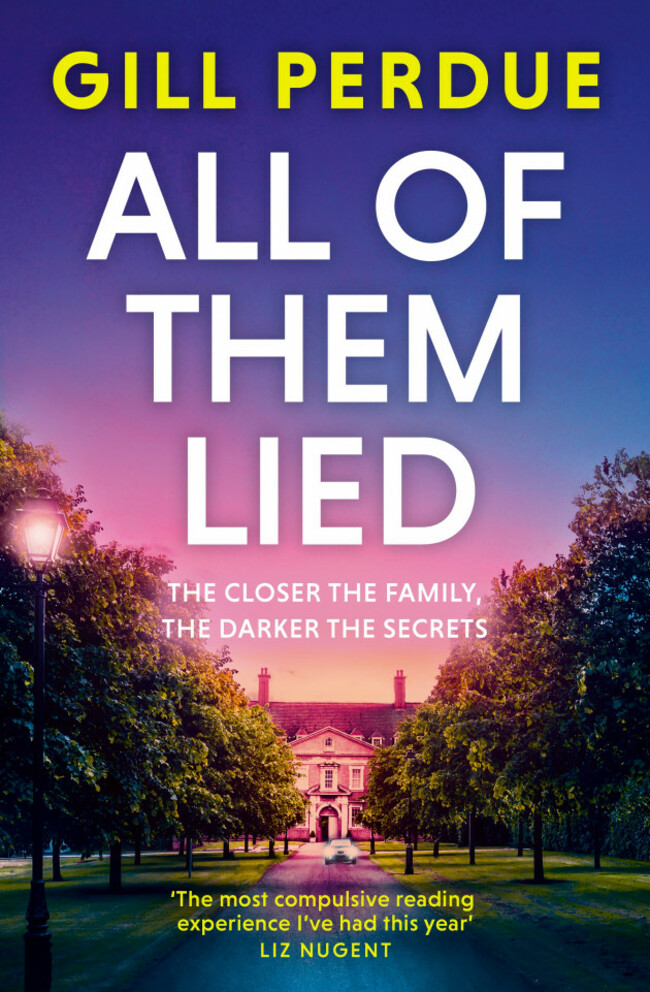
Thea, the main character in my new book All Of Them Lied, has survived a devastating cliff fall while on a walking holiday in Italy with the four people she loves most in the world.
Her injuries are extensive: a fractured pelvis, tibia and fibula, abdominal injuries, a shoulder dislocation, some traumatic brain injury. We meet her when she comes back home from hospital, and she’s trying to rebuild her life, learning to walk again, to become independent and, crucially for the story, struggling to remember what happened.
Learning to walk again after injury is incredibly painful. I know, because I’ve now had to do this twice. When I was 11, I had an operation to remove a tumour on my left leg. Fortunately, the tumour was benign but excising it involved both internal and external stitches and a long stay in hospital due to complications. (I was allergic to the internal stitches, so the wound opened up repeatedly.)
I went from being a lively little gymnast and dancer to a tearful, fearful shadow of myself. I can still remember the daily post op step count – three steps went to five, to 10, to 20 and so on. They discharged me three weeks after the operation when I could walk the length of the ward. When I came home, my bed had been moved downstairs into the sitting room as there was no question of managing the stairs.
Nor was there any gymnastics or ballet or running around chasing my siblings. Sitting, standing, walking was all I could manage for months. The siblings had been instructed to be nice to me, which was disconcerting in the extreme. It was a whole new world.
And I’d like to say I embraced it bravely and without complaint. Reader, I’m sorry to disappoint you. I whinged and cried and berated my poor mother as if she were personally responsible. But eventually, when the realisation finally sank in that I needed to keep persevering and keep moving to move on, it all came back.
Skip on a good few years from my childhood (okay, decades) to 2022, and we come to another injury. A broken leg. (The same leg as it happens.) This time, thanks to fantastic surgery and the insertion of a steel pin or two (performed by one of the parents of a child in my dance school!), my recovery was much faster, and there was way less whinging.
Although perhaps my husband would not agree. By this stage, I had learned a certain amount of patience. That there is no escaping the pain, but that it doesn’t last forever. Bones heal. Muscles strengthen if you put the work in.
Another experience which fed into the creation of Thea’s character and the writing of the story concerns my funny, lovely dad who died in 2018. When Dad died, he was mentally in tiptop shape and always looking for someone to play chess with. But physically he had been suffering from Parkinson’s disease for many years. He had gone from using a walking stick, to a frame and then a rollator and finally a wheelchair in the years before he died. Over those years, my siblings and I became adept at navigating the world with him in his chair or using the frame.
There were tumbles and scrapes, cars parked so close you couldn’t get him back in, footpaths too pitted to use the rollator on. And more than anything else, the world had to be navigated so slowly and carefully, with painstaking attention to detail.
But he never lost his good humour or his ability to make a joke out of it. I used a lot of this experience in the story as I worked to establish Thea’s mindset. In the case of my own injuries and my dad’s Parkinson’s, we had the total support of family and friends. But in the story, Thea doesn’t know who she can trust. As memories come trickling back, she realises that one of her closest loved ones must have pushed her.
That word ‘mindset’ is extremely important. Because just as the tearing of muscle fibres is what leads to strengthening of tissue, so the mental aspect of recovery leads to the development of inner grit and determination.
In my professional life as a dance teacher, I have seen so many examples of resilience, grit and courage – both mental and physical. Some years ago, I had the privilege of teaching a girl who continued to dance after illness required the fitting of a prosthetic lower leg.
She had been dancing with me since she was four, and there was no way anything was keeping her away from class even after part of one leg had been removed. Her love of dancing superseded any desire to avoid pain. Her bravery inspires me to this day.
Injury is unavoidable. Coming back after injury is difficult and slow. But when you do, you will be stronger than ever before.
Gill Perdue is a writer and dance teacher. She worked as a primary school teacher for fifteen years and published four children’s books. If I Tell, her first adult novel, was an Irish bestseller and shortlisted for Crime Novel of the Year at the 2022 Irish Book Awards. All of Them Lied is her fourth novel. Gill lives in Dublin.
To embed this post, copy the code below on your site







have your say