Sign in. It’s quick, free and it’s up to you.
An account is an optional way to support the work we do. Find out more.
Sign in. It’s quick, free and it’s up to you.
An account is an optional way to support the work we do. Find out more.
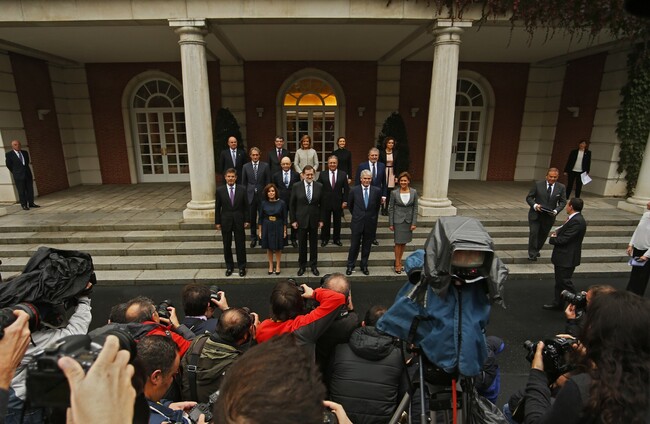
AFTER MONTHS OF hard negotiations and two elections this year, Spain have finally formed a government – and their approach to economic recovery is looking more and more like Ireland’s.
In the aftermath of the recession, both countries have faced the same difficulties: both have borrowed exorbitant amounts of money to keep the country afloat, both have a housing crisis and are tackling unemployment, and both are trying to reform their respective political systems.
‘A new way of doing politics’
Last week, Mariano Rajoy was re-elected as Spain’s prime minister after ten long months of negotiations, much like Enda Kenny’s renewed term as Taoiseach.
Rajoy kicks off his second term after a ten-month period of political limbo marked by two elections that produced no clear winner – much like Ireland’s election this summer which saw 70 days of negotiations and a surge in support for independent politicians.
The result of the negotiations is a minority government which must ‘negotiate every bill’ with the opposition - and a focus on ‘a new way of doing politics’ (sound familiar?).
With little parliamentary support and after ten months of almost no political action, Rajoy has a daunting task ahead of him: securing the economy, reassuring the public that the country is recovering, as well as strengthening ties within the EU.
In a move likely to reassure the markets, Luis de Guindos was one of the few people kept on by Rajoy in his post as Finance Minister.
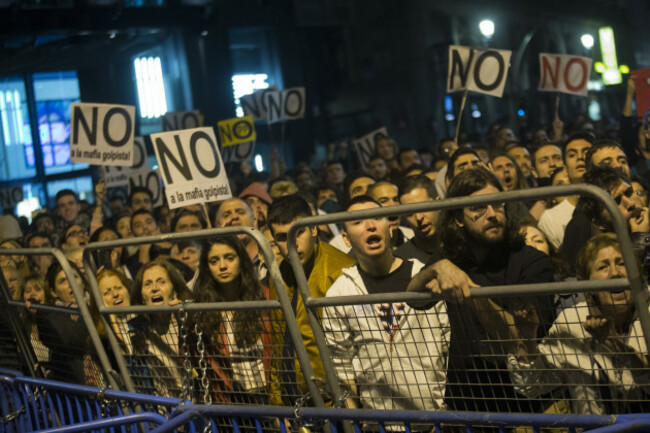
De Guindos imposed austere spending cuts in reaction to the economic crisis that sparked criticism and mass protests.
He has stressed that more efforts will be required to reduce Spain’s deficit as required by Brussels, and has credited the reforms for helping create jobs by increasing flexibility.
Jobs Minister Fatima Banez, who oversaw the implementation of much-criticised labour reforms, also remains in her post.
Its measures like these by what are viewed as the ‘political elite’ that have seen the support for so-called ‘populist’ left-wing party Podemos.
Podemos, which has an affiliation with Sinn Féin and Greece’s Syriza party, came in third with 5.18 million votes and 69 seats (in a 350-seat parliament).
Brexit’s influence

Both Ireland and Spain are also extremely sensitive to Brexit’s influence. In the wake of Britain’s June referendum on EU membership, Scottish First Minister Nicola Sturgeon raised the notion of a second independence referendum.
Scotland voted to remain in the European Union – as did Northern Ireland – and Sturgeon took this vote as an opportunity to leave the United Kingdom, which has long been an ambition of her party, the Scottish Nationalists.
If Scotland were to leave the UK, this would have serious implications for both Ireland and Spain: the whole construct of the Union in Britain would collapse, and would stir up what exactly would happen in Northern Ireland.
In Spain, the situation would be even more dramatic – the eastern region of Catalonia has long-been fighting for independence as its own country, and it’s widely considered that Scottish independence would inflame relations and spark a vote on the matter.
But with homelessness figures at 23,000 in 2015, and with political tensions on a knife’s edge, the country’s leaders – much like Ireland’s – will be concentrating on upholding the electorate’s vote and maintaining a functioning government for as long as possible.
With reporting from AFP

To embed this post, copy the code below on your site













have your say