Sign in. It’s quick, free and it’s up to you.
An account is an optional way to support the work we do. Find out more.
Sign in. It’s quick, free and it’s up to you.
An account is an optional way to support the work we do. Find out more.
LAST UPDATE | 3 Jul
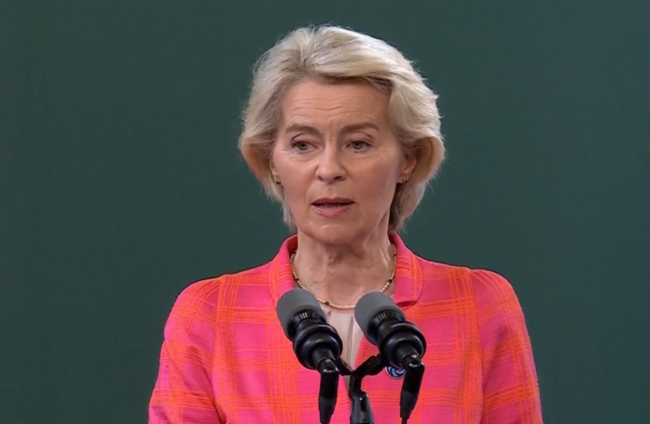
PRESIDENT OF THE EUROPEAN Commission has said that “the ball is in the court of the member states” to take action about the EU-Israel Association Agreement and to sanction Israeli minister Ben Gvir.
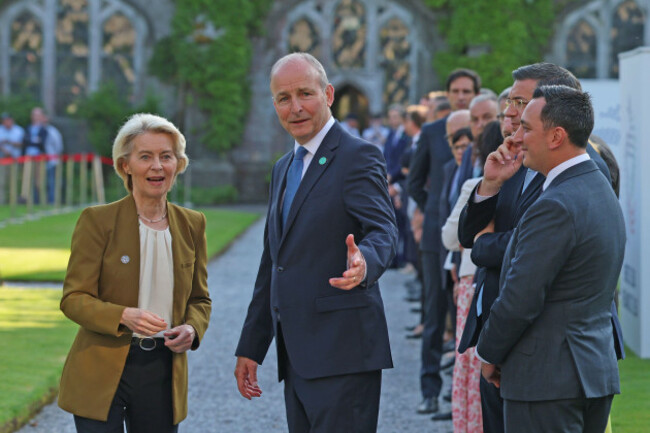
At a press conference in Cork, where EU commissioners and cabinet ministers are meeting to mark the beginning Ireland holding the EU Presidency, Ursula von der Leyen was asked by The Journal why she and the commission are “dragging” their feet on the situation in Gaza and the West Bank.
She responded that she wanted to “set the record straight” and said “we are the world’s largest provider of assistance to the Palestinian people, the largest. No-one does more than us”.
“Continued expansion of Israeli settlements in the West Bank is utterly unacceptable and the violence used to achieve this expansion is abhorrent,” she added.
She said a proposal to “suspend trade preferences under the EU Israeli Association Agreement” was made 10 months ago but “remains on the table of the member states to vote with a qualified majority”.
“So, the ball is in the court of the member states.”
She also said “many” member states have proposed sanctioning Gvir but “no consensus has been reached”.
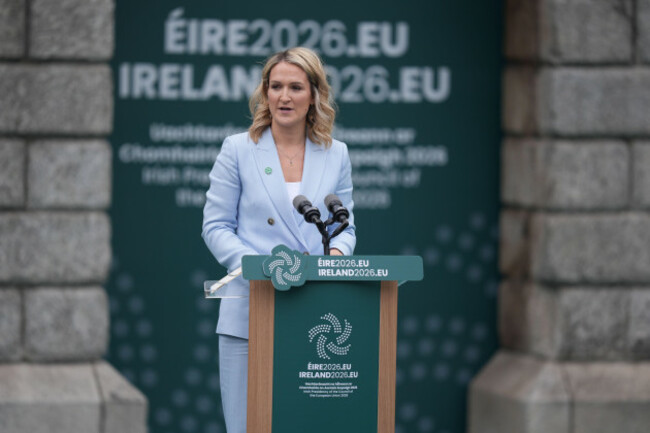
Foreign Affairs Minister Helen McEntee said recently that in her view, it is “more possible” to secure an agreement to ban trade with illegally occupied territories rather than secure a complete suspension of the EU-Israel Association Agreement.
Speaking to reporters earlier today in University College Cork (UCC), McEntee cited a recent UN independently verified report which finds the Israeli Defense Forces and Israeli government are targeting children, post the ceasefire agreement.
“We all have to stand up and listen to this. We have to take action. We have to respond to these type of actions, so that we do see a change and a different response from the Israeli government. And that’s what we’ll be advocating for. That’s what I’ll be saying with our colleagues here on the commission today,” said McEntee.
The minister said she wants a vote held on the proposals on the table as “soon as possible”, stating that Ireland will obviously be advocating for the strongest possible response, which is the suspension of the association agreement.
She added that she does not agree that banning goods or services trade overall in the occupied territories is simply symbolic, adding that having all 27 member states deciding to ban trade in the occupied territories would be a “significant move”.
“It is not something that has ever happened before,” she added.
“The intention behind it is quite simple: it’s to change the actions of the current Israeli government, who are intent on moving ahead in what is a very clear attempt to disrupt any future prospect of a two-state solution.
“All 27 member states have agreed that the only prospect of peace in the region is through a two-state solution, and the more that we have these illegal settlements continue in the way that they are, they are permanent settlements, these are not encampments or tents, these are towns and villages and cities that are being developed. The longer this goes on, the less likely a two-state solution is viable, and that impact for the region for decades to come is absolutely immense,” said McEntee.
“We have to do everything that we can. That’s why we’re advocating for the strongest possible measure. Again, unfortunately, I don’t believe at the moment there is a consensus, but I would ask colleagues, and I will be saying this at the next meeting, we have a UN report, an independently verified report that is now saying that the Israeli Defense Forces, that the Israeli government are targeting children, not prior to the ceasefire, but post the ceasefire.
“We all have to stand up and listen to this. We have to take action. We have to respond to these type of actions, so that we do see a change and a different response from the Israeli government. And that’s what we’ll be advocating for. And again, that’s what I’ll be saying to colleagues here on the commission today,” said the minister.
Ahead of the Taoiseach’s meeting with von der Leyen, Micheal Martin said he planned to raise “Israel’s persistent and egregious breaches of human rights and international law”.
He said there has been “a lot of progress at the Foreign Affairs Council recently”, but added there are “quite a number” of EU countries who have “different views to Ireland” on “the Palestinian issue and Palestinians’ right to self-determination”.
He added: “The issue of trade with the occupied territories is one that can be dealt with and should be dealt with at a pan-European Union level.”
Alongside the meeting, a series of joint meetings with European Commissioners took place with cabinet ministers today.
The thematic cluster meetings were based around the government’s presidency priorities are currently underway.
Later a full plenary session involving the cabinet and the college of 27 commissioners was held.
The EU Commission president landed in Cork on Thursday afternoon.
Ireland officially took over the presidency of the Council of the European Union on Wednesday, with a ceremony at Dublin Castle attended by Ukrainian president Volodymyr Zelensky.

To embed this post, copy the code below on your site










have your say