Sign in. It’s quick, free and it’s up to you.
An account is an optional way to support the work we do. Find out more.
Sign in. It’s quick, free and it’s up to you.
An account is an optional way to support the work we do. Find out more.
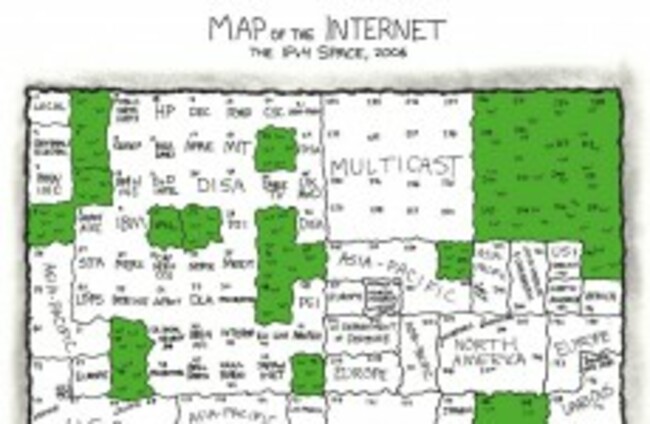
THE INTERNET is just ten days away from running out of new addresses to assign to the computers and mobile phones, according to analysis by one internet service provider (ISP) encouraging others to upgrade to a new addressing system.
The current format of Internet Protocol (‘IP’) addresses gives every device – whether that’s a computer, a mobile phone, or anything else – connected to the internet a unique ‘postcode’, that looks a bit like 46.51.173.223 (that IP address is the address for TheJournal.ie’s web server).
The current system for assigning addresses – known as Internet Protocol version 4, or more simply ‘IPv4′ – can support 4,294,967,296 different postcodes, one for each individual device.
There’s only one problem with this – individual blocks of addresses have to be assigned off in bulk; for example, your personal internet provider, or mobile phone operator, will have a substantial number of these blocked off for its own use, leasing them out to their own customers as they’re needed.
While that’s all well and good for ISPs or large companies that already have their own addresses sorted, it’s more problematic for new providers or operators trying to block off some space.
And now, one ISP insists that the internet faces a race against time to upgrade to the next system, IPv6 – because, in just ten days’ time, the current system will run out of unused addresses.
Hurricane Electric has set up a Twitter account, @IPv4Countdown, informing the world at large of how many addresses remain under the IPv4 system – and, with one million addresses being allocated off every six hours, we’ll be all out of addresses at about 4am on February 2.
The Twitter account – and its accompanying Facebook page – is designed to encourage other internet providers to migrate to the IPv6 system, where addresses are longer and can also handle letters.
Looking like 2001:0DB8:AC10:FE01:0000:0000:0000:0000, IPv6 can handle about 340 billion billion billion billion different addresses. The only problem? IPv4 and IPv6 can’t talk to each other – so the transition of billions of IP addresses could cost billions of euro.

To embed this post, copy the code below on your site













have your say