Sign in. It’s quick, free and it’s up to you.
An account is an optional way to support the work we do. Find out more.
Sign in. It’s quick, free and it’s up to you.
An account is an optional way to support the work we do. Find out more.
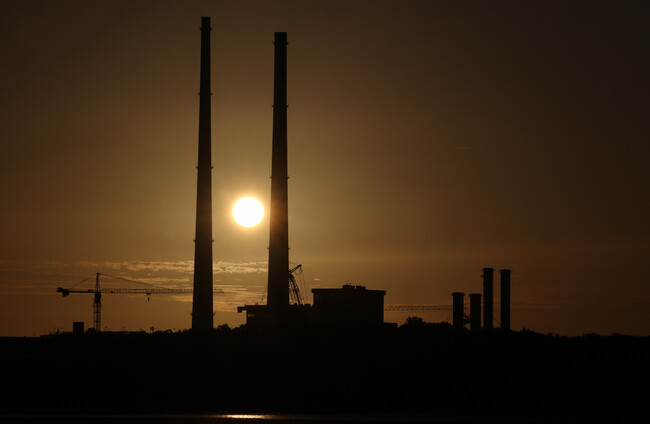
LAST YEAR was the fourth hottest year on record in Ireland.
That is according to Met Éireann, which measured the average air temperature in 2023 as 10.72 degrees Celsius, which is 1.17 degrees above the 1961-1990 long-term average (LTA) or 0.55°C above the most recent 1991-2020 LTA.
The five warmest years on record are 2023, 2022, 2007, 2024 and 1945. Seven of the top ten warmest years have occurred since 2005.
The coldest year on record was in 1919 with 8.73 degrees. None of the top ten coldest years have occurred since 2000.
Provisional rainfall measurements show that 2024 was the 41st driest year or 44th wettest since 1941.
For many countries, incluidng Brazil, Serbia, China, and Indonesia, 2024 was their hottest year yet.
In December, the UN’s weather and climate agency said it was on track to be the hottest year worldwide, capping a decade of unprecedented heat.
Meanwhile emissions of greenhouse gases grew to new record highs, locking in more heat for the future, the World Meteorological Organization said.
“Climate change plays out before our eyes on an almost daily basis in the form of increased occurrence and impact of extreme weather events,” WMO secretary general Celeste Saulo said.
“This year we saw record-breaking rainfall and flooding events and terrible loss of life in so many countries, causing heartbreak to communities on every continent.
“Tropical cyclones caused a terrible human and economic toll, most recently in the French overseas department of Mayotte in the Indian Ocean.
“Intense heat scorched dozens of countries, with temperatures topping 50 degrees Celsius (122 degrees Fahrenheit) on a number of occasions. Wildfires wreaked devastation.”
With reporting by AFP

To embed this post, copy the code below on your site














have your say