Sign in. It’s quick, free and it’s up to you.
An account is an optional way to support the work we do. Find out more.
Sign in. It’s quick, free and it’s up to you.
An account is an optional way to support the work we do. Find out more.
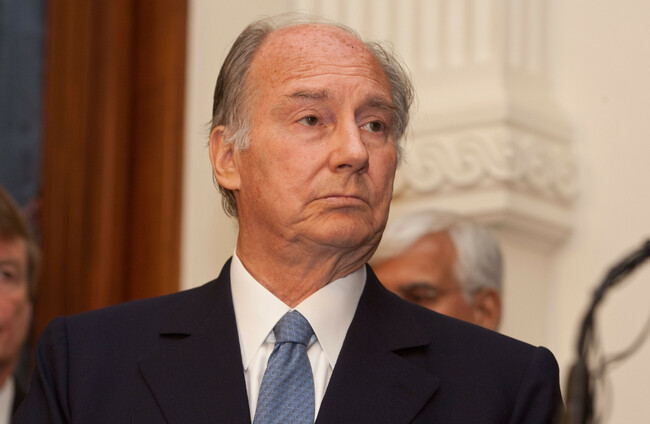
THE AGA KHAN, Imam of the Ismaili Muslims and a notable supporter of Irish racing, has died aged 88.
He was the founder and president of the Aga Khan Development Network, which employs 96,000 people and finances development programmes particularly in Asia and Africa.
Present in multiple countries, notably in central and southern Asia, Africa and the Middle East, the Ismaili community numbers 12 to 15 million, according to its website.
United Nations chief Antonio Guterres described the Aga Khan as “a symbol of peace, tolerance and compassion in our troubled world” following the religious leader’s death.
Malala Yousafzai, Nobel Peace laureate and education campaigner, said his legacy would “live on through the incredible work he led for education, health and development around the world”.
The Aga Khan was a regular on the racetrack and continued the family tradition of breeding thoroughbreds.
He also ploughed a large amount of his inherited wealth into philanthropic projects.
The Aga Khan was a notable supporter of Irish racing and one of the driving forces behind the redevelopment of the Curragh.
The Aga Khan Trophy is a renowned event on the Irish showjumping calendar, which takes place during the Dublin Horse Show at the RDS every summer. The trophy was donated by the Aga Khan’s father, a regular visitor, in 1926.
Khan was the owner of Shergar, a Derby-winning racehorse who was stolen from his stud farm in Co Kildare in 1983 and never seen again.
Shergar’s kidnapping is widely believed to have been conducted the IRA, with the star race horse’s remains still undiscovered to this day.
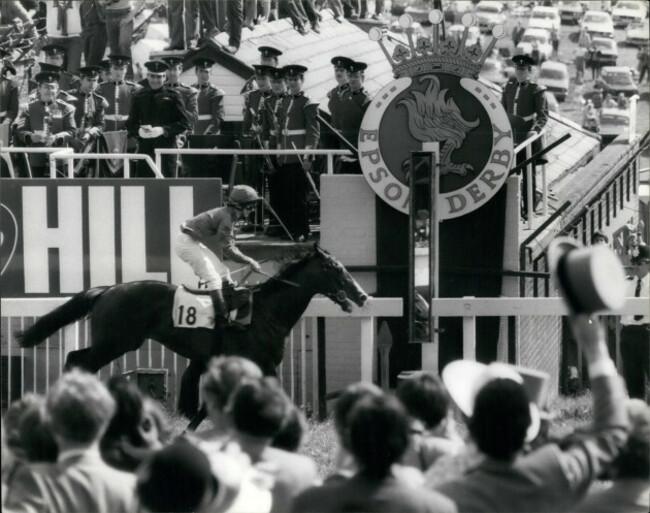
Horse Racing Ireland have since paid tribute to the Aga Khan, with CEO Suzanne Eade saying the sporting organisation was “greatly saddened” to learn of his passing.
“His Highness was an iconic figure in the global racing industry. He was recognised the world over as a champion breeder and a champion owner and he made his mark in many countries with Ireland playing a significant role in his family’s renowned operation for over 100 years,” Eade said.
“On so many levels, Irish racing and breeding will forever be in his debt. We were honoured to present His Highness with Horse Racing Ireland’s Contribution to the Industry Award last December.
“We hope that recognition went some way towards acknowledging his immense contribution, wonderful generosity and unwavering support of our industry for so many years.”
The apolitical and secular development foundation that the Aga Khan created in 1967 is credited with raising literacy levels in 18 countries across South and Central Asia, Africa and the Middle East.
Its work in Pakistan earned the Aga Khan the wrath of Sunni Taliban militants who accused the foundation’s schools of “brainwashing” men and women to stay away from Islam.
During his lifetime, the Aga Khan was awarded honorary Canadian citizenship for his work on development and “tolerance around the world”.
He also held British and Portuguese citizenship. The Ismaili leadership is based in Lisbon, where there is a significant community.
King Charles was “deeply saddened” by the death of the Aga Khan, who was “a personal friend of many years”, an unnamed royal source told British reporters.
Canada’s Prime Minister Justin Trudeau described the Aga Khan as an “extraordinary man of vision, faith, and generosity” who “devoted his life to peace and prosperity for all”.
The UN High Commissioner for Refugees, Filippo Grandi, praised “his exemplary commitment to culture, philanthropy and humanitarian causes”.
I am deeply saddened by the news that His Highness Prince Karim Al-Hussaini, Aga Khan IV, has passed away. He was a symbol of peace, tolerance and compassion in our troubled world.
— António Guterres (@antonioguterres) February 4, 2025
I express my deepest condolences to His Highness’s family and the Ismaili community. pic.twitter.com/VvXCrq8zPQ
Despite his role as the spiritual head of the Ismaili Muslims, he was reluctant to discuss Middle East conflicts, religious fundamentalism or Sunni-Shiite tensions.
Islam is not a faith “of conflict or social disorder, it’s a religion of peace,” he told AFP in 2017.
It is used in situations which are “essentially political, but which are presented, for various reasons, in a theological context. This is simply not correct,” he said.
Additional reporting from AFP

To embed this post, copy the code below on your site













have your say