We need your help now

Support from readers like you keeps The Journal open.

You are visiting us because we have something you value. Independent, unbiased news that tells the truth. Advertising revenue goes some way to support our mission, but this year it has not been enough.

If you've seen value in our reporting, please contribute what you can, so we can continue to produce accurate and meaningful journalism. For everyone who needs it.

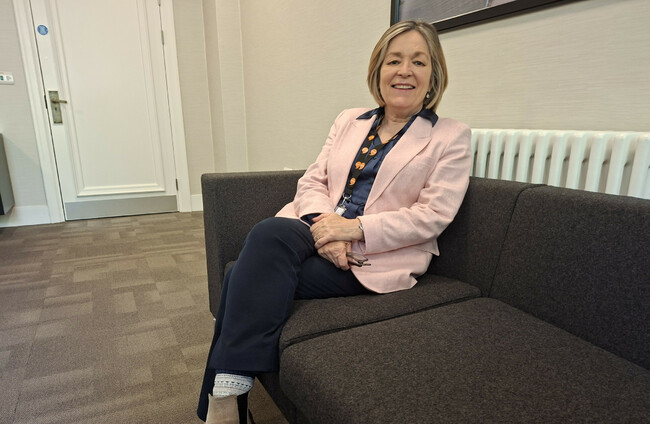
Anna Brychan was appointed to be the Secretary of State for Education and the Welsh Language in Wales after her party, Plaid Cymru, won the most seats in the May Senedd election Concubhar Ó Liatháin

Welsh government set on making Wales a 'truly bilingual country' by 2050 - senior minister

Anna Brychan, the minister with responsibility for the language in Wales, wants to see 1m Welsh speakers by 2050.
(Seo alt ónár bhfoireann Gaeltachta. Is féidir an bunleagan as Gaeilge a léamh anseo)

ONE OF THE very first things that happened when Anna Brychan was appointed Secretary of State for Education and Welsh in the Welsh government recently was that a bunch of civil servants arrived to meet her and her cabinet colleagues with armfuls of identity lanyards for people to wear to show that they are comfortable speaking Welsh at work.

It is noteworthy that responsibility for the Welsh language falls to Brychan alongside education – a clear signal of the importance her party places on the language.

Speaking to The Journal as part of a series on the lessons from Welsh for Irish, Brychan recalled the moment upon her appointment in May, after her party, Plaid Cymru, succeeded in winning the greatest number of seats in the election to the Senedd [Welsh Assembly] in Cardiff.

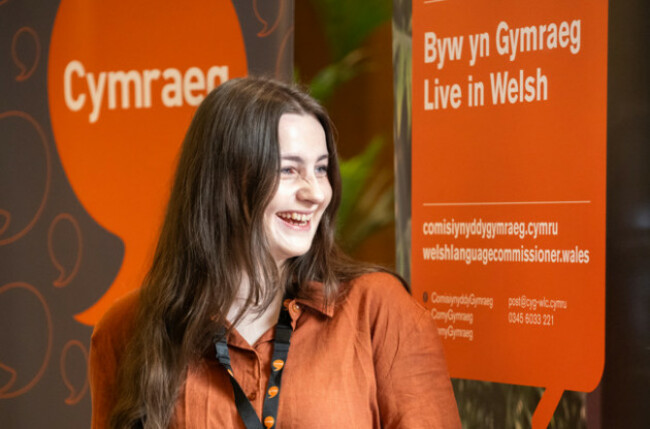
On the lanyards the civil servants brought to Brychan and her cabinet colleagues was an orange speech bubble – a symbol indicating that the person wearing one is willing to use Welsh in their working life.

This is a scheme called Iaith Gwaith (Working Language), used across Wales to encourage people to use the language in their workplaces, and the civil servants were assuming that the new ministers would have Welsh. Plaid Cymru is, after all, the Party of Wales, and the party’s members are language activists as much as they are political activists.

Welsh is at the heart of how we see ourselves and we want to respond passionately to the people of Wales on a more personal level. Welsh belongs to them, it belongs to all of us, whether we speak it fluently or not,” said Brychan.

“But it is worth remembering that when we ask the people of Wales – young people in particular – 85% of them say they would like more opportunities to speak it in the education system.

“They place great value on it, and not only would they like opportunities to use the language at school and to learn through Welsh, but they would also like opportunities to use it in the community – at work, playing sport and taking part in other activities outside of school.”

Welsh is taught in schools and is a compulsory subject until students reach the age of 16. Under legislation, every school must have a Welsh delivery plan, with every school and local authority working towards the target of one million Welsh speakers by 2050.

At present, according to the most recent Census (2021), approximately 538,000 out of a total population of 3.1 million say they are able to speak Welsh, but an annual language use survey indicates that around 830,000 say they are able to speak Welsh.

Under this legislation, schools are divided into schools where Welsh is the primary language of instruction – the equivalent of Gaelscoileanna in Ireland -, Welsh and English-medium schools, and schools where English is the primary medium but where Welsh is also taught.

“We have an expectation that every pupil in Welsh schools will learn Welsh, and this expectation will be strengthened under the government so that people learn Welsh to B2 level, in line with the Common European Framework of Reference for Languages, so that they can use it in the community,” Brychan said. 

As regards schools that teach through Welsh, our target is that 50% of schools in the country will be teaching through Welsh by 2050.

Currently 24% of schools teach through Welsh.

The Welsh government in Cardiff has another tool for advancing Welsh: local authorities. Each authority has a responsibility to agree and implement a strategic plan for Welsh-medium education, incorporating the teaching of the language across the education system, with targets that mean they must substantially strengthen their efforts.

“We are currently reviewing these plans to ensure they are on track towards our 2050 target, or whether further amendments are needed,” said Brychan. 

Language activists and organisations in Ireland frequently complain about what they see as the Department of Education’s resistance to Irish – a perception that is becoming more widespread given the growing number of Irish language exemptions or the Department’s recent statement indicating that no further Gaelscoileanna or Irish-medium secondary schools would be built.

It will certainly surprise some, then, that in Wales the minister responsible for education is also responsible for Welsh. She said: 

This did not happen overnight in Wales either. It is the culmination of work over generations to place Welsh at the centre of national life and to make these opportunities available to everyone.

“From my point of view, with education and the language under my remit, they are two sides of the same coin.

“Education is the key to our goal of Wales being a country that is truly bilingual.”

She said a great deal of work was also being done to extend the use of Welsh among the wider community.

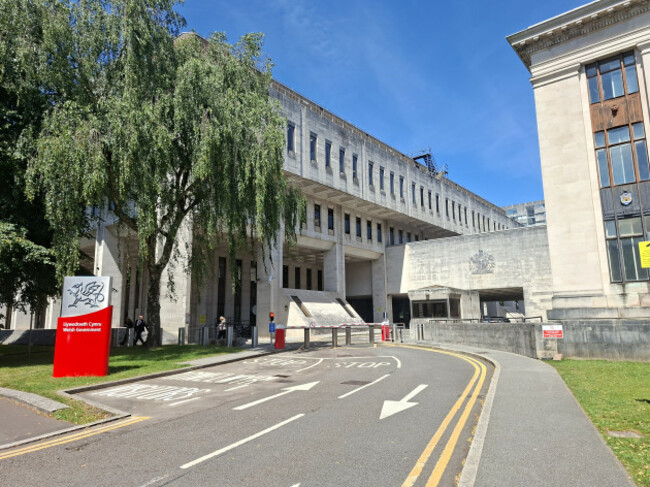
20260702_143658 The newly installed Plaid Cymru led Government in Wales is intent on realising the ambition of 1m plus Welsh speakers by 2050. Concubhar Ó Liatháin Concubhar Ó Liatháin

In the heartland Welsh-speaking communities – Y Fro Gymraeg – work is underway to protect the language in places where 40% or more speak Welsh every day.

“How do you preserve the language, how do you develop it in these communities? It is all connected because we want to develop policy around language and economic development, around the work that is going on, particularly regarding the resilience of rural communities.

“All of these policies need to come together to give people the opportunity to stay in their own communities, work through Welsh and have the social opportunities as well,” she said.

Just as the housing question is central to the vitality of the Gaeltacht in Ireland, it is at the heart of the question regarding the future of Welsh as a spoken language in its core communities in Wales.

“We are also looking at access to housing here, because what happens here – as in Ireland – is that there is pressure on housing stock in the areas where Welsh is most spoken, in the western parts of the country.”

She said there were many people with holiday homes in these areas and that there is a connection between that issue and the cost of housing.

“It is certainly the case that conversations are ongoing about how we can ensure that houses will not be too expensive for young people, so that Welsh speakers can remain in their communities.”

She also acknowledges that young people are often drawn to move from those rural areas to the city in search of work and a more vibrant social life. She herself is someone who moved from her home place of Aberystwyth to Cardiff, where she has now lived for more than 20 years – and where she is able, as it happens, to live her life through Welsh.

Part of her emphasis and that of her government is on creating the employment that will ensure people – couples among them – move back to the heartland Welsh-speaking communities, with good employment and pay to go with it.

Only two months have passed since Plaid Cymru came to power and since Brychan was appointed. She is well aware that there is great work ahead and a long road before her, but she feels the change they are seeking is already beginning to take shape.

062411_conference_009_n-treharne Work ID lanyards featuring an orange speech bubble denote that the person wearing is comfortable using Welsh while they work. Nick Treharne Nick Treharne

And that brings us back to the lanyards that the civil servants brought to her and her colleagues on their first day in government.

“I understand that everyone has a few words of Welsh, everyone has ‘bore da’ ['good morning'], but I don’t see people as Welsh speakers or Welsh non-speakers. I look at people as if they are on a language journey.

We are all on the bus of bilingualism and the place you start is not the same as where you end up – things are more fluid now, we don’t put each other in boxes.

“We are no longer dividing the two parts of our Welsh identity from each other – I don’t believe we are.”

As an illustration of the change that is taking place, she described her own family story. “My mother learned Welsh as an adult and my father didn’t have it growing up either, but I had a Welsh-speaking family because my children went to a Welsh-medium school as I did myself.

“Now my mother’s extended family don’t speak English – that is something that is becoming more common.

“We are more comfortable with the language than we used to be, perhaps.”

The Journal’s Gaeltacht initiative is supported by the Local Democracy Reporting Scheme

 This article was originally written in the reporter’s native Irish and has been translated to English here. AI was used as part of the translation process before final edits.

Close
Comments
This is YOUR comments community. Stay civil, stay constructive, stay on topic. Please familiarise yourself with our comments policy here before taking part.
Leave a Comment
    Submit a report
    Please help us understand how this comment violates our community guidelines.
    Thank you for the feedback
    Your feedback has been sent to our team for review.

    Leave a commentcancel

     
    JournalTv
    News in 60 seconds