Sign in. It’s quick, free and it’s up to you.
An account is an optional way to support the work we do. Find out more.
Sign in. It’s quick, free and it’s up to you.
An account is an optional way to support the work we do. Find out more.
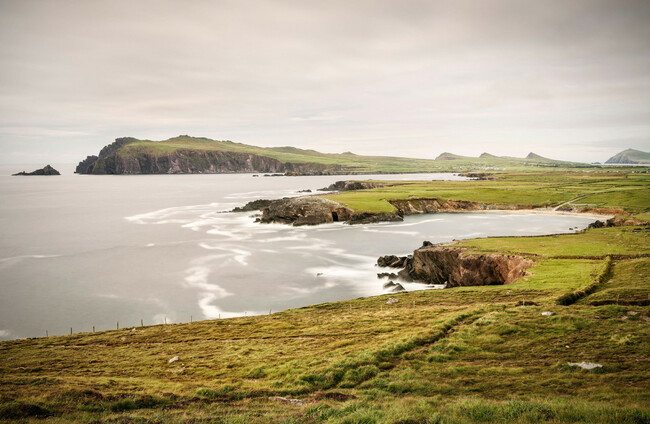
NEW RESEARCH HAS revealed that ancient “Kerry cow” bones discovered on the Dingle Peninsula were “never cattle at all”.
The research has been led by University College Dublin (UCD), who say that the finding has “rewritten a key chapter in Irish prehistory” and “challenges a long-held theory on farming’s arrival in Ireland and Britain”.
Between 1983 and 1995, a University College Cork team undertook an excavation at Ferriter’s Cove, a small bay on the Dingle Peninsula in Kerry.
Bone fragments from this dig were radiocarbon dated to the second half of the fifth millennium BC and anatomically identified as human, and others as domestic cattle.
These “Kerry cow” bones have since been cited as proof that before agriculture became established in Ireland, there was contact between its Mesolithic hunter-gatherers and Europe’s Neolithic farming communities.
The find was considered to be the earliest evidence for the presence of domesticated farm animals for the islands of Ireland and Britain.
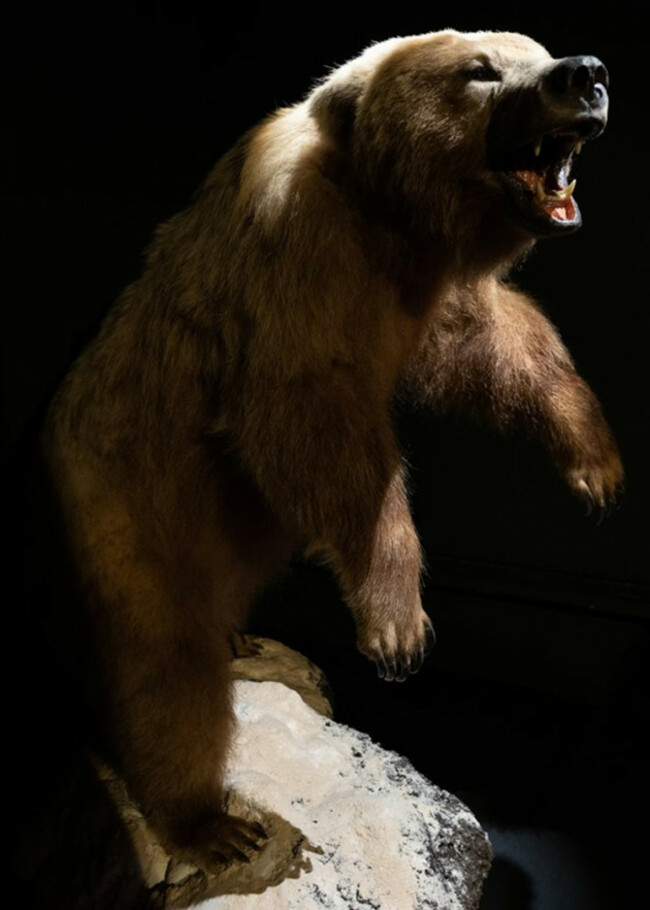
However, researchers have said that these bones “long thought to mark the beginning of farming in Ireland belong to bear and wild boar, not cattle”.
Detailed in the latest edition of PAST, the newsletter of the Prehistoric Society, researchers say the discovery “removes one of the most significant pieces of evidence for when agriculture developed in Ireland or Britain”.
They added that it will “likely force a rethink of when and how their communities moved from Mesolithic hunter-gatherer lifestyles to Neolithic farming societies”.
The new research is part of a project at the UCD School of Archaeology, led by Dr Martin Moucheron and under the mentorship of Professor Graeme Warren, which is re-examining important Mesolithic archaeological sites using modern scientific techniques.
Dr Moucheron said there is “much we can understand about Mesolithic people just by going back to the sites and material we have, and by looking at them with new eyes and new techniques – and an open mind”.
The presence of the so-called “Kerry cow” had contradicted existing theories of the Mesolithic–Neolithic transition in Ireland, and has been cited as evidence that its Mesolithic communities had established links with early farmers arriving from Continental Europe.
The original archaeological material from Ferriter’s Cove were sent to the CNRS lab in Lille, France, to undergo biomolecular analysis.
Using a technique known that identifies species through proteins preserved in ancient bone collagen, the results found the fragments were not from domesticated cattle as originally thought but instead came from a bear and a wild boar.
As a result, there is currently no archaeological evidence to support the idea that domesticated cattle, and by extension, early farming communities, had reached or influenced Ireland before 4000 BC.
Professor Warren remarked that these “exciting results show the real value in going back to key sites with new analytical techniques – which can change the stories we tell about our past”.
Researchers added that the study “demonstrates how advances can challenge long-held assumptions and reshape the understanding of the past”.
Further analyses are now underway to determine whether the bear remains belonged to brown bears or polar bears, with the hope of providing new insights into prehistoric Ireland’s bear populations prior to their extinction during the Bronze Age.

To embed this post, copy the code below on your site















have your say