Sign in. It’s quick, free and it’s up to you.
An account is an optional way to support the work we do. Find out more.
Sign in. It’s quick, free and it’s up to you.
An account is an optional way to support the work we do. Find out more.
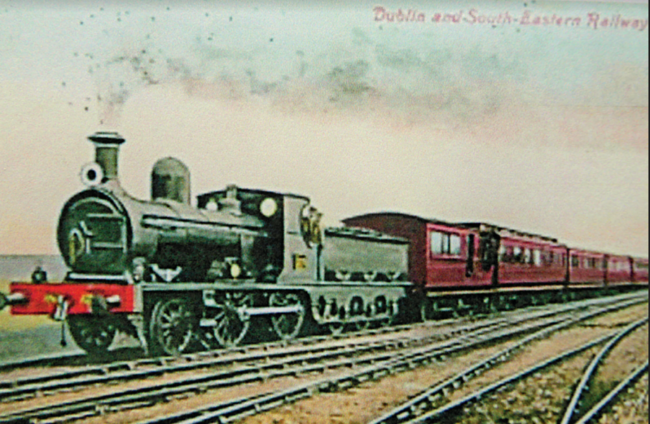
BEFORE THE DART, Dublin had the world’s first dedicated commuter railway line, running from Westland Row to Kingstown (now Dún Laoghaire).
The line was initially planned as a freight railway but became popular with commuters and holidaymakers heading to Kingstown when it opened in 1834.
According to historian Kurt Kullman, this commuter rail literally lay the foundation for the DART.
Originally tickets were priced according to class and not distance, to accommodate the deep-rooted class attitudes of the time.
First-class carriages held three passengers per seat row on stuffed cushions, with 18 passengers per carriage. Those carriages also had blinds on the windows.
Third-class carriages were open from waist-level up and did not have doors. The carriage took thirty-five passengers in total.
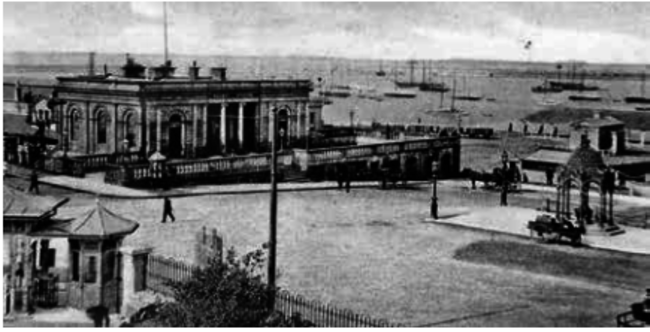
In his book, The First Irish Railway – Westland Row to Kingstown, Kurt Kullmann says that the railway was more expensive to build than other lines around the world.
The cost in pounds was outlined in an 1839 article quoting the Royal Commission: for American railways, one mile of railway cost £6,000, while the Dublin & Kingstown Railway was £40,000.
The high price per mile for the Dublin railway might have had something to do with the fact that the line included eight bridges over streets, apart from the bridges crossing the Grand Canal Basin and the Dodder.
Another cost included structures that were erected for Lord Cloncurry and the Reverend Sir Harcourt Lees, plus the payments to them for being allowed to build the line
across their properties.
Those payments (without the costs for the additional structures) amounted to £10,500.
As the line was originally less than 6 miles long, these costs would have increased the price per mile considerably.
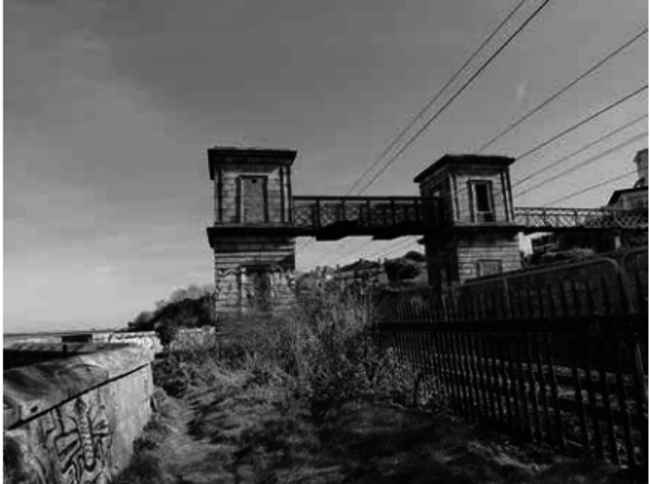
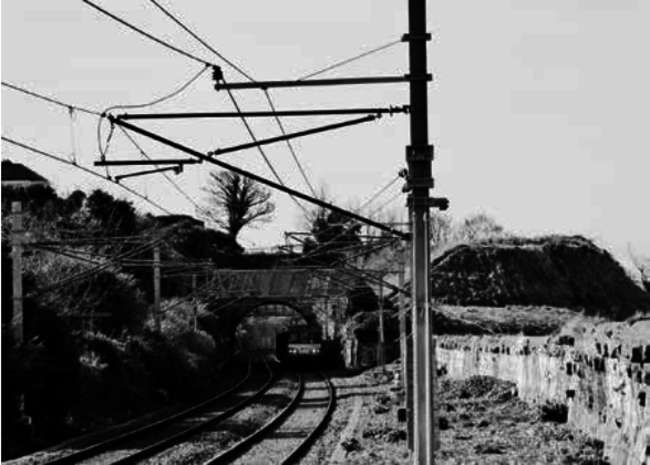
Before the famine between 1845 and 1849, the situation of the Irish lower classes was appalling according to Kullman.
In the early 1830s, there were very few jobs for the poor and on top of that, cholera broke out in 1832 and 1833 in the Dublin area, with Ringsend, Irishtown and Sandymount badly affected by it.
Building the railway should have been a boost to that area, but the people were so emaciated that the railway company ignored them and employed people from the countryside.
They were stronger and therefore better able to survive the hard manual work. The line was built manually and no machinery was used.
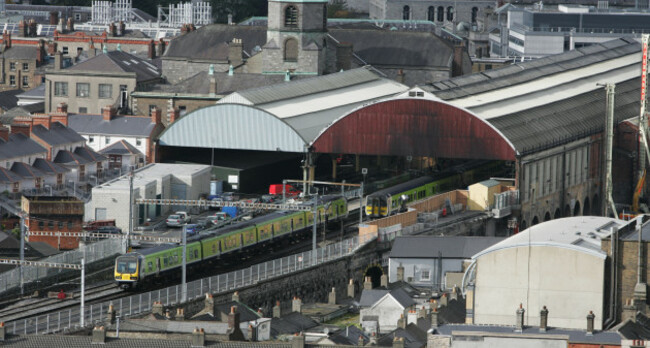
In 1960, the service for most of the stops between Westland Row and Dún Laoghaire was discontinued and for twenty-four years any commuter on that stretch would have to rely on the bus service.
In the early 1980s, a stretch from Howth through Dublin city centre to Bray was electrified and a new commuter service was introduced, the DART.
From 1984 on, electric multiple units were used for the stretch from Howth to Bray. Later the line was extended to the north to Malahide and to the south to Greystones.
Kurt Kullmann’s new book ‘The First Irish Railway: Westland Row to Kingstown’ will be released later this month.

To embed this post, copy the code below on your site











have your say