We need your help now

Support from readers like you keeps The Journal open.

You are visiting us because we have something you value. Independent, unbiased news that tells the truth. Advertising revenue goes some way to support our mission, but this year it has not been enough.

If you've seen value in our reporting, please contribute what you can, so we can continue to produce accurate and meaningful journalism. For everyone who needs it.

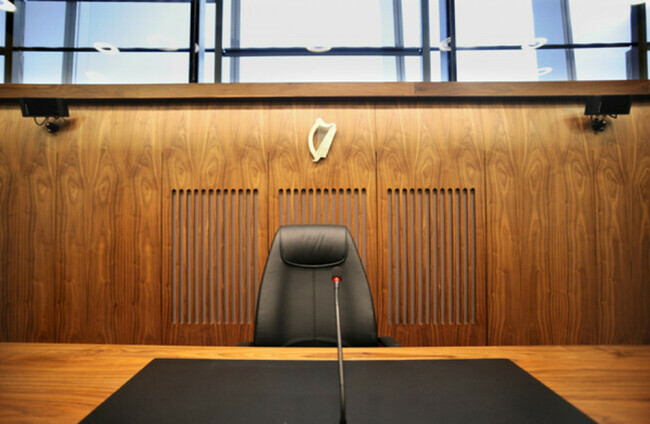
He accused the trial judge of being biased against him due to the tone she used when she asked the jury how their lunch was.

Man appealing assault conviction claims jury 'dined with the State' over subsidised lunches

Feliks Andrianov claimed that his actions against the security guard that clamped his vehicle were “proportionate”.

A TAXI DRIVER who assaulted a security guard who had clamped his car has told the Court of Appeal that the fact his trial jury had their lunch subsidised meant they “dined with the State”, creating “psychological relations” that added to an alleged bias against him.

Feliks Andrianov (55) also argued today that his actions were a “proportionate response to an unjust clamping enforcement” and that the trial judge displayed a bias towards him by making him view body cam footage of the assault.

Following his trial at the Dublin Circuit Criminal Court in July last year, Andrianov, of Corduff Green, Blanchardstown, Dublin, was unanimously found guilty of assault causing harm at a McDonald’s restaurant at Dublin Airport on 5 July 2019.

He denied the charge and has no previous convictions.

He was sentenced by Justice Elma Sheahan in November 2024 to 18 months in prison, suspended for 18 months.

At the sentencing hearing, Garda Paul Murphy gave evidence that the injured party Michael Norris, who was working at the McDonald’s restaurant located across from Dublin Airport, saw a taxi driver park his car and leave the area to go to Circle K.

Signs stating that cars parked in the location would be clamped were posted throughout the area.

Norris proceeded to clamp the vehicle, before Andrianov returned to his car and was informed that the car park was for McDonald’s customers only. Norris then turned on his body cam.

The court heard that Andrianov looked down at the body cam, put his hand over it and instigated an altercation by grabbing Norris.

The security worker noticed that his left shoulder was injured, and he was unable to move it.

He was treated at Beaumont Hospital, with an X-ray showing he had a dislocated left shoulder.

During questioning, Andrianov told gardaí that he had been struck first by the security guard. Gardaí obtained CCTV and the body cam footage, which showed that the security officer did not hit the taxi driver.

In launching his appeal against conviction today, Andrianov submitted that his legal representatives failed to present a legitimate defence, namely that his actions were a proportionate response to an unjust and procedurally flawed clamping enforcement.

He also said that CCTV evidence was admitted by the judge without verification of its integrity, and no direction was given to caution the jury about “the inconsistencies” in the footage.

Andrianov, who represented himself, further claimed that he was removed from the witness box, telling the court that he was denied the right to finish his testimony.

He accused the trial judge of being biased against him, due to the tone of voice she used to address the jury when she asked them: “How was your dinner?”

“The jury’s lunch was partially funded, that creates psychological relations for the jury, they dined with the State,” he said.

The appellant said that his defence team at the trial asked that he be excluded from watching the body cam footage, but the judge insisted.

He said there was “some argument on the body cam, but nothing extraordinary.”

“I was in some desperate state because my mother was dying, that’s why I was in that state,” he said. 

He went on to say that the trial judge told him he could close his eyes during the playing of the body cam footage, but he could still hear the audio, which had “a traumatising effect” on him.

He further claimed he was the victim of “a technical assault” when he was in custody and a garda pulled at his clothes with no provocation.

A further ground of appeal he advanced was that the jury was misdirected in law by being instructed under section 2 of the Non-Fatal Offences Against the Person Act but invited to return a verdict under section 3, which he claimed was “a legal inconsistency”.

He told the court that he received “defective assistance of counsel” from his legal team, as he instructed his legal representatives to challenge the CCTV footage but not the body cam footage, and he claimed his counsel acted against these instructions.

He said that his barrister had admitted that he only became privy to information relevant to the case the day before the trial, which was not enough time to prepare the case.

“I got no legal advice, he just came and pretended he knew everything, instead of asking for an adjournment,” he said, adding that his proper defence of citizen’s arrest was never advanced.

Justice Peter Charleton asked Andrianov who was arresting whom, to which the appellant replied that the complainant “was causing me pain”, so he [Andrianov] attempted to arrest him “for trespassing”.

“I didn’t touch his body, only his body cam. He was hitting me on the head, I didn’t hit him back,” he said.

Counsel for the Director of Public Prosecutions, Jane Horgan-Jones BL, said it was quite apparent that the appellant’s legal team had made a substantive objection to the admission of CCTV footage, with the authenticity of it challenged in a voir dire, after which the court was satisfied to admit it.

Horgan-Jones said there was nothing in the transcript of the trial to justify the appellant’s complaint about the judge’s ruling on the admissibility of the CCTV footage.

She said his allegation of the footage having been tampered with was speculative, with the judge admitting it into evidence and telling the jury it was a matter from them to decide its worth.

Concerning the appellant’s assertion that he was “prematurely removed from the witness box”, Horgan-Jones said that the cross-examination of Andrianov had been concluded at that point and his testimony had come to an end.

She pointed out that there is no right for an accused person to continue giving evidence after both sides have finished their questions.

Addressing the remaining grounds of appeal, counsel said that the trial judge had been correct to say that the appellant had to be present for his trial, during which the CCTV footage had to be viewed.

Concerning Andrianov’s claim of misdirection by the judge, Horgan-Jones said that the judge’s references to section 2 assault were made to give the jury a definition of the offence of assault, with the judge making it clear that the jury would have to be satisfied of the extra element of harm to convict him.

Judge Charleton said the court would reserve judgement in the case.

Readers like you are keeping these stories free for everyone...
A mix of advertising and supporting contributions helps keep paywalls away from valuable information like this article. Over 5,000 readers like you have already stepped up and support us with a monthly payment or a once-off donation.

Close
JournalTv
News in 60 seconds