We need your help now

Support from readers like you keeps The Journal open.

You are visiting us because we have something you value. Independent, unbiased news that tells the truth. Advertising revenue goes some way to support our mission, but this year it has not been enough.

If you've seen value in our reporting, please contribute what you can, so we can continue to produce accurate and meaningful journalism. For everyone who needs it.

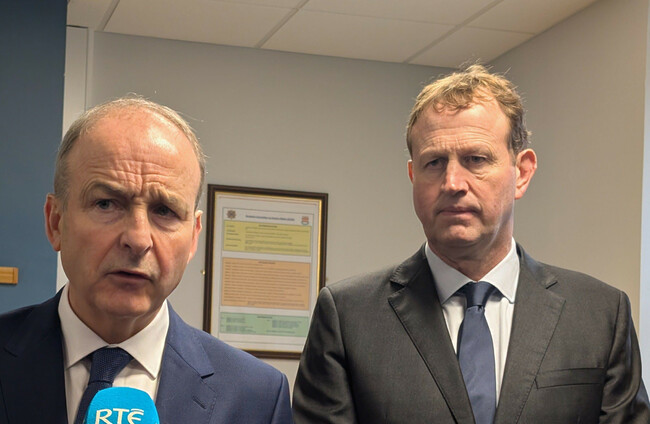
Taoiseach Micheál Martin and Jim O'Callaghan Alamy Stock Photo

Government pushes on with 'tough' stance on migration with new rule changes before Cabinet today

Senior sources say there are real worries about the impacts the UK reforms will have on Ireland.

PLANS TO TIGHTEN Ireland’s migration rules are due to go to Cabinet today. 

The measures, which have been well flagged by government, seeks to reduce the number of people coming to Ireland through the asylum process, however, moves are afoot to target other areas of migration also. 

The proposals to be approved today seek to increase the amount of time an international protection applicant must be resident in Ireland before seeking naturalisation from three years to five years and to increase the cost of doing so.

Other reforms already in the works include making asylum seekers who are working contribute financially, up to 40% of their income, towards their accommodation and offering payments to asylum seekers to drop their claims and leave the State.

The Taoiseach has also confirmed that certain types of welfare payments, paid to people seeking Irish citizenship, will be taken into consideration as part of the application process. 

All these proposals come on the back of debate about migration and comments made by government leaders, such as Tánaiste Simon Harris, that the numbers arriving into Ireland are too high. 

Last year, when the European Migration Pact was being voted on, Harris denied that ‘Ireland is full’, telling RTÉ: “Irish people are very fair. Migration is a good thing. We need people to come to Ireland. We need them to do it legally.”

Fast forward 18 months or so and Harris, as well as others in government, have said that the general migration figures, outside of asylum applications, are “too high”.

Opposition parties have slammed Harris in recent weeks for his comments, stating that his language failed to explain the complexities around migration, conflating the different groups coming to the country, either for work or asylum, while also failing to state that the numbers seeking asylum in Ireland have fallen this year in comparison to last year. 

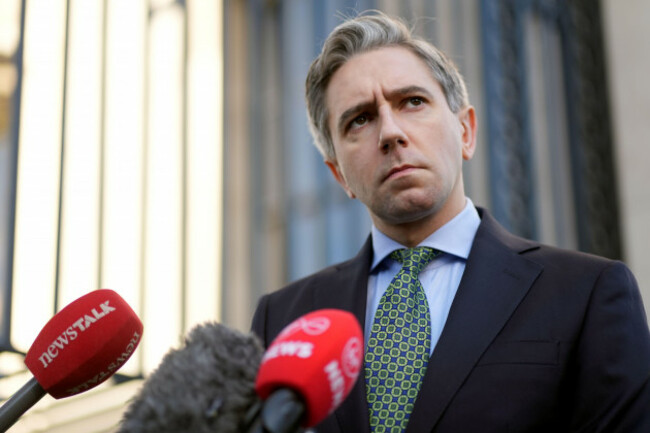
tanaiste-simon-harris-speaks-to-media-ahead-of-a-cabinet-meeting-at-government-buildings-in-dublin-picture-date-wednesday-october-29-2025 Tánaiste Simon Harris Alamy Stock Photo Alamy Stock Photo

International protection numbers

In 2020 and 2021, during the pandemic, the numbers were small at 1,500 and 2,600 but then in 2022 and 2023 we had 13,500 people applying for international protection in each of those years.

Last year 18,500 people applied, but the numbers have reduced this year, falling by around 40%. 

Accusations of who is being more populist have been bandied around, with Harris being accused of being a populist for his comments, with the Tánaiste also accusing the opposition parties of “political populism” by asserting that Ireland can go it alone when it comes to migration. 

Yesterday morning, the opposition told the media that they are not trying to shut down the debate around migration, something that Harris has asserted in the past.

Social Democrats TD Gary Gannon said they want a debate on it that is rooted in facts. He said a number of the new changes are “quite significant”. and he believes there’s “cruelty inbuilt to some aspects of it”.

Former Integration Minister Roderic o’Gorman was also very critical of the new proposals stating that they are actually “anti-integration measures”. He said Ireland shouldn’t blindly following the UK’s lead. 

Opposition parties have also accused the government of being irresponsible in their use of language around migration, particularly in light of recent protests and violent incidents, stating that there is a risk that government moves will only bolster the far-right. 

Nevertheless, the debate around migration has definitely shifted in the space of a few years, with government wanting to appear to be taking a much tougher stance on the issue. 

EU Migration Pact and UK changes

Government sources say there are two big reasons for a change in tac – one being their obligations under the new EU Migration Pact, which Ireland has signed up to, as well as the reforms the UK are making to their migration rules. 

The EU Migration and Asylum Pact seeks to create uniform rules around the identification and speeding up of decisions on asylum claims of people who arrive from outside the EU, and to develop a common database about new arrivals to Europe.

Just this week, the European Commissioner for Migration, Magnus Brunner, was over in Ireland to assess our preparations and compliance. 

He told reporters that ireland is a “frontrunner” in terms of our preparation to adopt the EU Migration and Asylum Pact and that Citywest international protection centre is an example of “best practice”, comments those in Independent Ireland and Aontú vehemently disagree with. 

Senior sources have told The Journal that there is significant worry around the migration changes being rolled out in the UK and the impacts they will have in Ireland. 

Taoiseach Micheál Martin has said there could be “knock-on effects, consequences from what others do. That’s the reality’.

Former Taoiseach Leo Varadkar, in his Sunday Times column last weekend, said: “Ireland simply has no choice but to align its rules with those of the UK. Otherwise, we will see significant secondary movements from there to here.”

Sources state that the flow of migrants through Northern Ireland is something of concern and is not a problem that government cannot easily solve. 

In order to adhere to the Migration Pact, the government is currently working on a new International Protection Bill to reform Ireland’s asylum system. This will be published later this year. 

It is not just the international protection system that is being reformed, with changes to work permit structures also under scrutiny by government as well as the student visa system. 

While government members have said that much needed workers in sectors such as the health system will not be targeted, the 60,000 or so student permissions for those coming from abroad is an area the government is looking at, particularly in respect of English language schools.

While the government is looking at the broad umbrella of reducing numbers, there are negative impacts to be considered. 

The Irish Refugee Council has criticised the proposed tightening of immigration rules, stating it is irresponsible for government to make people choose whether to avail of social welfare supports or choose not to for fear of any repercussions.

Other experts in the area have said charging those in direct provision for their accommodation will only make the system more congested as those that are permitted to work will now not be able to save for a deposit and move out sooner. 

When it comes to student visas, much of the income that universities and colleges rely on comes from student fees charged to non-EU nationals. If that is reduced, more money will have to be given through the Exchequer. 

In 2023, nearly four in every ten doctors registered with the Irish Medical Council were trained outside Ireland, and one in four were trained outside the UK and the EU. In the same year, there were 27,500 migrant workers in Ireland’s construction sector. 

Some stats that the government would be prudent to keep in mind when making any future changes to the system. 

Need more clarity and context on how migration is being discussed in Ireland? Check out our new FactCheck Knowledge Bank for essential reads and guides to finding good information online.

Readers like you are keeping these stories free for everyone...
A mix of advertising and supporting contributions helps keep paywalls away from valuable information like this article. Over 5,000 readers like you have already stepped up and support us with a monthly payment or a once-off donation.

Close
JournalTv
News in 60 seconds