We need your help now

Support from readers like you keeps The Journal open.

You are visiting us because we have something you value. Independent, unbiased news that tells the truth. Advertising revenue goes some way to support our mission, but this year it has not been enough.

If you've seen value in our reporting, please contribute what you can, so we can continue to produce accurate and meaningful journalism. For everyone who needs it.


A man sits on a park bench with water to his shins as the River Dodder floods in Dublin. Rolling News

Parts of Dublin are flooded - why wasn't there a rain warning?

Storm Chandra flooded many parts of Dublin, but the rain fell just short of Met Éireann’s warning criteria.

CARS ABANDONED, PEOPLE rescued by dinghy, schools closed and thousands without power – Storm Chandra has caused severe disruption across Dublin this morning, with flooding particularly acute just south of the city.

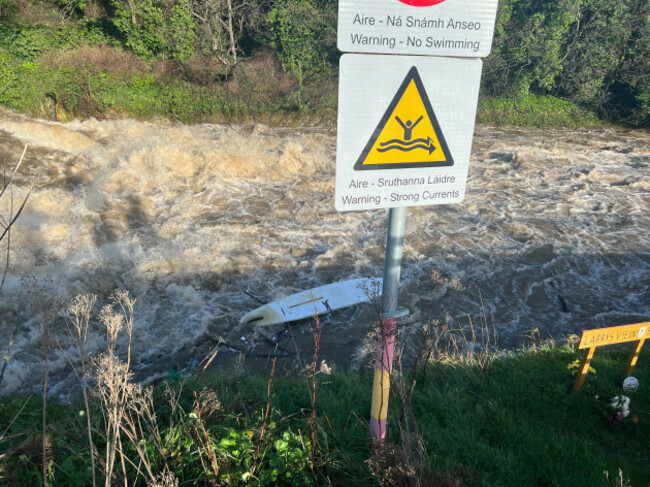
Dodder Road Lower is currently completely closed as the river overflowed at Milltown earlier, with residents describing scenes of “unbelievable” flooding and water rising rapidly towards homes.

The Journal / YouTube

Dublin Fire Brigade prioritised life-risk emergencies as cars were left stranded across Rathfarnham, Sandyford, Nutgrove and Rathgar, while sections of the M50 were also shut due to floodwater.

Yet despite the scale of the flooding, Met Éireann did not issue a rain warning for Dublin yesterday in advance of the storm’s arrival.

Rain warnings were issued in advance for nearby counties such as Wicklow and Louth, but only a wind warning was in place for the capital. 

The lack of rain warning for Dublin has prompted questions about how weather warnings are issued, and whether they fully account for already saturated ground.

What was forecast?

Met Éireann said Storm Chandra had been forecast to bring heavy rain and strong winds nationwide, with updated assessments delivered at a technical briefing of the National Emergency Co-ordination Group (NECG) yesterday afternoon.

Aoife Kealy, a meteorologist with Met Éireann, told The Journal that it had been highlighted at that briefing that Dublin faced a high likelihood of surface flooding.

“At that time, it was indicated that there would be a high likelihood of surface flooding in Dublin, largely due to a combination of the expected rainfall and, importantly, the antecedent conditions,” she said.

Kealy said the country had experienced exceptionally wet conditions in recent weeks, with parts of the south and east recording three to four times the average rainfall over the past seven days alone.

So, why was there no rain warning for Dublin?

Kealy explained that Met Éireann’s weather warnings are primarily based on forecast rainfall thresholds, rather than how wet the ground is before a storm arrives.

For a Status Yellow rainfall warning, rainfall totals must reach between 30mm and 50mm within a 24-hour period.

She said that while Storm Chandra’s track shifted slightly northwards, bringing heavier rain to Dublin than initially expected, rainfall totals across much of the county remained just below warning thresholds.

“Two stations recorded rainfall amounts in the Dublin region that were just on the low end of yellow-warning-level criteria,” Kealy said.

“All other stations across Dublin did not reach those accumulations.”

IMG_1212 The River Dodder pictured this morning. The Journal The Journal

She added that the flooding seen across the city was driven less by extreme rainfall overnight, and more by what had already fallen in the days beforehand.

“The big thing in this case was actually the previous conditions,” Kealy explained.

“It has been so wet in the run-up to the event that rainfall, which otherwise may not have caused an issue, did cause an issue in this case.”

Kealy said that while recent rainfall, river levels and ground saturation are considered during emergency briefings, they are not currently built into the formal warning thresholds.

“There were impact considerations discussed,” she said, “but the weather warning criteria at the moment are primarily for the meteorological conditions themselves.”

She said the flood risk in Dublin had been clearly communicated to emergency planners, even though the rainfall forecast did not trigger a county-wide warning.

Could the warning system change?

Asked whether more localised or flooding-specific warnings could be introduced, Kealy said any such move would require careful review.

“That would have to be assessed,” she said, noting that current county-based warnings are designed to be easily understood and used by local authorities and emergency services.

“We’d have to ensure that local authorities were able to use that information. At the moment, the county warnings are how we issue and communicate the warnings, not only to the public, but to those local authorities,” Kealy said.

Minister for Housing, Local Government and Heritage James Browne said a more targeted flood warning system is something that should be examined, but warned of potential unintended consequences.

IMG_1182 Emergency workers pictured dealing with floodwaters at the River Dodder. The Journal The Journal

“Some local authorities, such as Wexford County Council, have become very good at predicting when rivers are going to flood,” he told RTÉ’s News at One.

“Whether a more formalised national approach would help is something that needs to be looked at very carefully.”

What’s happening on the ground?

Storm Chandra has caused widespread disruption across Dublin.

Residents along Dodder Road Lower said water rose rapidly early this morning, with one resident describing the flooding as “the worst I’ve ever seen”.

“We could see it getting closer and closer, it was very scary,” one woman said, adding that the river had already been high before the storm arrived.

Dublin Fire Brigade said it was prioritising life-risk emergencies, while Transport Infrastructure Ireland confirmed “major disruptions” on the M50 due to flooding at Junction 13.

Rail services have been delayed across the network, flights at Dublin Airport have been disrupted by strong winds, and several schools in south Dublin closed due to impassable roads.

Around 5,500 homes, farms and businesses were without power across Ireland on Tuesday afternoon, with flooding also reported in Wicklow, Wexford and Louth.

What happens next?

Met Éireann warned that flood risks will persist for the rest of the week due to saturated soils, overflowing rivers and slow drainage, even as rainfall gradually eases.

Kealy said that even as conditions improve, impacts could linger.

“Even when it’s not actively raining, there can still be significant impacts from high river levels and surface water,” she said.

Dublin remains under a Status Yellow wind warning until 11pm, while several counties remain under Status Yellow rain warnings, with authorities urging the public to avoid flooded areas and continue to follow updates from local councils.

Readers like you are keeping these stories free for everyone...
A mix of advertising and supporting contributions helps keep paywalls away from valuable information like this article. Over 5,000 readers like you have already stepped up and support us with a monthly payment or a once-off donation.

Close
47 Comments
This is YOUR comments community. Stay civil, stay constructive, stay on topic. Please familiarise yourself with our comments policy here before taking part.
Leave a Comment
    Submit a report
    Please help us understand how this comment violates our community guidelines.
    Thank you for the feedback
    Your feedback has been sent to our team for review.

    Leave a commentcancel

     
    JournalTv
    News in 60 seconds