Sign in. It’s quick, free and it’s up to you.
An account is an optional way to support the work we do. Find out more.
Sign in. It’s quick, free and it’s up to you.
An account is an optional way to support the work we do. Find out more.

GARDA SOURCES SAY that ambiguity in the rules around pursuing scramblers is stopping them from being able to catch the bikes on Ireland’s streets, and instead have to focus on trying to identify the drivers afterwards.
Taoiseach Micheál Martin has pledged to remove the bikes from public roads following the death of Grace Lynch on Sunday.
The 16-year-old died in hospital hours after she was struck by a scrambler on Ratoath Road in Finglas. An 18-year-old man was yesterday charged with causing her death.
The incident sparked anger over the use of scramblers, with Grace’s mother Siobhan saying she would “fight” to get them off the streets.
Questions have been raised in the wake of Grace’s death about how gardaí approach scramblers, and why more isn’t done to get them off the roads.
However, a number of sources within An Garda Síochána said that gardaí will struggle to remove scramblers from the streets.
The sources across the country told The Journal that the ability of gardaí to take scramblers off drivers is hampered by not being allowed to pursue them, and not having adequate vehicles to pursue them across green areas.
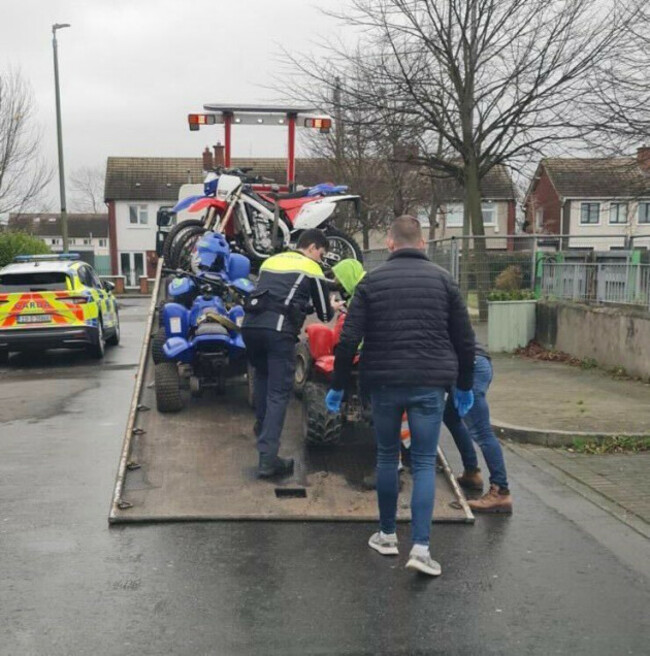
Transport Minister Darragh O’Brien said this week he will bring in new rules to restrict the use of scrambler motorbikes after Grace’s death – but gardaí say there is already ample legislation to deal with the crimes associated with the use of scramblers in public places, such as dangerous driving and no insurance.
A number of scrambler users have been before the courts in recent years facing charges for those offences.
For operational gardaí, the key is the danger involved in pursuing the scramblers. As one garda source put it: “You can’t arrest them if you are not allowed to chase them”.
The ability for gardaí to pursue a motorist committing a crime is governed under internal garda policy documents known as HQ Directives. The relevant one for this issue came into force in 6 December 2024.
Those sources we spoke to said that gardaí are observing scramblers, particularly in built-up housing estates in cities across the country.
When these gardaí contact their control room to request permission to pursue, they are being asked if there is a “containment co-ordinator” with them. This means a garda who is trained in pursuits.
One tactically-trained garda source said that this question from the control room puts the risk back on individual gardaí and allows the organisation to then place the blame on the garda who took the risk if they continue with the pursuit.
There are no trained containment coordinators in Ireland – however highly trained members of the Armed Support Unit can pursue given their tactical training but they’re low in number.
A number of garda sources said that individual gardaí are not pursuing the motorbikes because the risk is too high – judging that the safety of the gardaí, the motorcyclist and the public is too high but also the threat of discipline or even court for the garda if it goes wrong.
Mark Ferris, who is a detective garda and an official with the Garda Representative Association (GRA), has gone public with serious concerns around the strategy used by An Garda Síochána to pursue vehicles.
The detective said that gardaí are trained to respond rapidly to calls, known as response driving, but they are not specifically trained to deal with the rigours and danger of a pursuit.
A senior source said that in many districts across the country, gardaí focus on identifying the driver of an illegal scrambler, rather than on pursuing them on the streets.
They gather CCTV of the incident and then use new 2023 Road Traffic legislation to go to where the vehicle is stored, arrest the driver and seize the bike, which is seen as the safest way to deal with the problem. It is very robust legislation and allows them to enter a property without warrants to seize scramblers and other vehicles.
None of those sources we spoke to envisage an adoption of the method used by the Metropolitan Police in London, where there has been a significant problem with gangs of phone thieves using electric scooters and motorbikes to commit crime across the city.
In response, the Met Police were given powers to train police drivers to essentially crash into the motorcyclists to stop them.
A tactic known as “hard stops” are used by the Emergency Response Unit and Armed Support Unit. It involves gardaí essentially crashing into a target car. It has been used successfully in several operations, particularly in stopping armed suspects.
In a statement, a garda spokesman said that gardaí have adopted a “proactive approach in addressing the illegal use of scramblers, quads, e-bikes, and e-scooters” using the Road Traffic and Roads Act 2023.
“The impact of this approach is reflected in a consistent increase in vehicle seizures across recent years. Between 1 January and 30 October 2025, a total of 449 scramblers, quads, e-bikes, and e-scooters were seized in the Dublin Metropolitan Region,” the spokesperson said.
In regard to pursuits, the garda spokesperson said that they are generally “approached with caution” and that gardaí take into account a range of factors including environmental conditions, the nature of the offence, and the overarching priority of public and Garda safety in deciding whether to pursue a vehicle.
“While public discourse has raised concerns about the reluctance of gardaí to engage in pursuits due to legal and safety risks, the DMR remains committed to arresting those involved in the illegal use of scramblers and similar vehicles,” the statement added.
It said that risk assessments are made and the garda policy on pursuits gives a “key consideration” is to determine if it is “necessary and balanced against threat, risk and harm”.
It added that specific gardaí within each regional control room are suitably trained and qualified to manage serious incidents, including spontaneous pursuits.

To embed this post, copy the code below on your site
















have your say