Sign in. It’s quick, free and it’s up to you.
An account is an optional way to support the work we do. Find out more.
Sign in. It’s quick, free and it’s up to you.
An account is an optional way to support the work we do. Find out more.
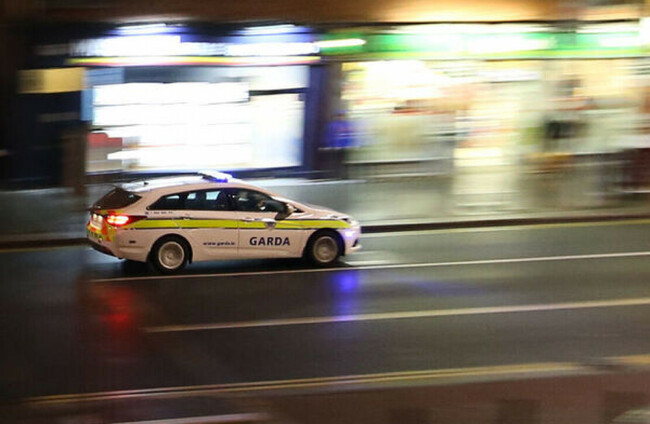
THERE IS A serious flaw in the new garda pursuit policy as no garda is specifically trained to chase fleeing criminals in cars, a garda representative has claimed.
Mark Ferris, who is a detective garda and an official with the Garda Representative Association (GRA), has gone public with serious concerns around the strategy used by An Garda Síochána to pursue vehicles.
Ferris, writing in the latest quarterly Emergency Services Ireland magazine, has outlined that there is a gap in garda training.
The detective said that gardaí are trained to respond rapidly to calls, known as response driving, but they are not specifically trained to deal with the rigours and danger of a pursuit.
Since 2019 gardaí who are permitted to drive patrol cars have been trained and cleared through a qualifications known as Competency Based Driving (CBD).
CBD One allows them drive but not respond on lights and sirens – CBD Two allows them to drive with the lights and sirens.
What Ferris has identified is a gap in training that while some members are qualified to drive fast and rapidly through traffic they are not trained in the specific skillset needed to manage a pursuit.
“There is no member of An Garda Siochana trained and appropriately authorised in pursuit driving which renders the policy inoperable.
“Competency Based Driving 2 (CBD2) drivers (which make up the vast majority of response drivers) are not trained in any element of pursuit.
“Response driver training, as governed by the Emergency Services Driving Standard (ESDS) in An Garda Síochána, is frequently conflated with pursuit driving, highlighting a
misalignment between organisational policy, operational implementation and public messaging.
“Driving to an emergency situation such as an armed robbery in progress with blue lights and sirens on is not, and should not, be confused with pursuit driving,” he said.
Ferris has outlined the differences between response driving and pursuit driving.
“While pursuit driving requires active evasion and awareness of a driver’s refusal to stop it also requires a level of competence to engage, while response driving is a distinct driving activity that allows trained members, for example under CBD2, to exceed
normal driving standards when responding to emergency incidents.
“These fundamental differences highlight how the two activities should never be confused or conflated,” he said.
Ferris said the College of Policing (the UK police training centre) has advised that non-pursuit trained drivers must not continue pursuits.
“On closer view, the entire CBD driver training model also has no element of pursuit driving incorporated across any of its facets. Tactical vehicle containment or the use of vehicle stopping devices do not constitute pursuit driving techniques or the required level of competence with which to engage in pursuit driving,” he added.
Ferris said Britain’s College of Policing’s pursuit framework “explicitly stipulates” that all personnel involved in pursuit management, including control room staff, tactical advisors, and drivers, MUST undergo standardised training.
The detective garda said this is not an advisory comment in Britain but is a “foundational governance requirement” for lawful pursuits in the UK.
Ferris said that the garda policy directive must be invalidated to prevent unacceptable risks to members of the public, gardaí and the organisation.
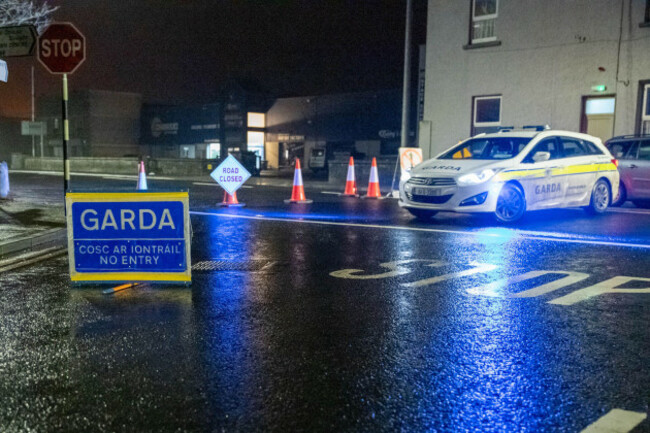
Speaking at the Oireachtas Justice Committee in June, Commissioner Drew Harris addressed the issue of training but said that a policy had been implemented to manage pursuits.
“There is more training that needs to be done in respect of pre-planned pursuit. If there is a spontaneous pursuit, the obligation on the garda member is to report what is happening to control.
“A risk assessment is then conducted by qualified individuals in the control room. There is no blanket policy against pursuit. What we have put in place is a policy to empower and enable but there is specific training required,” he said.
A garda spokesman said the force introduced a “spontaneous pursuit” policy in December 2024 following consultation with the garda representative associations.
“Where feasible, the first priority should be to prevent a pursuit from taking place,” the spokesman said.
The garda statement said that the decision to engage in a pursuit must be done in the interests of public safety, to prevent crime and to apprehend offender.
“A key consideration is to ask if the pursuit is necessary and balanced against threat, risk and harm for which the subject driver is being/about to be pursued,” he said.
The garda spokesman said that gardaí must comply with “fundamental principles, of legality, necessity, proportionality and accountability” as well as in keeping with international human right laws.
The spokesman said that An Garda Síochána has previously been subject of “adverse criticism” that the previous pursuit policy was too restrictive.
The spokesman said current documents provide guidance to gardaí in the use of pursuit tactics and pursuit management in order to reduce the risk, rather than “a prescriptive process”.
It is understood that the policy does not specifically require pursuits to be halted in the absence of either a pursuit trained driver or a serious incident dispatcher.
The garda statement did not specifically address the training standards.

To embed this post, copy the code below on your site












have your say