Sign in. It’s quick, free and it’s up to you.
An account is an optional way to support the work we do. Find out more.
Sign in. It’s quick, free and it’s up to you.
An account is an optional way to support the work we do. Find out more.
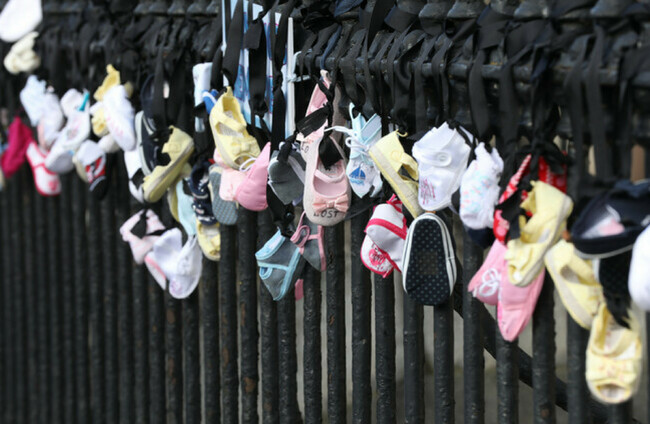
THE SPECIAL ADVOCATE for survivors of institutional abuse has said the Mother and Baby Institutions redress scheme is “exclusionary, poorly advertised, and re-traumatising for many applicants”.
In May 2024, Patricia Carey was appointed as the Special Advocate for Survivors and in this independent role, she engages with survivors and ensures their views are represented to the Government.
The Mother and Baby Institution Redress Scheme was launched in March 2024 and provides financial payments and health supports to eligible people who spent time in Mother and Baby or County Home Institutions.
But since the redress scheme opened, less than 10% of its budget has been spent and Carey said there is an “urgent need for the Government to make every possible effort to ensure that no Survivor misses out on their redress”.
Carey added that the first annual report of the scheme highlighted a “poor uptake”.
Between March 2024 and the end of 2024, close to 6,000 people applied for the redress scheme, with 10% of applications coming from the UK and 4% coming from the US.
It’s been reported that overseas applicants have often experienced additional administrative barriers to receiving their redress.
Around a quarter of cases in the first year of the scheme were closed with an award payment, but 3% were closed with no payment awarded.
As of the end of 2024, around two-thirds of the applications were still being processed and 205 applications had been deemed ineligible or withdrawn.
Total awards costs by the end of 2024 were €55.4m and for “straight-forward” cases, a notice of determination was issued in around 62 days.
However, Carey said it can take up to a year for cases to be dealt with.
One survivor was quoted as saying that the online application process “was a minefield” and uploading the necessary documents continues to be raised as a serious issue for applicants.
“I never wanted to revisit that part of my life with my family, but this process took that choice away from me as I needed help at every stage,” they said.
They added: “Shame on them for making the application so difficult and damaging.”
Another survivor said the journey has been “fraught with difficulty” and that the redress scheme was “cold and callous”.
Another said it felt like “the rug was pulled out from under me” when they discovered that they were not eligible for the scheme.
They added: “Do policymakers realise the extra hurt they’ve caused? I had tried to move on, but now I’m reliving the trauma and feeling worthless and forgotten by the Irish state.”
The Special Advocate office from Survivors said it has received a “litany of complaints about the many failures of the redress scheme” since it launched.
Carey said it is incumbent on Minister Norma Foley to “address these myriad issues in order to ensure all survivors receive the redress they are entitled to”.
Her office also estimates that there was an underspend of €68.5 million in the scheme last year and called for it to be expanded to “included all those excluded from redress”.
People who spent less than six months in an institution as a child are among those excluded from the scheme.
“The idea that the redress scheme arbitrarily dictates who gets compensation due to days spent in the institution seems cruel, unfair and discriminatory,” said one survivor.
Carey said her office has received daily calls and emails from survivors unhappy with the scheme over the past 20 months and that concerns raised include poor promotion and advertisement of the scheme and an “inconsistent trauma-informed care approach”.
Other concerns include issues around records of time spent in institutions and operational issues with the payment scheme.
Carey’s office added that there is a poor follow-up service provided by the scheme operations and that outsourced call centres are causing “unnecessary stress and worry”.
She has called for a renewed and extended advertising of the scheme, both here and abroad, as well as additional practical supports with completing applications.
Carey has also called for the extension of redress for those people who have been excluded due to the six-month month rule affecting children born in a mother and baby institution.

To embed this post, copy the code below on your site












have your say