We need your help now

Support from readers like you keeps The Journal open.

You are visiting us because we have something you value. Independent, unbiased news that tells the truth. Advertising revenue goes some way to support our mission, but this year it has not been enough.

If you've seen value in our reporting, please contribute what you can, so we can continue to produce accurate and meaningful journalism. For everyone who needs it.

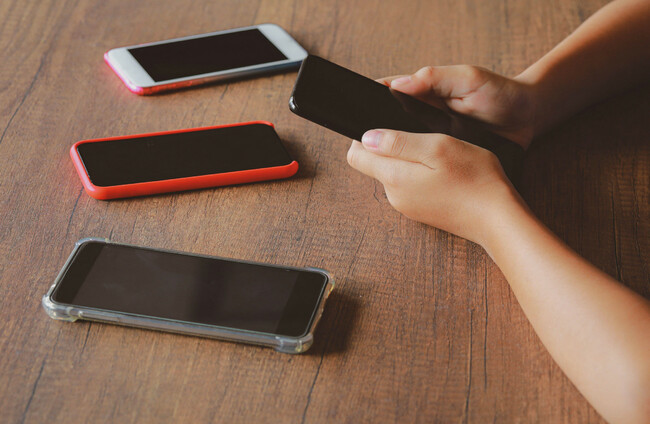
Hand of children holding a modern smart phone with three smart phones on table

Why is Ireland restricting social media for under-16s? And has it worked in Australia?

International momentum is behind restrictions on social media for young children.

IRELAND HAS BECOME the latest country to announce proposed restrictions on social media for children under the age of 16.

Ministers were given a rough outline of the plan today, with a trial mooted for the first half of 2026. Young people are expected to be invited to assess how the restrictions will work.

The government’s proposal comes as momentum gathers internationally for a social media ban for children, amid concerns that excessive screen time could harm childhood development and mental health.

Australia became the first country in the world to introduce a ban last December, with the United Kingdom, France, Spain, Portugal, Germany, Norway, New Zealand, Malaysia and India all announcing they would do the same.

Why are countries banning social media?

The proposed bans follow years of concerns over the impact of social media on all users, but particularly young users.

They range from things like the impact of social media on mental health, cyberbullying, exposure to harmful content, misogynistic and violent material, and the potential for predators to groom children.

In Australia, the government has argued that the design features of social media platform encourage young people “to spend more time on screens, while also serving up content that can harm their health and wellbeing”.

Tánaiste Simon Harris said last week that the Irish government was “clearly hearing” from parents that they want action when it comes to children on social media, after a poll showed that three-quarters of those surveyed were in favour of the restriction.

What reaction has the idea received?

Some have accused the government of letting tech firms off the hook by banning children without asking the platforms to clean up their act.

Noeline Blackwell of the Children’s Rights Alliance said today that the government’s proposal “punishes children for the fixable faults created by the tech giants by denying them the social engagement that is some of the best parts of social media”.

TJ McIntyre of Digital Rights Ireland, which campaigns for privacy rights and against data retention, also questioned plans around age-verification. He said the practicalities of introducing such a measure did not seem to have been worked out.

“This is something that has gone off on what is essentially the whim of the executive without any prior consultation,” he told RTÉ Radio One’s Morning Ireland programme.

“I would be very concerned that the whole thing is starting off rather half-cooked.”

How does Australia’s ban work?

It was a world first when Australia banned young teenagers from social media platforms on 10 December.

The ban requires big tech companies to stop users under the age of 16 from creating or keeping accounts on the likes of Facebook, Instagram, YouTube, TikTok, Snapchat and Reddit.

Streaming platforms Kick and Twitch are also on the government’s blacklist, as are Threads and X.

However, some platforms are exempt from the ban, such as Roblox Discord, WhatsApp and Lego Play.

Rather than punishing teenagers, the law requires the social media platforms themselves to weed out underage accounts.

If companies fail to take “reasonable” steps to purge accounts belonging to those aged under 16, they can be fined up to Aus$49.5m (around €28m).

It remains unclear how Australia’s internet safety regulator will interpret or enforce what counts as reasonable.

Its guidelines say that platforms have to act “to enforce the restrictions in a way that is just and appropriate in the circumstances”.

Guidelines warn they might try to upload fake IDs or use AI to make their photos appear older.

Platforms are expected to devise their own means to stop this happening. 

Not every Australian has to prove their age, only those suspected of falling foul of the ban, and young users are still able to access some social media without logging in – they just cannot register for their own accounts.

Meta, the parent company of Facebook, has started deactivating accounts based on information such as the age given when they were created.

Account holders flagged by mistake could verify their age using a “video selfie” or by providing government-issued ID, Meta said.

What are other countries doing?

France made headlines last month when politicians passed a bill that would ban social media use for under-15s – though it has to be approved by the country’s senate before becoming law.

The draft law has two articles. One would make illegal “the provision by an online platform of an online social media service to a minor under 15″. The second calls for a ban of mobile phone use in secondary schools.

Authorities want the measures to be enforced from the start of the 2026 school year, in September, for new accounts.

Former prime minister Gabriel Attal said he hoped the Senate would pass the bill by mid-February so that the ban could come into force on September 1.

He added that “social media platforms will then have until December 31 to deactivate existing accounts” that do not comply with the age limit.

The draft bill excludes online encyclopedias and educational platforms.

An effective age verification system would have to come into force for the ban to become reality. Work on such a system is underway at the European level.

WhatsApp and other private messaging platforms would not be covered by the ban.

France struck out on its own after spearheading a months-long push at EU level for Europe-wide action, alongside member states including Denmark, Greece and Spain.

However, it was felt the EU’s action was too slow. 

The European Parliament has already called for a social media ban on under-16s and there are tough laws in place to regulate the digital space.

European Commission chief Ursula von der Leyen has advocated going further than those laws currently do, supporting minimum age limit, but she wants to hear from experts on what approach the EU should take first.

A consultative panel on social media use is now expected to be set up “early” this year.

Ireland has therefore joined France and other European countries in taking matters into its own hands.

Denmark said last year it would ban access to social media for children under 15; 
Spain has likewise outlined its plans to ban social media for under-16s; and in the UK, the House of Commons voted in January to ban under‑16s from using social media.

Ireland’s preference is to move at a European level with other EU member states, and ministers appear eager to strike while the iron is hot.

- Contains reporting from © AFP 2026.

Readers like you are keeping these stories free for everyone...
A mix of advertising and supporting contributions helps keep paywalls away from valuable information like this article. Over 5,000 readers like you have already stepped up and support us with a monthly payment or a once-off donation.

Close
13 Comments
This is YOUR comments community. Stay civil, stay constructive, stay on topic. Please familiarise yourself with our comments policy here before taking part.
Leave a Comment
    Submit a report
    Please help us understand how this comment violates our community guidelines.
    Thank you for the feedback
    Your feedback has been sent to our team for review.

    Leave a commentcancel

     
    JournalTv
    News in 60 seconds