Sign in. It’s quick, free and it’s up to you.
An account is an optional way to support the work we do. Find out more.
Sign in. It’s quick, free and it’s up to you.
An account is an optional way to support the work we do. Find out more.
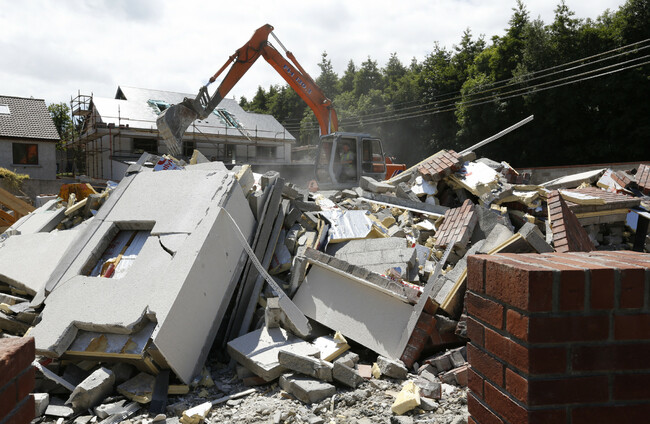
THE DEFECTIVE CONRETE Blocks scheme is set to be extended to part of North Dublin and Wexford.
Minister for Housing James Browne will seek Government approval of the plans this morning at Cabinet.
It is estimated that 39 homes are affected by defective blocks in Fingal, while two are affected in Wexford.
Of the 39 homes impacted in Fingal County Council, 30 are in the seaside town of Rush, six in Skerries, two in Lusk and one in Ballboughal.
The two properties impacted in Wexford are in Bunclody and Ferns.
The likely cost, excluding inflation, of adding both areas to the scheme is estimated to be between €10-15 million.
Recent reports have highlighted a rise in the number of homes across the country impacted by defective blocks, with around 9,500 homes now thought to be affected.
The figure includes 6,500 properties in Co Donegal, 1,100 in Co Mayo, 860 in Co Clare, 700 in Co Limerick and at least 300 in Co Sligo.
The existing Government scheme, the Remediation of Dwellings Damaged by the Use of Defective Concrete Blocks Act 2022, came into force in June 2023.
It originally included homes in Clare, Donegal, Limerick and Mayo, but has since been extended to include Sligo in October 2024.
Elsewhere at Cabinet this morning, Minister for Public Expenditure and Reform Jack Chambers will update Government ministers on plans to implement a review of regulations in a bid to speed up big infrastructure projects.
A new regulatory simplification unit established by the Minister will carry out the review.
The move is the latest in a series of actions by Government to speed up infrastructure delivery.
Chambers is expected to tell colleagues that under existing regulations, a transport project, such as a new road or public transport initiative, may require up to 30 licences, consents and approvals.
In the case of water projects, 21 such processes have been identified, while in the case of electricity infrastructure, 20 regulatory requirements were identified.
Minister Chambers will tell Cabinet colleagues these pre-planning processes are taking up to a year for roads, while for wastewater projects they can take between 1-4 years, and in the development of the national electricity network can take between 1-3 years.
It is understood that maritime and environmental licences and consents will be an area of particular focus for the new unit.

To embed this post, copy the code below on your site

















have your say