Sign in. It’s quick, free and it’s up to you.
An account is an optional way to support the work we do. Find out more.
Sign in. It’s quick, free and it’s up to you.
An account is an optional way to support the work we do. Find out more.
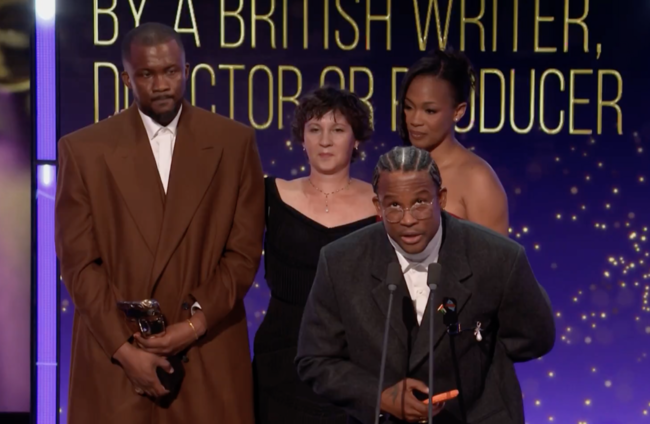
A BRITISH FILMMAKER has spoken out after his call for “free Palestine” was cut from the BBC’s broadcast of the Baftas awards ceremony.
Akinola Davies Junior gave a two minute speech on-stage after winning the Bafta for outstanding debut by a British writer, director or producer for his movie My Father’s Shadow.
The BBC coverage of the moment did not include the second half of his speech, which featured the call for Palestine.
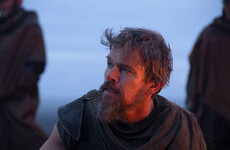
In his Bafta-winning movie, Davies Junior, who was raised between London and Lagos, explored the experience of two brothers exploring Lagos with their estranged father during the 1993 Nigerian election.
In his speech, which was shared in full on X by the Baftas, the British-Nigerian filmmaker shared his support for migrants and those experiencing genocide.
“To the economic migrant, the conflict migrant, those under occupation, dictatorship, persecution and those experiencing genocide, you matter and your stories matter more than ever,” he said in his speech.
“Your dreams are an act of resistance. To those watching at home, archive your loved ones, archive your stories yesterday, today and forever. For Nigeria, for London, Congo, Sudan, free Palestine. Thank you.”
The filmmaker wore pins of the Palestine and Democratic Republic of Congo flags.
My Father's Shadow takes home the win for Outstanding Debut by a British Writer, Director, or Producer✨#EEBAFTAs pic.twitter.com/WzmPHjYtrF
— BAFTA (@BAFTA) February 22, 2026
This section of his speech was not broadcast in the delayed coverage of the event.
The decision to remove part of Davies Junior’s speech in the coverage resulted in criticism of the BBC due to the inclusion of a racial slur shouted by a man with Tourettes as Sinners actors Delroy Lindo and Michael B Jordan presented an award.
In a statement yesterday, the BBC apologised that the language was not edited out prior to broadcast and said it will now be removed from the version on BBC iPlayer. The Baftas also apologised for the “harm caused” and stated that the “very offensive language carries incomparable trauma and pain for so many”.
In a statement to Variety on Davies Junior’s speech being edited, the BBC said the coverage had to be reduced from three to two hours, and other speeches were also edited.
“The live event is three hours and it has to be reduced to two hours for its on-air slot. The same happened to other speeches made during the night and all edits were made to ensure the program was delivered to time. All winners’ speeches will be available to watch via BAFTA’s YouTube channel.”
Speaking to Variety, Davies Junior acknowledged that edits had to be made, but said it was “a shame” that the last part was cut.
He said he was happy he had the chance to highlight the issues he did in his speech: “It was really important in the moment for me to say that in a room full of artists, because we have an opportunity to influence people because they watch our films.”
The filmmaker said the team behind the Gaza drama “The Voice of Hind Rajab”, who were up for the Bafta for best non-English film, thanked him for his words.
“That was really beautiful that, even though they didn’t win an award, someone still advocated for what they’re going through,” he said.
The Voice of Hind Rajab chronicles a crisis situation involving Red Crescent volunteers who receive an emergency call from a six-year-old girl trapped in a car under fire from the Israeli Defence Forces in Gaza.
The BBC has been contacted for comment.

To embed this post, copy the code below on your site



have your say