We need your help now

Support from readers like you keeps The Journal open.

You are visiting us because we have something you value. Independent, unbiased news that tells the truth. Advertising revenue goes some way to support our mission, but this year it has not been enough.

If you've seen value in our reporting, please contribute what you can, so we can continue to produce accurate and meaningful journalism. For everyone who needs it.

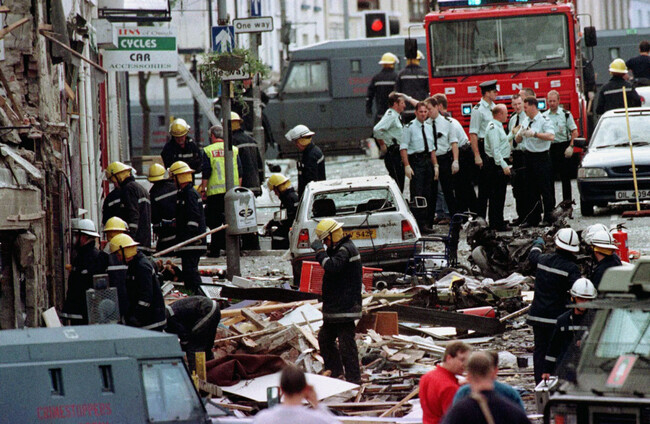
The 1998 atrocity killed 29 people Alamy Stock Photo

Labour TD raises concern over ‘bespoke’ Irish legislation for Omagh Bombing inquiry co-operation

Labour’s Alan Kelly said the direction on deciding whether to grant information was ‘vague’ and ‘generic’.

CONCERNS HAVE BEEN raised in relation to legislation being tabled that would allow Irish ministers, gardaí and soldiers to give evidence to the Omagh Bombing Inquiry.

The International Co-operation (Omagh Bombing Inquiry) Bill 2026 would allow for current or former members of the Gardaí, the Irish army, the Civil Service or the Government to engage with the inquiry examining the 1998 atrocity in the Co Tyrone town.

The Government’s legislation provides for a “bespoke legal mechanism”, which is triggered by a request from the Omagh inquiry chairman, to allow sworn evidence to be taken before a High Court judge in Ireland.

The Real IRA bomb killed 29 people, including the mother of unborn twins.

The inquiry, chaired by House of Lords peer Andrew Turnbull, was set up following a number of legal challenges brought by campaigners, to examine whether the explosion could have been prevented by UK authorities.

The next stage of the hearing, which will begin on 21 September, will explore what can be established based on information including construction of the bomb, warning calls, claims of responsibility, arrests and subsequent court proceedings.

The Irish Government’s Bill was before the Dáil this evening.

Speaking in the Dáil, Justice Minister Jim O’Callaghan said that assisting an inquiry established by another jurisdiction was “not without its challenges”.

“There are legal complexities that must be navigated to ensure consistency with the laws of Ireland and the Government’s duty to safeguard the essential interests of the state and the constitutional and other rights of citizens,” he said.

He said they had looked to assist the inquiry, including by agreeing a Memorandum of Understanding with Turnbull, and implementing measures with the aim of disclosing sensitive personal data, mostly material from An Garda Síochána.

“To date, approximately 20,000 pages of material have been provided by the Irish state to the Omagh Bombing Inquiry,” O’Callaghan said.

He said the Bill before the Oireachtas provides a “bespoke legal mechanism” to allow sworn evidence to be taken before a High Court judge in Ireland if the inquiry chairman requests such evidence.

He said the Bill would only provide for assistance with the Omagh Bombing Inquiry, which recognises its significance and allows for “speedy enactment”.

He said the mechanism is triggered by the chairman of the inquiry requesting assistance, which can be made to the Garda Commissioner or to the other heads of state bodies, including secretaries general.

“The assessment requires an individual consideration of each question and the potential evidence concerned,” he said.

“There are no classes of records that are automatically excluded from being put into evidence using this mechanism.”

He said the High Court judge will certify the transcript and provide it to the inquiry chairman, and the publication and dissemination of the transcript will be a matter for the chairman.

Labour TD Alan Kelly called the bombing “mass murder on our island” and said those who covered it up were “the worst kind of human beings that ever existed”.

The former minister welcomed the legislation, including the presence of family members while evidence is given, but said he had concerns that required “consideration and clarification”.

He said under Section Five and Section Six of the Bill, “it is for the head of a designated state body themselves to make a determination as to whether the information they are being asked to provide should be privileged from disclosure”.

“They’re so vague. They’re actually meaningless, because they’re so vague,” he told the Dail.

“I fail to see under the way this is written, in this Bill, in this piece of legislation, how the head of a designated body is supposed to make such a determination.

“It’s so subjective, customisable to their own opinions, rather than given confirmed, direct provision for determination from the designated head of any body that is requested here, so it’s really at their whim.

“This needs to be more defined – I’m not alone in saying this.

“It’s too open ended, it’s not defined enough, and it’s a serious concern because it really is at the core of everything in it.”

He said that amendments would be tabled at committee stage and suggested that no pre-legislative scrutiny of the Bill was a “mistake”.

He added: “There are so many outs here for those who – although have to be protected under the Constitution – need to be encouraged or need to give evidence and give access to information, access to records, access to data, that I don’t think we’re going to get the fulsome information that these people so desperately deserve, need and require.”

He also urged the minister to meet with the families of victims and survivors in relation to the legislation.

Close
JournalTv
News in 60 seconds