Sign in. It’s quick, free and it’s up to you.
An account is an optional way to support the work we do. Find out more.
Sign in. It’s quick, free and it’s up to you.
An account is an optional way to support the work we do. Find out more.
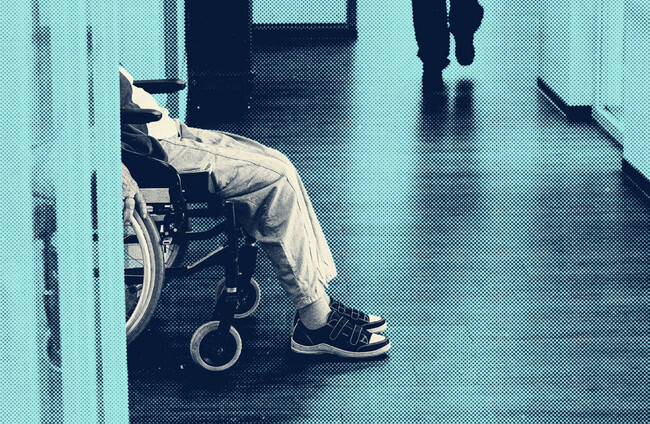
FAMILIES OF NURSING home residents who have been told their loved ones must leave their accommodation have described the panic and fear of trying to find alternative care at short notice.
In some cases, relatives said they were given little clear information about why a resident was being asked to leave. Others said they felt the threat of discharge came after they raised concerns about care, with one advocacy group saying this impression could have a “chilling effect” where families felt afraid to challenge aspects of nursing home care.
Discharge notices appear to affect a relatively small number of residents each year, but families and advocates say the impact can be devastating. The timeframe for a discharge, typically 28 or 30 days, is agreed through the initial contract signed when a resident first enters a nursing home.
The Journal Investigates has spoken to families who say they were left scrambling to find a new bed, bring a relative home, or manage the fallout from a breakdown in relations with a nursing home.
Advocacy groups have warned that the current system leaves families with too little information and not enough protection. One TD said that for an older person who may be frail or living with complex care needs, leaving a nursing home can feel like losing their home.
Describing the process as “evictions”, the Irish Association of Social Workers (IASW) claimed the short timeframe associated with discharge notices was “a clinical, social and humanitarian risk” and “a failure of the state’s duty to protect its most vulnerable citizens.”
The issue has prompted calls for stronger safeguards around nursing home discharges.
The IASW, Sage Advocacy and Care Champions all said the issue of resident discharge is increasingly pressing, with the IASW claiming there was a “distressing pattern” of the displacement of older people from long-term care facilities solely because their care needs have become more complex.
Families and advocates have told us that while the reasons behind a discharge notice can vary, from disagreements with management to increasing care need or even financial matters, the fallout can lead to highly stressful situations for them and their relative. One representative group told us that it also highlights what it called a “power imbalance” between families and those operating nursing homes.

The Health Information and Quality Authority (HIQA) received 37 complaints relating to discharge notices last year, including three in which the family had previously complained to the nursing home about the care being offered to their loved one.
The data, released under Freedom of Information, also shows that the vast majority – 34 complaints – relate to privately-run nursing homes, whereas just three related to HSE-operated facilities.
Other issues cited throughout those 37 complaints include the quality of care, care planning, governance and management, and communication. A smaller number of summaries mention issues such as nutrition and hydration, and medicines and healthcare management.
The Journal Investigates has spoken to a number of families who have been through the process in one form or another, while Prof Mary Rogan, professor in law at Trinity College Dublin, told us that this “transfer trauma” can potentially shorten the lives of older people.
Sinead (not her real name) placed her father in a care home last year. Less than a week later, the family was told he might have to be discharged.
“At the time he was suffering from delirium, having been in hospital,” Sinead said.
“The grief of having to leave him in the home was bad enough without the threat of an eviction.”
Sinead’s father moved from home to an emergency department and then into the care home.
On entering the nursing home, Sinead said many staff members were kind and caring towards her father, but she felt others were disengaged.
She believes that what she calls “the eviction” was prompted due to her family raising some concerns relating to her father’s care, but she is adamant that no complaint was made.
Instead, following discussions, the possibility of a discharge notice was withdrawn, but according to Sinead, it was not the last time that the possibility of a discharge was raised.
Sinead later sent a letter to the Minister for Health, Jennifer Carroll MacNeill, about the situation relating to her father. That letter outlined a number of claims made about her father’s care, including that he was routinely put to bed at a very early hour.
Sinead told us:
They’re in bed by the Angelus [at 6pm].
In the letter, Sinead said: “The heartbreaking reality is that my dad is likely one of the better-cared-for residents — simply because … our family has never missed a single day of visiting. Our anxiety would not allow it.
“We have been actively looking for other options since day one, but there are no available beds nearby.
“My dad is a good man. He does not deserve this.”
There are also families whose loved one was returned to their care after a discharge notice was acted upon.
Maire (not her real name) has been caring for her mother since her discharge from a nursing home.
“It hasn’t been easy since returning home as I felt shame and judged without a single person in authority ever voicing understanding or empathy for my experience and my mum’s [experience] there,” she said.
Maire said she had regularly visited her mother at the home and while the staff were kind and attentive, there were issues about the administering of medication, as well as concerns over whether call bells were within reach and sensor alarms were always turned on, or when a window might be left open when her mother was unwell with a chest infection.
Maire said the impact of many of these issues was that her mother began losing weight and experiencing other health difficulties.
“Anything that happened was reacted to rather than questioning why it had occurred,” Maire said.
“They were not interested in hearing what I was trying to convey regarding my mum’s needs and the issues that were arising.”
Matters came to a head between Maire and a member of staff, at which point it was communicated to Maire that, in the view of those in charge, trust had broken down and Maire’s mother would have to move on.
“The termination was unexpected despite relations having deteriorated,” she said. What was already a difficult situation was made worse by the fact that Maire’s mother did not want to move and in some ways blamed her for having to.
Now her mother’s health has improved even though Maire said “it hasn’t been easy.”
“I feel like I was challenging the system that they have,” she said. “Could I have done it better? I absolutely could have.”

Investigations like this don’t happen without your support… Impactful investigative reporting is powered by people like you.
Majella Beattie of the Care Champions organisation said she has heard numerous stories just like these from families around the country.
The organisation began just before the Covid pandemic and its reach and influence has grown since, with 16,000 followers on its Facebook page.
Approximately 27,000 older people reside in nursing homes around the country, with around 80% of nursing homes now privately run.
Care Champions attended a meeting at the Oireachtas earlier this year to discuss different aspects of care for older people, and Majella believes the issue of discharge notices is a hidden but significant stressor for families and residents alike.
“It is something that has been consistent since we began,” she said.
“Particularly if a family member raises a concern, it is a power imbalance.
“It could be [an older] wife or husband or son or daughter and they could be raising a valid concern, like someone has lost a lot of weight or some teeth, or someone is looking unkempt, and the family is raising a concern.”
She said this could have a “chilling effect” on whether families felt confident enough to raise an issue or a concern about the care being provided to their loved one.
Majella said that the language used in correspondence with families around a discharge notice tends to be similar, often based around an assertion that trust has broken down with the family members and that it would be better if the resident moved on.
“Families will hear that they are the cause of stress to staff,” Majella said.
A discharge notice can spark “panic” for families, who may have few, if any, options for alternative care, depending on where they live, while also facing the possibility that their loved one may have to come back home.
This is what happened with Maire, who said that while her mum’s quality of life has improved, “our relationship has not been easy at times.”
This highlights the emotional toll on family members and the risk of “transfer trauma” for the loved one.
Majella Beattie said of the decision to have a loved one move to a nursing home: “It is one of the hardest decisions for any family to make – there is a lot of guilt, even though it’s misplaced guilt out of a fear that you’ve let the person down.”
The prospect of that family member then having to leave the nursing home adds to the uncertainty, which Majella said can adversely affect a person’s health.
Helen Fitzgerald, Assistant CEO of Sage Advocacy, agrees. “From our experience, outcomes for residents in these situations have been challenging and, at times, very disruptive,” she said.
“We have seen cases where, at the end of the notice period, residents were transferred to the nearest acute hospital, particularly where no alternative placement had been secured in time.
“In other instances, residents have been taken home by family members, often at short notice, where suitable alternative care arrangements could not be put in place before the discharge date.”
In her briefing paper, presented to a number of Oireachtas members in March, Professor Rogan described “a hidden but growing problem” where there are “fewer protections than for those in rented accommodation.”
She said there was a lack of basic data on the reasons for a discharge and proposed addressing what she said were shortcomings in the current system, such as through a statutory minimum notice period, an independent medical review, a multidisciplinary review prior to discharge, and an appeal mechanism.
Prof Rogan said: “Both the lived experience and a review of the law show that there are inadequate protections in our legislation for the right to a home for people living in nursing homes and reform is needed.”
Social Democrat TD Liam Quaide, who has been following the issue, described a 30-day notice period as something that can be “brutally short for an older person or someone with complex needs.” He said:
“A nursing home is not just a commercial service; for many residents it is their home.
“No one should be moved without proper notice, access to independent advocacy, functional review and a proper alternative residence in place. For an older person in declining health, being moved suddenly from the place that has become home can be profoundly destabilising. The rules around discharge have to recognise that human reality.”
The Department of Health said it recognised that situations involving changes to a nursing home resident’s care needs “can be distressing” for residents, while stressing that contractual arrangements between a nursing home provider and a resident are a private matter, subject to compliance with relevant legislation and regulations.

Nursing Homes Ireland (NHI) is the largest representative body for the sector. A spokesperson for the group said the occurrence of discharges from nursing homes in Ireland is “extremely rare”, particularly given the large number of people residing in nursing homes – public, private and voluntary – nationwide.
As for the concerns raised with HIQA over discharges, a spokesperson for NHI said: “Despite its very low occurrence, it is understandable that the process of discharge is a source of stress and worry for a nursing home resident and their family, and also for the staff of the home.
“Discharge from a nursing home is often in the best interest of the individual resident and the wider nursing home community – ensuring a safer and more suitable continuum of care provision for everyone. A discharge is discussed, planned for, and agreed with a resident and, where appropriate, with their family or carer – and done so in accordance with the terms and conditions of the contract for care.”
Tadhg Daly, CEO of Nursing Homes Ireland, believes there needs to be a broader ambition for older people.
“We have an ageing demographic which is something to be celebrated and something positive but we don’t have an ambitious plan for our ageing population,” he said, referring to the need for better planning around day services, meals on wheels, independent living, home supports and more.
“We are making it up as we go along.”
Shane Scanlan is CEO and spokesperson for the Alliance, which represents 32 independent nursing homes. He believes that even though fees for nursing home care are expensive, many operators are “hard-pressed” financially and that a change in the way the system is funded would help.
“We have to move to a cost care model where funding follows the resident and is allocated to their dependency level,” he said, adding that in some cases the care needs to outweigh the funding that is received.
“The funding model [currently] doesn’t take into account dependency levels.”
Majella Beattie believes the answer is a Commissioner for Older People, like that which operates in the North.
“We have to have a system that is fair, there has to be somebody, where a resident’s voice is heard.”
Reporter: Noel Baker • Editor: Christine Bohan • Social Media: Cliodhna Travers • Main Image Design: Lorcan O’Reilly

To embed this post, copy the code below on your site














have your say