Sign in. It’s quick, free and it’s up to you.
An account is an optional way to support the work we do. Find out more.
Sign in. It’s quick, free and it’s up to you.
An account is an optional way to support the work we do. Find out more.
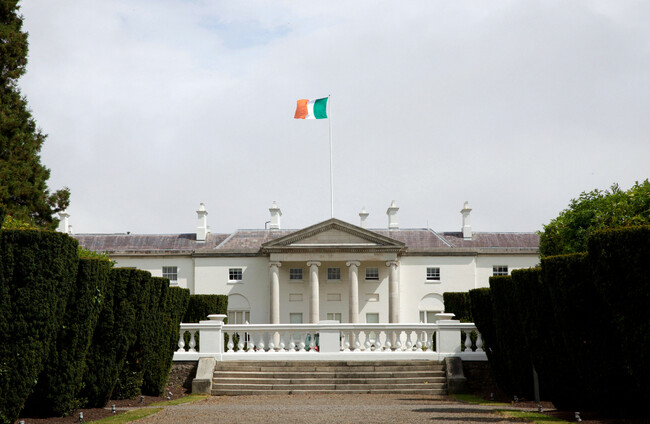
THE GOVERNMENT IS set to exclude applications related to convictions before the foundation of the State from consideration of a Presidential pardon.
Justice Minister Jim O’Callaghan today said he has secured approval in principle from Government for the new approach which will ensure applications are “anchored to the foundation of the State”.
The Constitution provides that the right to pardon is vested in the President and, in accordance this right is exercisable only on the advice of the Government.
The Department of Justice noted that Presidential pardons have been granted sparingly and in exceptional cases only.
Between 1937 and 2014, only three Presidential pardons were granted, none of which were granted posthumously, and none related to cases pre-dating the founding of the State in 1922.
But since 2015, further pardons have been granted, four of which relate to convictions that pre-date the foundation of the State.
O’Callaghan today remarked that there is a “high evidentiary bar that must be met to recommend the granting of a pardon to the President”, which is reflected in the low number of pardons that have been granted.
He added that in recent years, applications for consideration of a pardon have “changed to focus on historical cases that pre-date independence from British rule”.
O’Callaghan said these cases “present several difficulties”, namely the fact that the courts that tried these offences were “established under the jurisdiction of the previous British administration in Ireland, and not the Irish State itself”.
He has proposed a new approach that will limit consideration of Presidential pardon applications to a miscarriage of justice since the foundation of the State in 1922.
A Department spokesperson said that in order to grant pardons, a State must acknowledge that it has responsibility for miscarriages of justice administered by that State.
The spokesperson added that there are “significant challenges associated with processing historical cases which predate the foundation of the State, including the likelihood that many of these cases may not be sufficiently documented”.
O’Callaghan remarked that the “granting of a pardon is one of the most significant powers the President can exercise and allows the State to right a manifest wrong that has occurred in the administration of justice”.
However, he said that such pardons should only be granted in “circumstances where a miscarriage of justice has occurred under the auspices of the State”.
“Remedying historical miscarriages of justice, while admirable and desirable to many, poses significant challenges,” said O’Callaghan, “including that convictions pre-dating independence in 1922 occurred under a different legal system, in the name of a different Government.”
O’Callaghan said it is his “strong view” that Presidential pardon applications “needs to be anchored to the foundation of the State when an Irish Government came into existence”.
“By doing so it recognises that the Irish State acknowledges that it has responsibility for any miscarriages of justice that have taken place under its authority,” he added.
While pardons were granted in the past related to cases prior to the foundation of the State, a Department spokesperson said:
“The Government now wishes to ensure the power to pardon is not in some way devalued by overuse, especially in circumstances where the threshold of proof grounding any proposal for a pardon is lowered due to the passage of time.”

To embed this post, copy the code below on your site















have your say