Sign in. It’s quick, free and it’s up to you.
An account is an optional way to support the work we do. Find out more.
Sign in. It’s quick, free and it’s up to you.
An account is an optional way to support the work we do. Find out more.
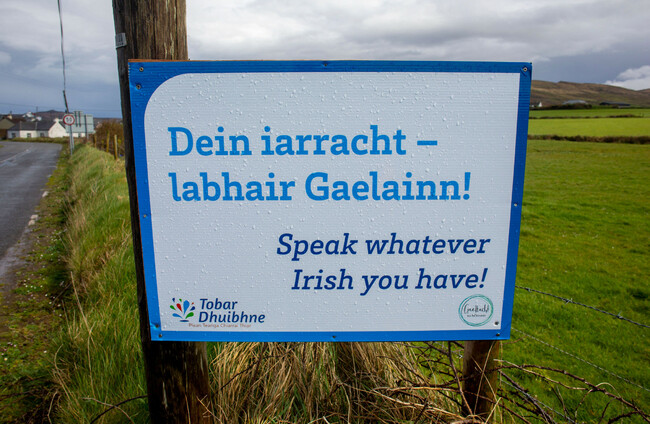

MANY CONTEMPORARY ATTITUDES and behaviours have their origins in colonialism. People accept the inferiority of their own culture, rejecting what makes them who they truly are.
Such low self-esteem captures the essence of a psychological condition named ‘malignant shame’ by the noted psychiatrist, the late Garrett O’Connor.
There is widespread evidence that indigenous language loss, in particular, has destructive social, political and economic consequences.
Hopefully, things may be changing in Ireland. Now, there is ample evidence to support this claim, especially among young people.
In research undertaken by leading Irish market research agency Amárach, in collaboration with third level college Gaelchultúr and regional state agency Údarás na Gaeltachta, a survey was taken late last year of a representative sample of 1,000 adults aged 18 years and over living in the Republic. It included a booster sample of people living in the Gaeltacht.
People were asked about their attitudes to the Irish language and the importance of the Gaeltacht to the future of the language. The results make fascinating reading.
Women, for example, display a stronger affinity to Irish than men, measured by their greater commitment to learning the language, with their children’s education a key motivator, and the importance they place on the Gaeltacht for the future of the language. It seems that women are to the fore in fostering Irish cultural identity.
Those under 35 have the strongest desire to learn Irish, with 73 per cent stating that they would like to learn or improve their Irish in the future, far higher than the figure of 68 per cent for the national sample. No doubt many now regret getting an exemption from the study of Irish in secondary school. Such exemptions have doubled over the last seven years.
Almost half of the respondents report using Irish in at least one setting, not surprisingly, the home being the most common milieu. Younger demographics are again driving the momentum, with a very healthy 52 per cent of those under 35 reporting that they are more likely to use Irish in at least one setting.
A most interesting result is the number of young people who want to see more Irish used by businesses and public organisations. The figure is 73 per cent for those under 35 versus 63 per cent for the national sample.
This backs up previous research by Amárach, which showed that young people like to see businesses use Irish to communicate with customers. They are also willing to pay more for their products or services. The language nurtures meaning, tradition and belonging, leading to a significant competitive advantage for a company. Yet very few Irish firms grasp this opportunity to tap into consumers’ identities, and the emotional association of the language with authenticity and locally made.
Policymakers take note: an impressive 74 per cent of those under 24, compared to 52 per cent in the national sample, think that it is very important for politicians, elected councillors, and local representatives have the ability to speak Irish.
So why is this change occurring, and what are the implications? The commitment to the language by artists, movie-makers and admired public figures in recent years has helped improve young people’s perception of the importance of Irish.
In this Amárach survey, an astonishing 93 per cent of those under 25 agreed that musicians and other public figures who use Irish have a positive impact on attitudes towards the language.
I see a deeper reason for this trend. I have been teaching economics and finance to university students for decades. Increasingly, I see young people questioning the impact of the homogenising forces of globalisation and the resulting placelessness which conventional economic policies promote. They witness everywhere becoming anywhere with all distinctive and unique characteristics being erased.
Social media and the pervasive consumer culture often leave them overwhelmed and lacking in meaning or purpose. Many young people now view the Irish language as a valuable resource that promotes rootedness and community memory. It helps sustain their well-being by offering a powerful force to resist the money-driven values of the market. It offers them a way to help them discover and explore their authentic selves.
They see the language as an ideal medium to experience the connection between the living and the dead, and as an antidote to individualism and the destruction of nature. This interest in Irish mirrors, to some extent, a recent trend seen across many Western countries of a revival of spiritual faith and church attendance, especially among young generations.
These young people are searching for experiences that are distinctive and authentic, satisfying their deep hunger for connection, meaning and attachment. They view with horror the erasure of a sense of belonging, the severing of links with the past, and relationships based purely on self-interest.
Irish is far more powerful than merely a means of communication. In a globalised world, the language is essential to wellbeing as it helps rejuvenate the whole person, fostering self-respect and self-reliance and ultimately, a flourishing society.
Finbarr Bradley is a former professor of finance. He taught at several Irish and overseas universities. He is the author or co-author of books on learning, innovation and sense of place.
****
Tá bunús ag go leor dár ndearcthaí agus iompraíochtaí comhaimseartha sa choilíneachas. Glacann daoine leis nach bhfuil a gcultúr féin chomh maith céanna le cultúir eile agus séanann siad na rudaí a mhúnlaíonn a bhfíorfhéiniúlacht.
Tugann easpa féinmheasa mar seo léargas dúinn ar an riocht síceolaíoch ‘náire mhailíseach’ (malignant shame), mar a thug an síciatraí aitheanta, an tOllamh Garrett O’ Connor, air.
Tá fianaise fhorleathan ann a léiríonn go bhfuil iarmhairtí millteanacha sóisialta, polaitiúla agus eacnamaíocha ag baint le cailliúint teanga dúchais, go háirithe.
Táthar dóchasach go bhfuil rudaí ag athrú in Éirinn. Tá neart fianaise ann anois chun tacú leis an ráiteas seo, go háirithe i measc daoine óga.
I dtaighde a rinne an ghníomhaireacht taighde margaidh Amárach Research, i gcomhar leis an gcoláiste tríú leibhéal, Gaelchultúr, agus le hÚdarás na Gaeltachta, rinneadh suirbhé ag deireadh na bliana seo caite ar shampla ionadaíoch de 1,000 duine fásta os cionn 18 mbliana d’aois agus atá ina gcónaí sa Phoblacht. Cuireadh sampla breise de dhaoine atá ina gcónaí sa Ghaeltacht san áireamh.
Cuireadh ceisteanna ar dhaoine faoina ndearcthaí i leith na Gaeilge, agus tábhacht na Gaeltachta i leith thodhchaí na teanga. Is ábhar inspéise iad na torthaí a bailíodh.
Tá dáimh níos láidre leis an nGaeilge léirithe ag mná ná ag fir, agus mar chomharthaí air seo tá a dtiomantas d’fhoghlaim na teanga, agus oideachas a gclainne mar phríomhspreagadh acu, chomh maith leis an mbéim a chuireann siad ar ról na Gaeltachta i dtodhchaí na teanga. Is cosúil go bhfuil mná chun tosaigh i gcothú fhéiniúlacht chultúrtha na hÉireann.
Is ar dhaoine atá faoi 35 is mó atá an fhonn an Ghaeilge a fhoghlaim agus é tugtha le fios ag 73 faoin gcéad díobh gur mhaith leo an Ghaeilge a fhoghlaim nó a gcuid Gaeilge a fheabhsú amach anseo, céatadán atá i bhfad níos airde ná an figiúr náisiúnta de 68 faoin gcéad. Níl aon dabht ach go bhfuil aiféala ar go leor a fuair díolúine ón nGaeilge agus iad sa mheánscoil. Tá líon na ndíolúintí seo tar éis méadú faoi dhó le seacht mbliana anuas.
Deir beagnach leath de na freagróirí go n-úsáideann siad an Ghaeilge i suíomh amháin ar a laghad, agus ní nach ionadh gurb é an baile an suíomh is coitianta a tuairiscíodh. Tá na haoisghrúpaí is óige chun tosaigh arís, agus é á thuairisciú ag nach beag 52 faoin gcéad de dhaoine faoi 35 go n-úsáideann siad an Ghaeilge i suíomh amháin ar a laghad.
Toradh an-suimiúil is ea an líon daoine óga ar mian leo níos mó Gaeilge a fheiceáil á húsáid ag gnólachtaí agus ag eagraíochtaí poiblí – 73 faoin gcéad de dhaoine faoi 35 i gcomparáid le 63 faoin gcéad den sampla náisiúnta.
Tacaíonn sé seo le taighde a rinne Amárach Research roimhe seo a léirigh gur maith le daoine óga nuair a bhaineann gnólachtaí úsáid as an nGaeilge chun cumarsáid a dhéanamh le custaiméirí. Tá siad sásta níos mó a íoc as na táirgí nó seirbhísí sin freisin. Cothaíonn an teanga brí, traidisiún agus muintearas, rud a chruthaíonn buntáiste iomaíoch suntasach do chomhlachtaí. É sin ráite, is beag cuideachta Éireannach a thapaíonn an deis seo chun leas a bhaint as féiniúlacht tomhaltóirí agus as an nasc mothúchánach idir an teanga agus barántúlacht agus táirgí áitiúla.
Agus a lucht déanta beartas, tugaigí faoi deara go mothaíonn nach beag 74 faoin gcéad de dhaoine faoi 24, i gcomparáid le 52 faoin gcéad den sampla náisiúnta, go bhfuil sé an-tábhachtach go mbeadh cumas sa Ghaeilge ag polaiteoirí, comhairleoirí tofa agus ionadaithe áitiúla.
Ach cén fáth a bhfuil an t-athrú seo ag tarlú agus cad iad na himpleachtaí?
Tá an tiomantas atá ag ealaíontóirí, déantóirí scannán agus daoine clúiteacha eile don Ghaeilge le blianta beaga anuas tar éis an dearcadh atá ag daoine óga i leith thábhacht na Gaeilge a fheabhsú. Sa suirbhé seo a rinne Amárach Research, d’aontaigh líon dochreidte daoine, 93 faoin gcéad de dhaoine faoi 25, go bhfuil tionchar dearfach ag ceoltóirí agus daoine eile atá i mbéal an phobail a úsáideann an Ghaeilge ar dhearcthaí i leith na teanga.
Feicim féin cúis níos doimhne leis an treocht seo. Tá an eacnamaíocht agus airgeadas á dteagasc agam do mhic léinn ollscoile le blianta fada. Tá níos mó agus níos mó daoine óga ag ceistiú an tionchar atá ag an mbrú i dtreo an aonchineálachais de thoradh an domhandaithe agus an easpa uathúlacht áite dá bharr, mar atá curtha chun cinn ag gnáthbheartais eacnamaíocha. Feictear dóibh go bhfuil gach áit ag éirí níos cosúla lena chéile agus go bhfuiltear tar éis fáil réidh le gach tréith shainiúil agus uathúil.
Is minic a bhíonn tionchar diúltach ag na meáin shóisialta agus an cultúr tomhaltóireachta orthu agus fágtar iad gan bhrí ná cuspóir dá bharr. Anois, feictear do go leor daoine óga gur acmhainn luachmhar í an Ghaeilge a chothaíonn féiniúlacht agus cuimhne phobail. Is uirlis chumhachtach í an Ghaeilge dóibh chun a gcuid folláine a chothú agus diúltú do luachanna an mhargaidh atá á dtiomáint ag airgead. Tugann sí an deis dóibh a bhfíorfhéiniúlacht a aimsiú agus a fhiosrú.
Breathnaíonn siad ar an teanga mar shármheán chun an nasc idir daoine beo agus na mairbh a bhrath, agus mar fhrithghníomh in aghaidh an indibhidiúlachais agus scriosadh dúlra. Tagann an spéis seo sa Ghaeilge, go pointe áirithe, le treocht atá le feiceáil in go leor de thíortha an Iarthair le déanaí – athbheochan sa chreideamh spioradálta agus freastal ar an eaglais, go háirithe i measc na nglúnta óga.
Tá na daoine óga seo sa tóir ar fhíoreispéiris shainiúla, a thabharfaidh an caidreamh, an bhrí agus an ceangal atá á lorg acu dóibh. Cuireann an scriosadh ar mhuintearas, an deireadh le naisc leis an am atá caite agus caidrimh bunaithe ar fhéinspéis amháin uafás orthu.
Tá an Ghaeilge i bhfad níos cumhachtaí ná mar mhodh cumarsáide amháin. Sa saol domhandaithe seo, tá an teanga riachtanach don fholláine mar go gcabhraíonn sí le hathnuachan an duine, rud a chuidíonn le féinmheas agus neamhspleáchas a chothú agus, sa deireadh, le bláthú na sochaí.
Is iarOllamh airgeadais é Fionnbarra Ó Brolcháin. Theagasc sé in ollscoileanna éagsúla in Éirinn agus thar lear. Is údar nó comhúdar é ar leabhair a bhaineann leis an bhfoghlaim, an nuálaíocht agus ómós áite.
To embed this post, copy the code below on your site













have your say