We need your help now

Support from readers like you keeps The Journal open.

You are visiting us because we have something you value. Independent, unbiased news that tells the truth. Advertising revenue goes some way to support our mission, but this year it has not been enough.

If you've seen value in our reporting, please contribute what you can, so we can continue to produce accurate and meaningful journalism. For everyone who needs it.

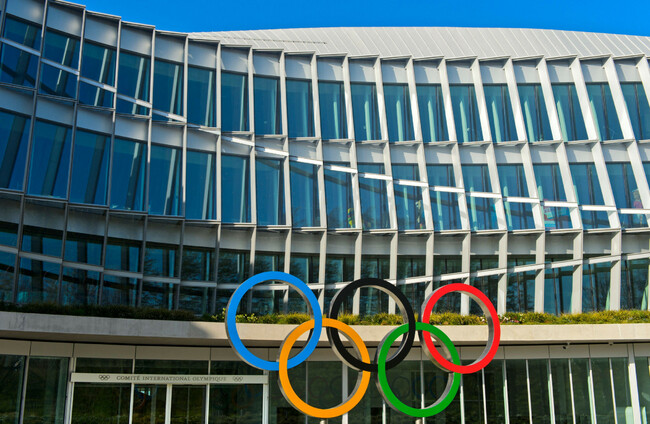
The Olympic rings at the headquarters of the International Olympic Committee, IOC, Lausanne, Switzerland. Alamy Stock Photo

The Olympics has banned transgender women from competing in female categories from 2028

The International Olympic Committee will require all women to undergo gene screening to confirm their gender.

THE INTERNATIONAL OLYMPIC Committee (IOC) has banned transgender women from competing in all female categories from 2028 onwards.

Eligibility for the female category is to be determined by SRY gene screening, a molecular genetic test carried out via saliva, cheek swab or blood sample.

The IOC said that athletes with an SRY-positive screen, including XY transgender and androgen-sensitive XY differences of sex development (DSD) athletes will not be able to compete in individual or team female categories.

Athletes with a diagnosis of Complete Androgen Insensitivity Syndrome (CAIS), or other DSDs, who do not benefit from the anabolic and/or performance-enhancing effects of testosterone may be able to compete in female categories.

The new rule will apply from the 2028 Los Angeles Olympics onwards but will not apply retroactively. 

The IOC originally approved the participation of transgender athletes in the Olympics in 2004, however, only a very small number of openly transgender athletes have competed in the Olympics.

Speaking about the policy, IOC President Kirsty Coventry said: “As a former athlete, I passionately believe in the rights of all Olympians to take part in fair competition. The policy that we have announced is based on science and has been led by medical experts.

“At the Olympic Games, even the smallest margins can be the difference between victory and defeat.

“Every athlete must be treated with dignity and respect, and athletes will need to be screened only once in their lifetime. There must be clear education around the process and counselling available, alongside expert medical advice.”

Readers like you are keeping these stories free for everyone...
A mix of advertising and supporting contributions helps keep paywalls away from valuable information like this article. Over 5,000 readers like you have already stepped up and support us with a monthly payment or a once-off donation.

Close
JournalTv
News in 60 seconds