We need your help now

Support from readers like you keeps The Journal open.

You are visiting us because we have something you value. Independent, unbiased news that tells the truth. Advertising revenue goes some way to support our mission, but this year it has not been enough.

If you've seen value in our reporting, please contribute what you can, so we can continue to produce accurate and meaningful journalism. For everyone who needs it.

Alamy Stock Photo

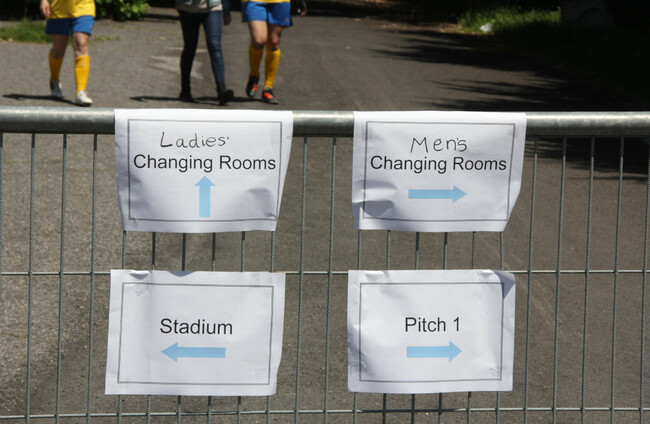
Women in the GAA Wicklow’s April Fool’s post shows that inequality still runs deep

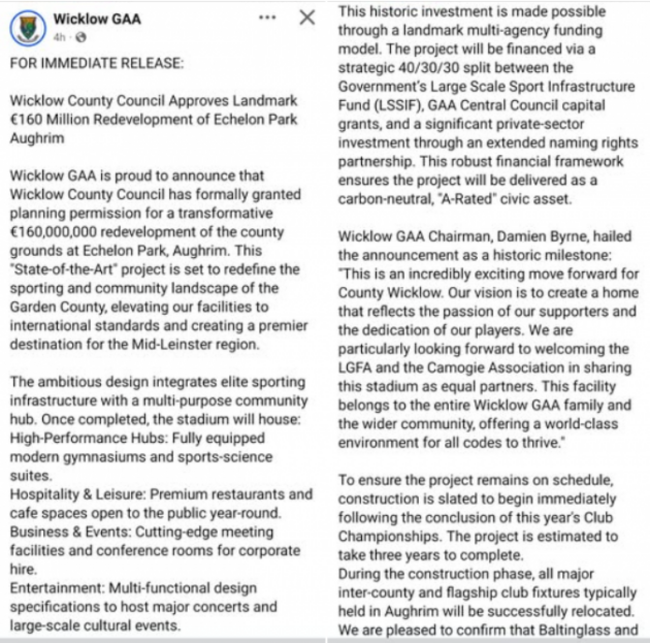
Wicklow GAA’s response to its April Fool’s controversy reflects a deeper, persistent inequality facing women and girls in Gaelic games.

MORE THAN A week has passed since the April Fool’s post by Wicklow GAA, a post that was not received as harmless humour, but as something far more telling: dismissive in tone, careless in judgment and deeply revealing of how easily the contributions of women in sport can still be trivialised and undermined.

As Chair of Wicklow Camogie, I can tell you that in the time since, there has been no response. No acknowledgement, no reflection, no attempt to engage. That absence is not minor; it matters. In an organisation as influential as the Gaelic Athletic Association, silence is not passive. It shapes culture, sets standards and tells people, quietly but clearly, what is acceptable.

full post The April Fools 'joke' was that the women players would be granted equality in a new stadium. It was deleted after a backlash. Wicklow GAA Wicklow GAA

This moment cannot be dismissed as a single misjudgement. It speaks to something deeper, something that women and girls in Gaelic games experience and have experienced over the years, not occasionally, but rather consistently. A system where they are still too often expected to adjust, to wait and to accept less.

It is standing in a dressing room with young players, girls who have trained hard, who are committed, who believe fully in what they are doing and having to tell them that their match has been moved again, or that their training time is uncertain. At the very same time, boys’ and men’s fixtures remain fixed, protected and prioritised.

These are not isolated frustrations. They are repeated, lived experiences that draw a clear line, one that every player, every parent, every family can see, between what is guaranteed for boys and what is still conditional for girls. Over time, that line of disparity doesn’t need to be explained; it is deeply felt.

A community organisation?

It is felt by parents trying to reassure their daughter, while quietly knowing the system is not treating her the same. It is felt in homes where commitment is equal, but opportunity is not. This understanding is not formed in a single moment; it is built slowly, week after week, decision after decision.

This is where the real damage lies, because we ask girls to stay in sports. We invest time, energy and resources into keeping them engaged, into building confidence, into creating pathways. But those efforts cannot compete with a system that, in practice, continues to signal that they matter less.

Allianz Ireland / YouTube

Talent does not disappear; it walks away from environments where it does not feel valued. For many young women, that realisation is not sudden; it is gradual, and it is painful. It is the quiet moment when enthusiasm turns into doubt. When commitment meets inconsistency and when belief in the system begins to fade.

Encouragment matters

The solutions are not complex. They are grounded in fairness: clear communication, consistent scheduling and equal access to facilities. What is required is not reinvention, but intent, the willingness to treat women’s sport as equal in practice and not just in principle and messaging.

Continuing to rely on inherited structures that prioritise boys’ and men’s sport by default only deepens the divide. Equality cannot exist where one side is consistently required to adapt around the other. Young players do not need to be told they are valued; they need to see it, consistently and without exception, in the decisions that shape their experience every single week.

They measure fairness and equality in what is guaranteed to them, not what is promised. Because value is not spoken, it is demonstrated.

When those elements are missing, expectations begin to change. Not dramatically, but quietly. This is how inequality endures, not through one defining moment, but through a pattern of small decisions that are never fully challenged.

The silence that has followed is not incidental; it is part of the pattern. What has not been said sends a clear message: there is no real appetite for change or equality for women in sport in Wicklow, and that is something Wicklow GAA appears unwilling to confront.

Yet, there is a shift happening and across the GAA, female athletes are becoming more aware, more vocal and less willing to accept the status quo. There is a growing recognition that equality cannot remain an aspiration; it must become reality, visible in every structure and every decision.

That awareness brings responsibility, not only to speak, but to stand firm in what is just and fair, even when it is uncomfortable.

As Chair of Wicklow Camogie, I will continue to face into the uncomfortable conversations, to advocate for change, and to welcome every genuine opportunity for constructive and collaborative work towards equality.

But that work requires more than words; it requires like-minded individuals and leadership willing to stand beside that commitment in action, not just principle.

Women in sport are not second-class citizens, and they will no longer accept being treated as though they are.

Silence has never been the Voice of Change.

Leanie Lifely is Chair of Wicklow Camogie.

Readers like you are keeping these stories free for everyone...
A mix of advertising and supporting contributions helps keep paywalls away from valuable information like this article. Over 5,000 readers like you have already stepped up and support us with a monthly payment or a once-off donation.

View 29 comments
Close
29 Comments
This is YOUR comments community. Stay civil, stay constructive, stay on topic. Please familiarise yourself with our comments policy here before taking part.
Leave a Comment
    Submit a report
    Please help us understand how this comment violates our community guidelines.
    Thank you for the feedback
    Your feedback has been sent to our team for review.

    Leave a commentcancel

     
    JournalTv
    News in 60 seconds