Sign in. It’s quick, free and it’s up to you.
An account is an optional way to support the work we do. Find out more.
Sign in. It’s quick, free and it’s up to you.
An account is an optional way to support the work we do. Find out more.
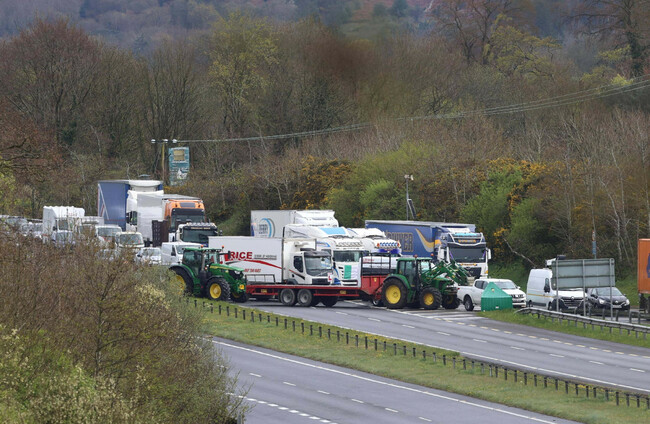
THE STATE’S EMERGENCY group met this afternoon to discuss the current impacts of the fuel protests taking place around the country.
The National Emergency Co-ordination Group (NECG), which meets to coordinate the response to emergency situations, was told today that a number of crises are impacting sectors around the country today.
The emergency group was told that Uisce Éireann’s chemicals in Fermoy, which are used to treat the country’s drinking water, cannot be released due to the fuel blockade.
The meeting was told that the lack of chemicals to treat water will result in a boil notice being issued as early as next week.
The primary source of chemicals is warehoused in Fermoy, which has been blocked.
Three trucks have been released in the last couple of hours, and there is a hope that 17 more will be released later today.
It is understood an agreement with protesters is being worked on so that larger plants will be prioritised.
Separately, the group was warned that medical supplies which are supplied on a ‘just-in-time’ basis will be affected if the protests and blockades continue.
The HSE representatives at the meeting said that people are not attending their appointments in recent days, and critical services are being interrupted as people cannot attend for dialysis and cancer treatment.
The National Ambulance Service has also said it has faced difficulties attending incidents due to the protests.
Bulk gases needed for medical reasons, which are also delivered through ports, have been impacted by delays, the HSE said this afternoon.
In addition, school buses may also be impacted next week, the meeting was told.
The meeting also discussed the impact on the country’s ports.
Dublin is one of the few unaffected ports, but it is understood officials were told that it could be the focus for protests later today.
The gardaí are trying to divert the protest away from Dublin at present, but if Dublin Port is blocked, food supplies will become an issue, the emergency group was informed.
Currently, ships cannot unload their goods in affected ports, but the ports remain operational for now.
Currently, no fuel trucks are being allowed to leave impacted ports, officials said today.
A government source said what is being experienced is only the result of 20 hours of blockages and if it continues it is only going to get considerably worse.
In terms of public transport, the state’s emergency body was told that bus routes continue to be impacted and that fuel supplies for buses in the west of Ireland are under threat.
The gardaí told the meeting today that the force is now moving to policing by enforcement under a policing plan for such incidences.
The Defence Forces confirmed it has received requests for aid in several locations, and this will be given at key strategic sites, though those operational details cannot be shared.
The emergency meeting also heard that when it comes to the operation of emergency services, contingency measures are being looked at.
There are “serious concerns for fire services”, the emergency group was told.
An NECG sub-group has been established to focus on the specific impacts on the emergency services fleet and to consider possible contingencies, the group said.
The Department of Enterprise, Trade and Employment told the emergency meeting today that cement stocks are affected also and production is being impacted this week as a result of the protests.
Animal feeds in some Limerick facilities are now ceasing operations, as the supply of raw materials is now being affected.
The emergency group was told that this may lead to an animal welfare issue if stocks are low.
Following the meeting of the NECG this afternoon, the government said it had been briefed that Ireland’s fuel supply “overall remains robust and resilient”.
“The current situation is solely a distribution issue that can be alleviated by ending blockades and restoring access for delivery vehicles,” the NECG said in a statement.

To embed this post, copy the code below on your site












have your say