Sign in. It’s quick, free and it’s up to you.
An account is an optional way to support the work we do. Find out more.
Sign in. It’s quick, free and it’s up to you.
An account is an optional way to support the work we do. Find out more.
DOMESTIC CAMERAS ARE causing disputes between the HSE and families whose relatives are receiving care.
“I was pulled from pillar to post,” said Tara*, who was told by the HSE to remove a camera she’d installed to protect two vulnerable family members.
A new investigation by The Journal Investigates has found multiple such disputes.
Two families have told us that they were asked to remove CCTV cameras or nanny cams by the HSE.
Another family was taken to court by the HSE over their use of cameras, and threatened with the removal of home care.
Families told us that in some cases they installed cameras to protect an older relative after break-ins, falls or wandering.
The Journal Investigates has heard from families who say cameras they installed were instrumental in detecting and providing evidence for alleged or convicted abuse or crime by HSE-funded home carers, either employed by the HSE or private agencies.
Ireland’s home care sector has never been regulated or subject to regular inspections, unlike the nursing home industry which has been regulated and inspected by the Health Information and Quality Authority (HIQA) for almost 20 years. For the first time, in July, HIQA began to register Ireland’s more than 100 private home care providers.
The HSE told us that they don’t have a national policy that governs CCTV use in homes of people receiving home care services, and that the decision to put up cameras in homes was a matter for homeowners.
When asked about instances where disputes arose over cameras, the HSE said: “The operational management of service provision rests with the local Home Support Services” and redirected our query to local health regions.
They added: “The Home Support Service aims to enable people to continue to live in their own homes with confidence, security and dignity,” a spokesperson said.
They said the Home Support Service has provided services to over 75,000 people this year alone and that “home support remains a critical component in facilitating hospital avoidance and supporting timely hospital discharge.”
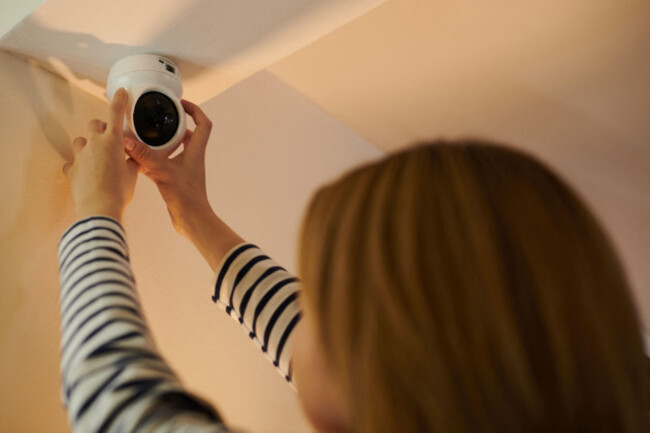
The Journal Investigates is aware of a number of cases where the HSE has directed families to remove cameras.
In 2018, the HSE took a family to the High Court for abuse after the family informed them that they had installed CCTV so they could protect their mother, who had advanced dementia, in case she had a fall.
At the time, their mother was receiving a package of home care carried out by agency workers through the HSE.
The HSE threatened the family with withdrawing the care if they didn’t remove the cameras.
The HSE lost its case and the court awarded costs to the family. At the time, The Irish Times reported that the court called the HSE’s lawsuit “improperly brought”.
In his judgment, Justice Peter Kelly said there should be no issue with the carer’s work being recorded “if it was of a high standard, as it should be”.
Despite losing this case, The Journal Investigates has spoken to families who continued to encounter issues with cameras.
Patricia* installed cameras in her 84-year-old aunt’s home after an attempted break-in. Her aunt was receiving HSE-funded home care at the time in 2020. This was provided by a private care agency.
Patricia’s camera captured footage of an alleged physical assault and verbal abuse by the home carer against her aunt. This was covered by The Mail on Sunday at the time, which reported that internal disciplinary action had been taken against the carer.
The care agency told us that “out of respect for the privacy and confidentiality of those who receive our services”, they could not comment on individual cases. The spokesperson added that they “take any allegation of mistreatment extremely seriously.”
The HSE said: “Private home support providers, commissioned by the HSE through the Home Support Authorisation Scheme, must have a comprehensive complaints management system in place which includes recording, investigating, and identifying any trends in complaints received. Any concerns in relation to safeguarding issues must be escalated to the HSE.
“Any concerns raised in relation to the care provided by home support services are dealt with on an individual case-by-case basis by the local home support service.”
Patricia’s local HSE office said they can’t comment on individual cases to protect privacy, but that “irrespective of how a safeguarding concern is brought to the attention of the HSE, any concern reported is assessed and followed up in accordance with the Safeguarding Vulnerable Adults Policy.”
Patricia told us that “those cameras were her German Shepherd.”
When she first installed the cameras, she notified the HSE.
The Journal Investigates has seen emails between Patricia and the HSE’s then-manager for older persons’ services at the HSE asking about the cameras “to continue to deliver services” and “in the interest of continued delivery of existing services going forward”.
She said that the HSE asked her to sign an agreement to remove the cameras. Patricia didn’t remove the cameras, and her aunt continued to receive home care.
Sarah McNulty, a privacy lawyer in Cork who regularly advises clients about the legality of domestic CCTV, said: “There’s no legislation specifically that concerns surveillance of elderly people in the home.
“From a legal standpoint, I would look at that High Court case from 2018 and therefore say that there isn’t a legal prevention of recording to ensure the safety of an elderly person,” McNulty said.
But CCTV shouldn’t be installed in an older person’s home without their permission, warned Amanda Phelan, a professor at Dublin City University (DCU), who researches elder abuse in the community.
HIQA, which regulates nursing homes and will become the home care regulator, hasn’t issued guidance on cameras in residents’ rooms in nursing homes or in properties where there is a home care arrangement.
The Health (Amendment) (Home Support Providers) Act 2026 gives HIQA new powers to regulate home care. It was signed into law in July this year, but has yet to be commenced. The Department of Health told us that it’s “envisaged that the legislation will be commenced within 12 months of its enactment”, so by July next year.

The HSE told The Journal Investigates that they have a CCTV policy for the use of CCTV in HSE facilities, but not in homes.
They said “the decision to install a camera within a private residence is a matter for the homeowner or service user, subject to compliance with data protection law,” and the guidance issued by the Data Protection Commission (DPC).
The spokesperson pointed to guidance issued by the DPC in May for people using domestic CCTV systems to monitor and safeguard their property.
The HSE has no national policy or guidance relating to CCTV being used in homes where home carers are working, though “local arrangements or practices” may be in place, according to information obtained through our FOI requests.
The DPC also published guidance in August for organisations operating residential care settings, such as nursing homes. It states that “CCTV generally should not be installed in areas where individuals would reasonably expect a higher degree of privacy.”
That includes bedrooms, bathrooms, changing areas and treatment rooms. The threshold for justifying CCTV in bedrooms and bathrooms “is extremely high”, it emphasised.
The Journal Investigates is also aware of a family who say they were directed to remove a camera by HSE staff more recently. This was in relation to the safety of a person with an intellectual disability, rather than home care provision.
Tara, from the north-west of Ireland, was frustrated at the HSE’s response when she installed a camera in her father’s home.
“A safeguarding issue,” pushed her to install the camera, she told us. Her father’s dementia had caused him to begin going into his intellectually disabled daughter’s bedroom and trying to sleep in her bed at night.
She reported the problem to the HSE safeguarding line for older people, the gardaí, the community nurse and her GP.
Tara installed cameras in her sister’s bedroom in March 2025.
“I had already made arrangements so that my sister wouldn’t change in that room. She understood that a camera was there and why the camera was there,” she told The Journal Investigates.
Her 76-year-old father was receiving HSE-funded home care at the time.
A HSE social worker was sent to the house after she raised the safeguarding concern.
“I told her that I had to install it as I wanted to keep my sister safe and redirect my father over the camera to go downstairs and tell him that [this] was his daughter. And to be able to come up to the house straight away.”
She said the social worker objected, saying the camera “was an invasion of privacy” for her sister.
“I thought they would do something about it. All she said was to remove the camera and they didn’t address the safety of my sister and father in the house,” she told The Journal Investigates.

A number of families spoke to us whose home cameras detected alleged or convicted abuse, neglect or crime by HSE-funded home care workers.
Marjorie Gallagher, a HSE home carer, was convicted in 2020 of stealing €20,000 from 84-year-old Bridget McLaughlin, the woman she was employed to care for in Co Donegal.
Footage from domestic cameras was key to the prosecution, and to the family detecting the crime.
Bridget’s son, Hugh McLaughlin, installed cameras in his mother’s property after her cash savings went missing.
“We never expected to catch the home carer” as the family actually suspected someone else, he told The Journal Investigates.
“The day after we found Marjorie had stolen the money, two representatives from the HSE came to the house to speak to us about what had happened. They asked what I’d recommend to other families and the one thing I said was to install cameras.”
McLaughlin now does DIY household camera installations for other families.
He said “the HSE were never made aware of the cameras” before they reported the theft.
The HSE recorded 116 referrals for community-based financial abuse that involved staff between 2021 and 2025, with four involving carers. These figures were obtained by The Journal Investigates through Freedom of Information (FOI) requests.
However, HSE data cannot establish how many financial abuse referrals involved paid home carers, as this is not a distinct recording category, according to the health service.
The HSE said that “forthcoming regulation of home support services is expected to strengthen oversight of the sector and support enhanced data collection and reporting”, and that they “will continue to review opportunities to improve the categorisation of safeguarding data in line with these developments.”
The health service recorded 3,998 referrals for alleged financial abuse in the same period, with family members identified as the alleged person causing concern in 2,273 referrals.
“While the HSE captures the source of referrals, including referrals from home care agencies, these referrals often relate to concerns involving family members, friends, neighbours, or other persons in a position of trust rather than agency staff,” a HSE spokesperson said.
There have been several other recent prosecutions of home carers for theft, where evidence was captured on cameras installed by their victims’ families.
A home carer subcontracted by the HSE was convicted of a €100 theft last year after CCTV caught him taking money from his 87-year-old client’s trouser pocket.
In 2023, Lesley Dyer, a home carer from Co Wicklow, was convicted of stealing over €1,000 from the older woman she was caring for. She was caught by CCTV installed by the victim’s sons. A month later another home carer in Clare was convicted of stealing cash from her 82-year-old client’s wallet after the theft was recorded on a CCTV camera installed by the woman’s family.
Inadequate care was captured by a number of other families that The Journal Investigates spoke to.
A family from Co Kildare said they uncovered serious issues with HSE-funded care on domestic CCTV cameras. A 52-year-old woman with short-term memory loss from a stroke has had HSE-contracted home care. Her daughter, Sophie*, told us that they installed cameras for “peace of mind” after carers repeatedly didn’t show up.
Between January and April 2025, there were “44 hours of care missed in three months,” she said.
“Lines were crossed,” Sophie said. She told us that earlier this year a HSE-contracted carer left the house with Sophie’s mother in her car for four hours without permission and against HSE policy. The family only found out by watching domestic CCTV camera footage.
“That really shocked me. Where are you going? What are you doing?”
She said a carer used Sophie’s mother’s phone for her personal use several times.
After they complained to the care company, Sophie said they were told the carer was given a warning.
Sophie’s local HSE office said they can’t comment on specific cases to protect patient confidentiality, but mentioned the HSE’s Your Service Your Say process for addressing concerns.

Tara told The Journal Investigates that she also discovered her father received inadequate care through camera footage.
She had installed cameras outside her father’s house due to his dementia.
“It’s vital to have cameras when someone has dementia. You need to know when they leave the house, what they’re wearing, what direction they’re heading in for [making a report to] the gardaí.”
The cameras outside the property also showed when carers would come and go. Her father was allocated several 45-minute and 30-minute home care visits each day by the HSE. Carers’ responsibilities included assisting her father with changing his stoma bag, per his HSE home care plan.
She said that in December 2024, the cameras showed that a HSE carer spent just 4 minutes at the house. Tara said when she returned to see her father, he had no stoma bag attached. She took him to the doctor who, she said, diagnosed him with a skin infection.
Emails written at the time say the doctor advised that the infection had been there for multiple days.
Similarly to other responses, Tara’s local HSE office said “cannot comment on individual cases”, but mentioned the HSE’s complaint process. They added that “safeguarding policies and protocols are there to protect vulnerable people” against abuse and “to have any concerns regarding abusive experiences addressed.”
A large proportion of people receiving home care live alone, and have physical or cognitive dependencies, according to DCU’s Phelan. The researcher said that home care recipients may be particularly reluctant to make disclosures against home carers.
“In the person’s mind, it might mean if I report this person, I won’t have them anymore and I’ll have to go into a nursing home.”
Phelan said: “Home care is just starting to be regulated now. Historically it hasn’t been regulated.
“The standards were not there before this.”
*Names have been changed to protect the identity of relatives receiving care
Reporter: Francesca Gilks • Additional Reporting: Patricia Devlin • Editor: Maria Delaney • Social Media: Cliodhna Travers • Main Image Design: Lorcan O’Reilly
To embed this post, copy the code below on your site












have your say