Sign in. It’s quick, free and it’s up to you.
An account is an optional way to support the work we do. Find out more.
Sign in. It’s quick, free and it’s up to you.
An account is an optional way to support the work we do. Find out more.
LAST UPDATE | 9 Apr
FUEL PRICE PROTESTERS who don’t move their vehicles out of the way will “face the full rigour of the law”, gardaí say, as the army has been called to help dismantle blockades.
“The blocking of critical national infrastructure will not be permitted to continue,” the Department of Justice said in a statement this morning.
Minister Jim O’Callaghan said it is “well established in law” that the Defence Forces may assist An Garda Síochána in such situations, if asked.
A form C70, the formal paperwork to request the help of the army, has been submitted by An Garda Síochána.
It is understood that gardaí are seeking military vehicles that have heavy lift capacity.
“Large vehicles blocking critical infrastructure will be removed. Owners of those vehicles should remove them immediately this morning and should not complain later about any damage caused to those vehicles during removal,” O’Callaghan said.
“Denying people access to fuel and clean water is an unacceptable interference in the most basic of human rights.”
The protests over the government’s response to rising fuel prices have entered a third day, with actions so far involving the blocking of major routes and a refinery.
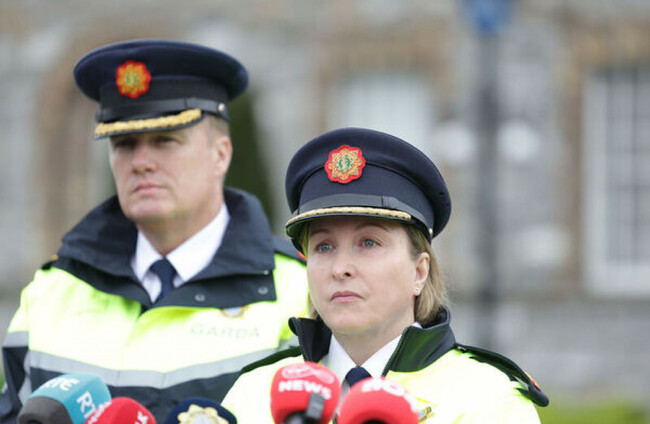
Deputy Garda Commissioner Shawna Coxon said the blockades could affect food, fuel, clean water and animal feed supplies.
“This is not tolerable and it is against the law,” Coxon said.
“The wilful obstruction of public roads and the movement of vehicles and persons are offences under various statutes including the Public Order Act and the Road Traffic Act.”
Those who don’t move out of the way “will face the full rigours of the law”, she said.
The Defence Forces are aware of images circulating of MOWAG Armoured Personnel Carriers in convoy.
— Óglaigh na hÉireann (@defenceforces) April 9, 2026
We can confirm that these are the personnel of the 128th Infantry Battalion conducting mission readiness exercises ahead of deployment to UNIFIL next month.
Mission Readiness… pic.twitter.com/MGUcJ9KvcQ
It is understood that the army will seek to remove blockades at fuel depots. It is unclear whether vehicles on key roads will be moved.
Minister Helen McEntee said the army is “always available to consider any requests for assistance from An Garda Síochána”.
“Ensuring that critical supplies for our country and its people are able to flow across our country is absolutely essential,” she said.
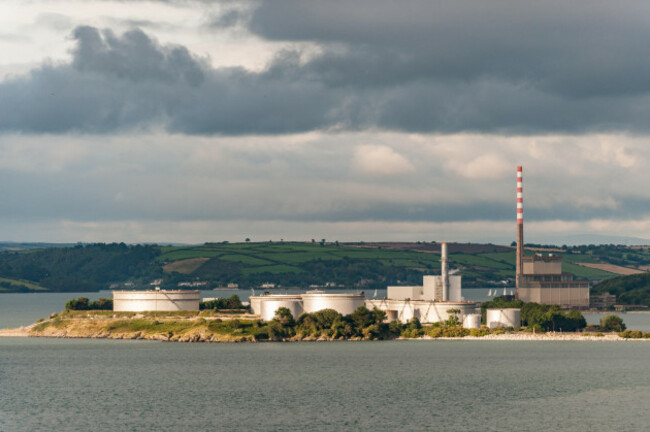
At the Whitegate refinery in Cork, tractors and other large vehicles stayed put overnight, sparking concerns that shortage may arise.
Whitegate is Ireland’s only oil refinery and provides around 40% of the country’s fuel.
Taoiseach Micheál Martin said “some forecourts will have no fuel this morning”.
He told RTÉ that the protesters at Whitegate and Foynes depot in Limerick made no attempt at “meaningful negotiations” prior to their demonstrations.
“For people who said that they’re concerned about the price and so on of fuel, to now be denying people access to fuel is beyond any logical comprehension,” he said.
The cost of petrol, diesel, and marked gas oil (“green diesel”) has soared as a result of the war in the Middle East and impacts on supplies out of the Strait of Hormuz.
Just over two weeks ago, Government signed off on a range of measures to reduce fuel costs, including a temporary excise duty reduction for motor fuels, expansion of the diesel rebate scheme for hauliers and bus operators, and an extension of the fuel allowance.
It saw an effective reduction of 17 cent for petrol, 22 cent for diesel, and five cent for green diesel – but the savings were largely eroded as the war waged on.
Several distinct but co-ordinated protests manifested on Tuesday, involving slow-moving convoys on motorways as well as the blocking of major roads in Dublin and other cities.
Those taking part included hauliers and agricultural contractors using large trucks and tractors to disrupt traffic.
Martin said the nature of the protest “leaves an awful lot to be desired, and it runs counter to a proper functioning democracy”.
Sinn Féin TD Mark Ward criticised the government’s response to protesters, continuing the opposition’s calls for the Dáil to reconvene to discuss the matter.
“The last thing the lads in the army want is to be ordered in to deal with the fuel protest,” the Dublin Mid-West TD said in a Facebook post.
He said government leaders should engage with protesters and “de-escalate the situation”.
With reporting by Christina Finn and Niall O’Connor

To embed this post, copy the code below on your site












have your say