Sign in. It’s quick, free and it’s up to you.
An account is an optional way to support the work we do. Find out more.
Sign in. It’s quick, free and it’s up to you.
An account is an optional way to support the work we do. Find out more.
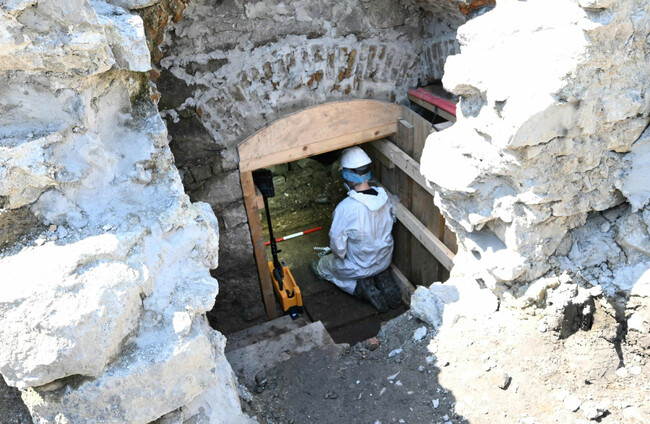
A FURTHER EIGHT sets of infant remains have been recovered as part of the ongoing excavation of the site of the former Mother and Baby Institution in Tuam.
In its latest update, the Office of the Director of Authorised Intervention (ODAIT) said all eight were buried in coffins.
It brings the total number of infant remains recovered from the site to 77. Most have been found in area that was identified in historical documents as a burial ground.
The excavation of the St Mary’s site in the Co Galway town is attempting to identify the remains of infants who died at the home between 1925 and 1961.
In 2014, research led by local historian Catherine Corless indicated that 796 babies and young children were buried in a sewage system at the Co Galway institution across that time period.
Archaeologists and other specialists started working at the site on 14 July last year.
This latest update covers the period between April and May.
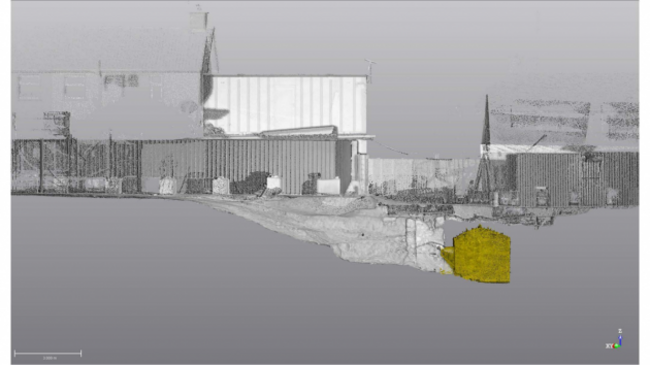
The ODAIT said forensic specialists excavating the site have also recovered some separate or ‘disarticulated’ bones from both adults and infants that are not associated with remains already recovered. They will be forensically analysed when the excavation is complete.
Another area of the side has shown evidence of additional potential graves “of child or infant size”, it said. Further excavation of this area is ongoing.
Artefacts from various historic periods also continue to be recovered, including a metal finger-loop candleholder found in the subterranean chamber.
This subterranean structure is thought to have formed part of a wastewater management system constructed between 1841 and 1918. It is unclear if it was in operation as such when it was run as a mother and baby home from 1925.
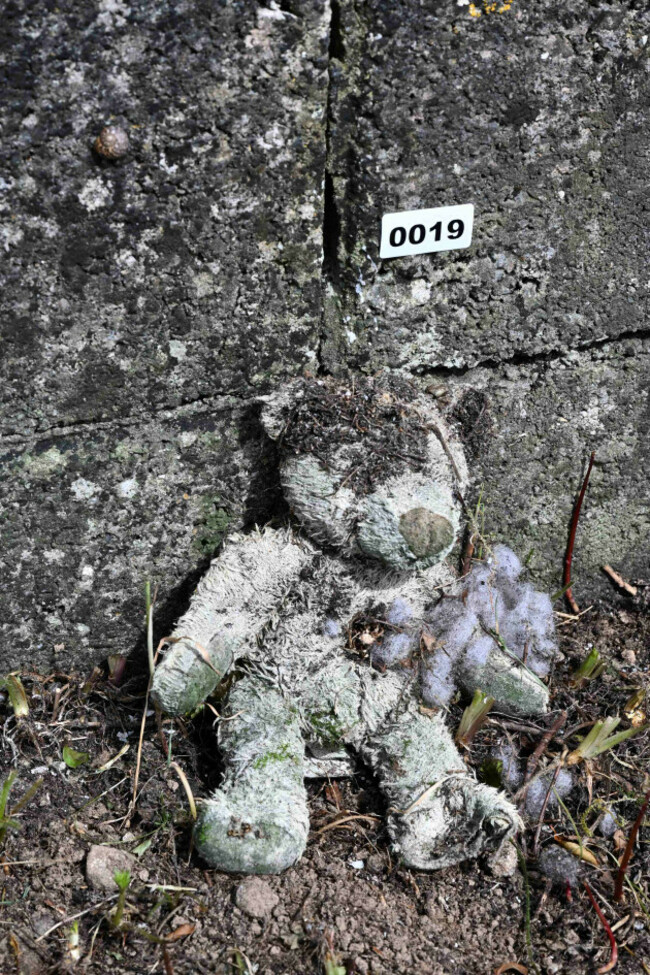
The items recovered are being catalogued and put in storage, while remaining fixed items will be moved at a later stage.
Separately, an additional 22 DNA samples have been collected during this period, bringing the total number of samples collected to 55. They have been given to Forensic Science Ireland (FSI).
The ODAIT said its team travelled to the US, UK and Canada to meet families and collect samples. As part of these trips, the team also met with diaspora organisations to assist in encouraging family members to get in touch to potentially provide a DNA sample.
In April, the government signalled its intention to amend the Institutional Burials Act 2022 to include first cousins as eligible family members who can participate in an identification programme and provide a DNA sample.
It came after a development in forensic science that means DNA from a first cousin may be sufficient to identify remains.
It was previously thought that the variation in shared DNA was too great as the common ancestor is the grandparent rather than the parent.
Following this decision, the ODAIT said it has been in contact with some first cousins to put the initial steps in place so that samples may be taken “without delay” once it is permitted under the legislation, it said.
“The team will continue to reach out to first cousins as part of this process.”
Information for those interested in providing a DNA sample is available on the ODAIT’s website.
They urged anyone who believes they may have a family member buried at the site of the former Tuam Mother and Baby Institution to contact their office on +353 (0)1 539 1777 or email info@dait.ie.

To embed this post, copy the code below on your site









have your say