We need your help now

Support from readers like you keeps The Journal open.

You are visiting us because we have something you value. Independent, unbiased news that tells the truth. Advertising revenue goes some way to support our mission, but this year it has not been enough.

If you've seen value in our reporting, please contribute what you can, so we can continue to produce accurate and meaningful journalism. For everyone who needs it.

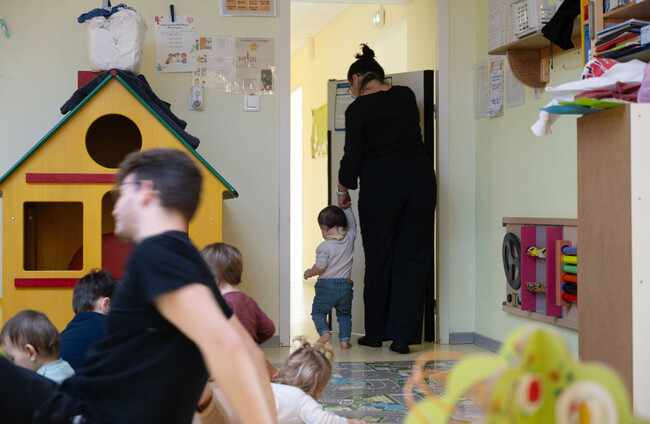
Summer camp fees ranged from €650 to €1,000 for families. File photo Alamy Stock Photo

'I flew my mother in from South America': How our readers are managing childcare this summer

Parents broke down the eye-watering sums needed for the summer, with some families deciding to take unpaid leave during the break due to a lack of options.

“We ARE COBBLING it together as we go.”

That response from a Kildare parent of two young children summed up the mood among our readers, as they told us of the scramble to find some type of accommodation for their children for the summer off.

So what’s the solution? One viral clip from recent days captures the debate, as while some parents have urged shorter holidays and longer time in school, UK teacher Lee Parkinson has questioned whether this might cause more harm to children in the long run.

Parents told us about a non-stop combo of babysitters, summer camps and negotiations with employers is being relied upon by some of these parents for the break.

They also broke down the eye-watering sums needed to cater to their kids, with some families deciding to take unpaid leave during the break due to a lack of options.

Where they have opted for summer camps, fees to cover the break ranged from €650 to €1,000.

‘Huge juggling act’

One recurring message from parents who spoke to us was their struggle to make their annual leave entitlements fit into the roughly eight-week break.

Rebecca, from Dublin, told us that she and her husband both use three weeks of leave to look after children, aged 6 and 2.

To make the numbers work, they overlap one of the weeks to take a short break in Ireland together, and take turns as to which week works and the other minds the children.

Aside from that there are three weeks of summer camp for both, but as they only run for the morning they have also had to employ a babysitter for two afternoons a week over four weeks. A crèche that usually caters for their two-year-old only opens in line with term time.

“Overall it is a huge juggling act, and I think six weeks would be more than enough. Especially at primary school age, you can see they thrive on structure, and even in fun summer camps, they can find it hard for adapting to changes,” Rebecca said.

Another Dublin-based parent, Rachel, said that the “problem with the long break is that it doesn’t acknowledge the reality that these days, most families need two working parents to afford a mortgage and the cost of raising a family”.

She’s spending €635 on camps for her two children, but noted that they don’t even cover the working day.

“The length of the break is an agricultural hangover, when kids were helping on the farm. Nowadays, it makes life incredibly stressful for parents,” Rachel said.

“We are lucky we can work flexibly and from home to pick up the slack, but it’s not a good result for either families or employers.

“I think the government needs to be realistic about the reality for families these days and the cost of living.”

Relying on family network

Others have done the sums and realised a different solution is needed to get them through the period.

The cost of childcare has been a dominant issue in Irish politics over recent years, with one report in recent days that a crèche franchise in Dublin is set to raise fees for parents.

One reader, who hails from South America and is married to an Irish man, told us of their calculations before they found a solution for this summer.

Summer camps are not an option for their 12-year-old autistic daughter, the parent said, as they said they “either softly reject you because ‘they can’t cater for her’, or because the schedules don’t fit when both parents work full-time”.

But the cost of a private childminder would simply be exorbitant. The couple realised that it would set them back €5,650, so instead they “ended up flying my 70-year-old mother” to Ireland.

The sums certainly make more sense for this family, as the plane tickets cost €2,400, plus travel insurance for €300 and other purchases for the trip at around €200.

“It still came cheaper than the calculated price for a full-time childminder,” the woman said, explaining that the couple are struggling to take annual leave this summer, with the father running a small business.

“We have an Irish family that helps when they can, but they also have full-time work commitments,” the reader added.

Summer camp tango

One mother in Co Cork said she has managed to get places sorted in summer camps for two of their three children, with the costs too high for their 10-year-old.

“I have to put the 7 and 8-year-old in camps for the summer as I only have two weeks summer annual leave. It’s costing me close to €2,000 for the camps,” she said.

“The 10-year-old has to go farming with his dad, not ideal but definitely couldn’t afford to put three children in camps.”

But the cost of the camps affects the “amount of cash I have spare to do family-fun activities over the summer”, this reader added.

Another working family bemoaned how they “spend a fortune” on camps that are often only 10am-2pm, so don’t even cover the working day.

“The school holidays still work on the assumption that one parent is at home; this isn’t even an option for most now with the cost of living,” this parent said.

They have found that “employers are not sympathetic to accommodate”, making it hard for families with no grandparents to help.

“Schools should shorten the school holidays or even run camps for the month of July at a reasonable rate,” this woman suggested.

‘We’ve tried bribes’

Rachel, the parent living in Dublin, said one of the real difficulties is trying to convince her children to go to the summer camps.

“Yes, we’ve tried bribes,” she said, before adding that her family are usually “left with no option but to work from home with them with us when they’re not in a camp”.

Rachel was among those questioning whether shorter summer holidays might be needed, particularly if no other measure is pursued around annual leave or to reduce the cost of childcare.

“We come out of the summer poorer, stressed and with an array of negative camp experiences for the kids,” she said.

I understand that the teachers need a break, but two months is too long.”

Her eldest has additional educational needs but benefits from his school running summer provision, meaning that he spends the first two weeks of the break booked in for activities and outings, without any cost to his parents.

“This keeps him in his familiar routine and environment, while preventing learning regression through play-based and social learning activities. To him, it’s just a fun camp in a familiar environment,” Rachel said.

“At least with the summer provision, the holiday is reduced to six weeks for my eldest and is more like the UK where I’m originally from. I hear the UK are talking of ways of shortening their six-week break – my family and friends can’t believe how long the holidays are here.”

On the other hand one parent told us that, much like Parkinson the UK teacher influencer, that kids “need to be kids” and have time to relax during the summer.

“Kids neeed to know how to be bored,” this woman said.

‘My husband and I see much less of each other’

One reader has found it difficult to navigate the summer break after her family moved to a rural part of Co Wexford.

“The usual issues pop up – we live rural so very boring for our only child,” she said, adding that there is “constant arranging of play dates and summer camps that only run for a few hours – non-stop dropping and picking”.

The cost of the summer camp this year came to €720.

“Unless you have plenty of money (and leave) to go on holidays you’re just hanging around trying to juggle work and home half the year,” the woman said.

But she added that the scramble has meant she and her husband find it hard to see each other during the summer.

“An unexpected issue has been the loneliness of it,” she said.

“My husband and I need to arrange office days so that there is one of us at home all summer – meaning we see much less of each other.

“Our friends tend to be people like us, that have parents elsewhere and they all disappear to benefit from that summer support. Unfortunately, we can’t do that.”

One parent of two kids, aged five and one, outlined how her family is managing.

They have a two-week summer camp for their kids, with annual leave and other days booked off to manage the schedule.

But it’s also meant both parents have had to take an unpaid week off each to try and plug the gap for their sons.

“All in all we have it covered. Some days will look like him spending a lot of time in front of the telly. Others will see him have the opportunity to connect with family or have one-on-one time with a babysitter or parent,” she said.

“We are happy enough but we are only six days in. It could turn out to be a long summer. But to sum it up, we are cobbling it together as we go.”

Close
64 Comments
This is YOUR comments community. Stay civil, stay constructive, stay on topic. Please familiarise yourself with our comments policy here before taking part.
Leave a Comment
    Submit a report
    Please help us understand how this comment violates our community guidelines.
    Thank you for the feedback
    Your feedback has been sent to our team for review.

    Leave a commentcancel

     
    JournalTv
    News in 60 seconds