Sign in. It’s quick, free and it’s up to you.
An account is an optional way to support the work we do. Find out more.
Sign in. It’s quick, free and it’s up to you.
An account is an optional way to support the work we do. Find out more.
LAST UPDATE | 29 May 2025
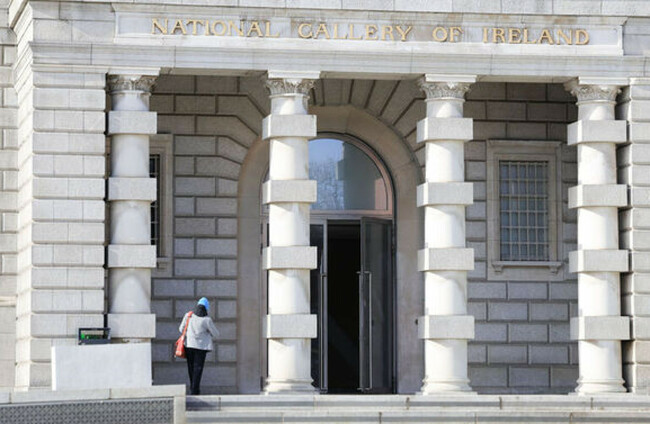
THE COST OF a cabinet to hold the National Gallery’s unused x-ray machine will be €222,448, an Oireachtas committee has heard.
Earlier this year, it emerged that a €127,000 x-ray scanner has not been used for eight years due to the gallery not having the facilities to store the device.
Following the purchase of the scanner, it emerged it required a room with lead-lined a storage unit to shield against emitted x-rays when in operation.
Under questioning by Fianna Fáil TD Seamus McGrath, Dr Caroline Campbell, director of the National Gallery of Ireland, confirmed the x-ray scanner it purchased cost €127,000.
When asked about the manufacture of the x-ray cabinet which will store and hold the scanner and how much it will cost, Campbell said it will cost €222,448 plus VAT.
She said the cabinet is currently on order.
“I think that will come as a shock to many people in terms of the cost of
something that was not envisaged as part of the original purchase of machine,” said McGrath.
Campbell responded, stating: “We are deeply sorry at the gallery for any failures that were in this project.”
She acknowledged the failures but stated they are committed to have the system operational by the end of the year.
“It will provide value for many years to come, and we are focused on getting this
system up and running and providing public value for money,” she added.
Under questioning by Fianna Fáil’s Albert Dolan, the gallery director said she believed the cabinet cost is “good value for money”.
She said the National Gallery acknowledges weaknesses in its project management practices which she said contributed significantly to its inability to bring the digital x-ray system purchased in 2017 into use.
“Pressures on the use of our building, unanticipated operational issues following the reopening of the Gallery’s Historic Wings in 2017, the impact of the Covid-19 pandemic, and changes of key senior personnel during this period have also been contributing factors,” she said.
The manufacture of the x-ray cabinet will commence shortly, with the expected delivery, installation and operation of the x-ray system expected to be up and running before the end of 2025.
“All costs associated with the resolution of the issue will be borne from the resources generated by the gallery and not from the Exchequer,” said Campbell.
Separately, representatives from the Arts Council were before the Oireachtas Public Accounts Committee this morning over the failed project to develop an IT system for the organisation which cost nearly €6.7 million.
The director of the Arts Council, Maureen Kennelly, addressed the committee this morning before she steps down from her role next month.
Kennelly’s five-year term as director ended on 4 May, and the Arts Council confirmed yesterday that she agreed to remain in her role to represent the board at upcoming Public Accounts Committee hearings.
The committee has heard that a lack of internal expertise, poor performance by its contractors and the impact of Covid-19 all contributed to the project failure.
Arts Minister Patrick O’Donovan launched an external review of the controversial IT project in February after it was confirmed that €5.3 million was written off on a system that was “not fit for purpose” and was eventually discontinued.
When the project was first planned six years ago, it was estimated to cost roughly €3 million and take two-and-a-half years to complete. By the time it was abandoned, the cost of the project had reached €6.675 million, and the system was not in use.
The Arts Council continues to use an outdated grant applications system that was in place when the IT upgrade was first announced.
Maura McGrath, the chair of the Arts Council board, told the committee that the project “was not an optional extra” and began out of necessity, “and it is a necessity that remains to be addressed”.
“However, the expectation that small state bodies set up for specialist purposes should be expected to carry the load on complex IT projects, should be questioned,” she said
Kennelly told the committee that they have commenced legal proceedings against two contractors and are in the pre-action stage in relation to two others.
“We are vigorously pursuing our cases to reduce the loss to the taxpayer,” Kennelly will say.
The committee heard the Arts Council’s systems date from 2008, are not integrated and are difficult to use.
Kennelly told TDs and Senators that as the expected delivery date of September 2022 approached for the IT project, “multiple bugs were discovered” and the “sub-standard work” meant the project could not move forward to completion.
She said that following a review and attempted re-working, “we were ultimately advised by new ICT consultants at the end of 2023 that the system was too flawed to rectify in a reasonable timeframe”.
Kennelly said the Arts Council now has senior ICT expertise in-house, and have “identified and implemented improvements to our procurement and project management processes”.
“We are in the process of implementing all recommendations relevant to us from the Department’s examination report.”
Meanwhile, the Secretary General at the Department of Tourism, Culture, Arts, Gaeltacht, Sport and Media assured the committee this morning that the Department “places the highest emphasis on fulfilling our oversight responsibilities in relation to all our bodies”.
Feargal Ó Coigligh said it is clear from the report in relation to the IT project that the Department “failed to properly exercise its oversight function” and that it should have “intervened more actively and much sooner to reduce the exposure to the taxpayer of this failed project”.
Kennelly said she is “very disappointed” that she has not been granted a second term as director.
Asked if she was resigning from the role or if it was a matter of her contract ceasing, Kennelly said her contract came to an end on 4 May but that she wanted to stay in the job.
“As I said, the minister, unfortunately, wouldn’t sanction a further five-year term, which was precedential with all my predecessors in living memory, I think.
“And I was offered a short term contract which I deemed unacceptable,” she told the committee.
To embed this post, copy the code below on your site
















have your say