Sign in. It’s quick, free and it’s up to you.
An account is an optional way to support the work we do. Find out more.
Sign in. It’s quick, free and it’s up to you.
An account is an optional way to support the work we do. Find out more.
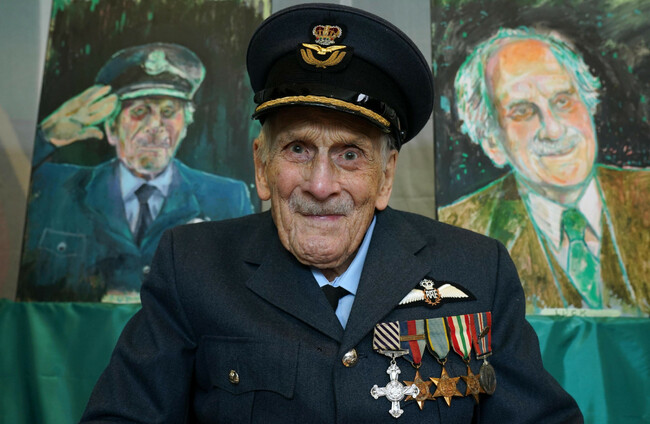
AN IRISH MAN who was the last surviving pilot who fought in the Battle of Britain, John “Paddy” Hemingway, has died aged 105.
Born in Dublin in 1919, Hemingway was among the men known as “The Few”, coined by Winston Churchill to describe Britain’s Battle of Britain pilots.
He had enlisted in the RAF in 1938 and soon became one of the young pilots who fought in the Battle of France.
UK Prime Minister Keir Starmer said he was saddened to hear of Hemingway’s death, adding that he “fearlessly flew over enemy territory” “never considered himself a hero” despite his efforts.
“Eighty years ago, the courage and determination of Paddy and all our brave RAF pilots helped bring an end to the Second World War,” Starmer said.
“He never considered himself a hero and often referred to himself as the ‘Lucky Irishman’, a man simply doing his job, like so many others of his generation,” Starmer added.
“Despite his sacrifice, he would tell stories of the joyous memories he made and moments he shared with his peers, many of whom never returned home.
Britain’s Royal Air Force paid tribute to Hemingway on social media.
It is with great sadness we announce the passing of John ‘Paddy’ Hemingway DFC – Last of ‘The Few’. We reflect not only on his sacrifices, but the sacrifices of all those who served & fought in WWII.
— Royal Air Force (@RoyalAirForce) March 17, 2025
Paddy, thank you for your service.
Per Ardua ad Astrahttps://t.co/ijgtRpgFTm pic.twitter.com/0zebzgmf65
In 1940, Hemingway was recorded as destroying a German airliner and the following day he downed a German Luftwaffe plane, but his Hurricane fighter was hit by anti-aircraft fire and he had to make a forced landing.
He then became one of the frontline members of 11 Group’s response to daily attacks by German aircraft, which went on to be known as the Battle of Britain.
Hemingway’s logbook records up to five daily sorties he and the other pilots undertook in defence of the UK.
In August 1940, amid intense dogfights, he was forced to bail out of his Hurricanes twice, landing once in the sea off the Essex coast and the other time in marshland.
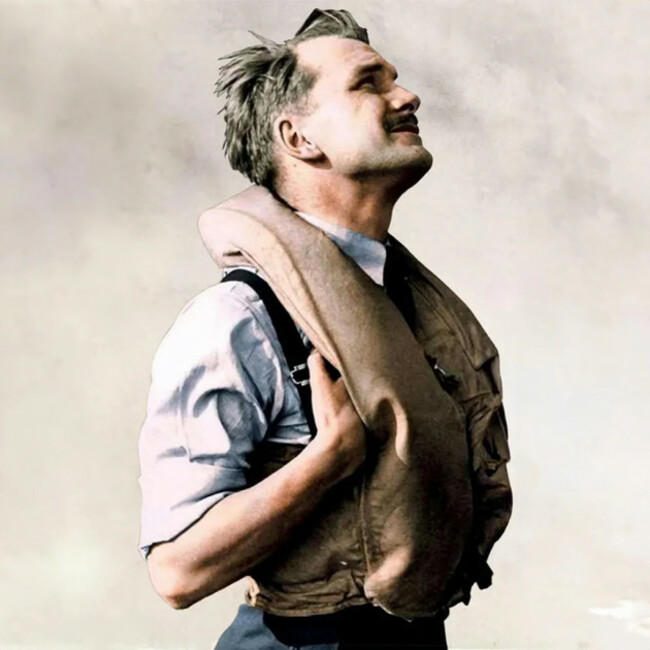
On July 1 1941, he was awarded the Distinguished Flying Cross and in September that year, he was mentioned in despatches by senior officers.
Hemingway went on to serve as an air fighter controller during D-Day operations, and in 1945 he joined the Mediterranean Allied Air Forces with 324 Wing.
Chief of RAF Air Staff Rich Knighton passed condolences to Hemingway’s family and friends.
“I am thankful that I was able to meet and spend time with him in Dublin, most recently in January this year,” he said.
“Paddy was an amazing character whose life story embodies all that was and remains great about the Royal Air Force.”
“He never felt that there was anything special about him. He thought the special ones were the friends who never returned. And now he is back with his squadron,” he said.
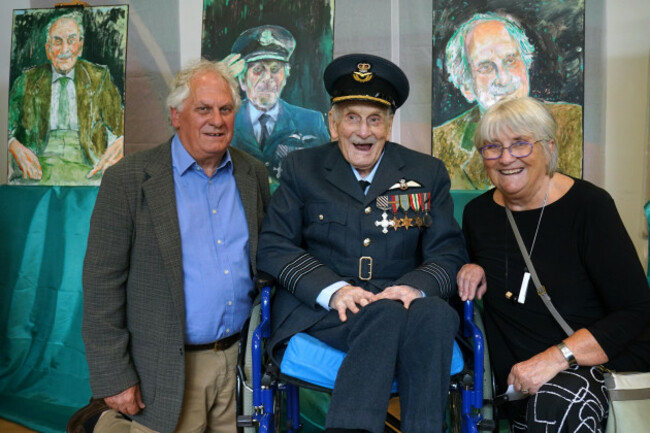
Hemingway was stationed in Italy towards the end of the war where he commanded a squadron. During this period, he was forced to bail out for a fourth time.
While attacking enemy forces near Ravenna in April 1945, his Spitfire was hit multiple times by anti-aircraft fire.
He parachuted into enemy territory and managed to contact local partisans who helped him return to his squadron.
In 1966, he became Officer Commanding RAF Leconfield and eventually attained the rank of Group Captain.
With reporting by PA

To embed this post, copy the code below on your site





have your say