Sign in. It’s quick, free and it’s up to you.
An account is an optional way to support the work we do. Find out more.
Sign in. It’s quick, free and it’s up to you.
An account is an optional way to support the work we do. Find out more.
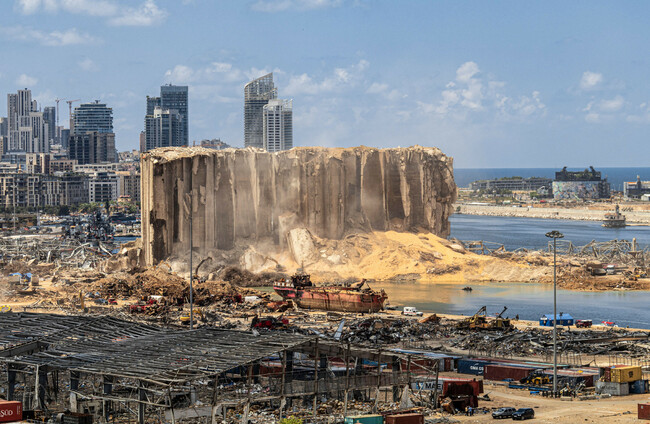
LEBANON WILL MARK two years today since an apocalyptic blast in Beirut port killed over 200 people, destroyed a large chunk of the city and deepened a painful economic crisis.
What followed the tragedy was two years of legal and political battles.
August 2020 mega-blast
On 4 August, 2020, one of history’s biggest non-nuclear explosions destroyed much of Beirut port and wrecks swathes of the capital.
The blast was caused by a fire in a warehouse where a vast stockpile of the industrial chemical ammonium nitrate had been haphazardly stored for years, authorities said.
The huge explosion left more than 200 people dead, over 6,500 injured and the city in a state of shock.
The tragedy struck as Lebanon is mired in what the World Bank later calls one of the world’s worst financial crises in 150 years.
Macron rushes to Beirut
Two days after the blast, French President Emmanuel Macron visited the ruined Gemmayzeh neighbourhood, where he was greeted by residents sickened by their own political class, seen as corrupt and inept.
Macron called for an international probe into the disaster, which President Michel Aoun rejected.
On 8 August, thousands of people demonstrated against Lebanon’s leadership.
The next day, a donor conference raised around $300 million in aid for the victims. The donors insisted the money be distributed directly to the Lebanese people, not entrusted to the government.
August-September 2020: wave of resignations
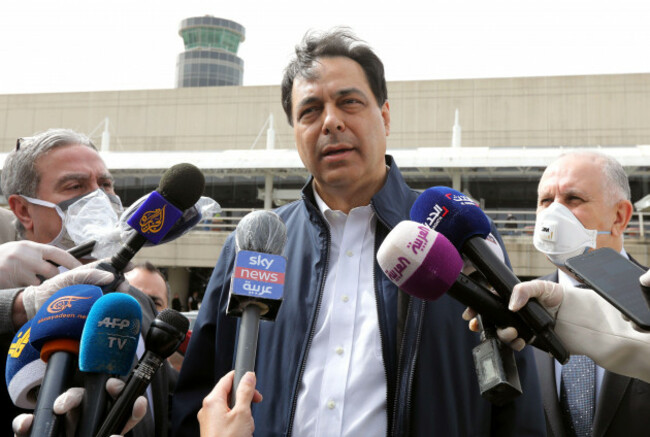
On 10 August, the prime minister, Hassan Diab, resigned amid further demonstrations.
At the end of the month, diplomat Mustapha Adib was named as Lebanon’s new premier.
But on 26 September, after weeks of political deadlock, he bowed out.
On 22 October, three-time prime minister Saad Hariri was nominated to lead the country again.
He promised to form a government of experts to stop the economic collapse.
Diab stayed on as caretaker PM until the formation of a new cabinet.
December 2020: PM Diab charged
A week later, the lead investigator into the explosion, Fadi Sawan, charged Diab and three ex-ministers with negligence.
But the probe was soon suspended and a court removed Sawan in February 2021.
July 2021: parliament stalls probe
In July 2021, the new magistrate in charge of the investigation, Tarek Bitar, took steps towards indicting four former ministers but parliament stalled on lifting their immunity.
On 15 July, Hariri stepped down, having been unable to form a government.
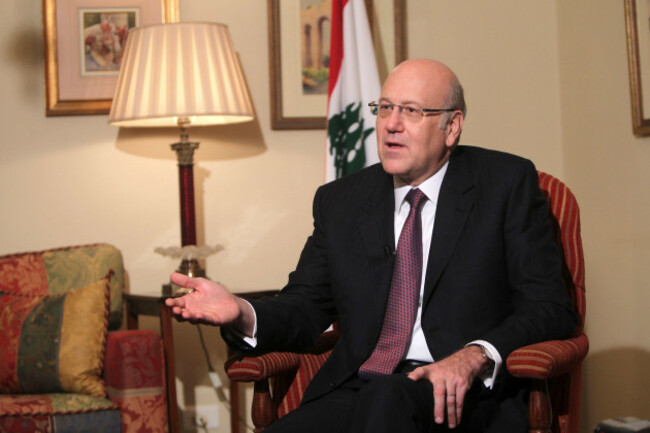
Billionaire Najib Mikati – Lebanon’s richest man and already twice premier – managed to form a new government on 10 September, ending a 13-month power vacuum.
October 2021: deadly protests
The new government was shaken by demands from the powerful Shiite group Hezbollah for Bitar, investigating two ex-ministers from a party allied to Hezbollah, to be removed.
Bitar was forced to suspend the probe following a series of court challenges.
Hezbollah and its ally Amal called for demonstrations to demand Bitar’s dismissal, accusing him of bias.
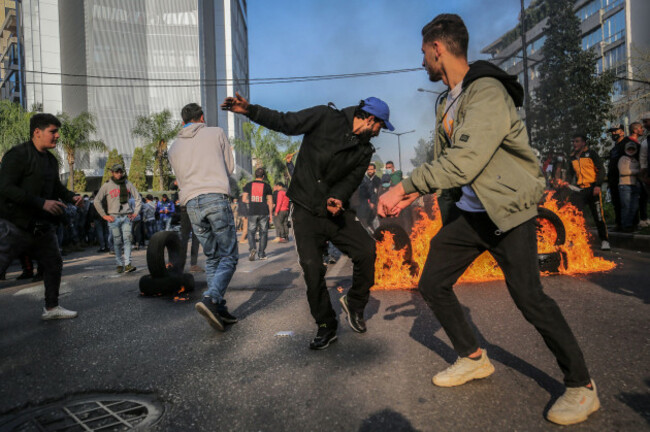
Seven people were killed in gun battles during the rally.
December 2021: probe halted again
At the end of 2021, Bitar resumed his investigation but less than two weeks later he was forced to suspend work for a fourth time following more legal challenges.
In April, the International Monetary Fund announced a conditional deal to provide Lebanon with $3 billion in aid over four years.
Chile arrested a Portuguese man wanted in connection with the port blast.
May 2022: voters punish establishment
Hezbollah and its allies lost their outright majority in 15 May parliamentary elections, in which independent candidates made record gains. Mikati was tasked with forming a new government.
In July, victims of the Beirut blast filed a $250-million lawsuit against US-Norwegian energy services company TGS over its alleged links to the ammonium nitrate that exploded in the port. TGS has denied any responsibility.
July 2022: Silos collapse
Parts of Beirut port’s huge grain silos, which withstood the explosion, collapsed in a huge cloud of dust after a weeks-long fire that broke out when remaining grain stocks fermented and ignited in the summer heat.
- © AFP 2022.

To embed this post, copy the code below on your site










have your say